The lullabies that get babies to sleep fastest are slow, repetitive, and boring on purpose: roughly 60-80 beats per minute, the same three or four notes recurring, no surprises. Not the ornate music-box versions with key changes and flourishes. If you've been cycling through a playlist of different "top lullabies" hoping one will click, that variety is probably working against you.
Why slow and repetitive beats pretty and varied
A newborn's nervous system is still learning what predictable feels like. Outside the womb, everything is new: light, temperature, the feeling of not being held constantly. A lullaby that repeats the same phrase over and over gives a baby something to anchor to. It's less about the melody being pleasant and more about it being reliable. The brain, at any age, relaxes faster around a pattern it can already guess the end of.
Tempo matters for a related reason. Around 60-70 beats per minute sits close to a resting heart rate, and there's a reasonable body of anecdotal and clinical-adjacent observation (not hard proof, worth saying plainly) that infants regulate their own breathing and heart rate partly by matching external rhythm. A lullaby at 100 bpm with a bouncy dotted rhythm might be fun to sing, but it's the wrong tool at 9pm.
What most lullaby lists get wrong
Search "best lullabies for babies" and you'll get the same rotation: Brahms' Lullaby, Twinkle Twinkle, Rock-a-bye Baby. Nothing wrong with any of them, but the lists rarely mention the two things that actually determine whether a song works on a given night: volume and consistency. A gorgeous, gentle lullaby played at a volume loud enough to be heard over a baby monitor's static is no longer gentle. And a different lullaby every night, however lovely each one is individually, denies the baby the one thing repetition offers: recognition.
The other thing these lists skip is that recorded instrumental versions often work better late at night than sung ones, purely because a tired parent's voice cracks, speeds up, or trails off when they're exhausted, and babies notice that inconsistency faster than adults think. A steady, unhurried instrumental take on the same handful of melodies, played at low volume from a phone or speaker across the room, removes that variable entirely.
Building the lullaby into a routine, not a rescue
Lullabies work best as the last step of a sequence, not a fix reached for mid-cry. Dim the lights, change into sleepwear, do the feed or the story, then start the music before the baby is fully overtired. Once a baby is overstimulated and crying hard, no lullaby, however well-chosen, is doing much on its own. It needs to arrive earlier in the wind-down, as a cue rather than a cure.
This is where a lot of parents get the order backwards. They keep the room bright and stimulating until the last possible moment, then hope a song will flip a switch. It's more useful to think of the music as the last domino, not the only one.
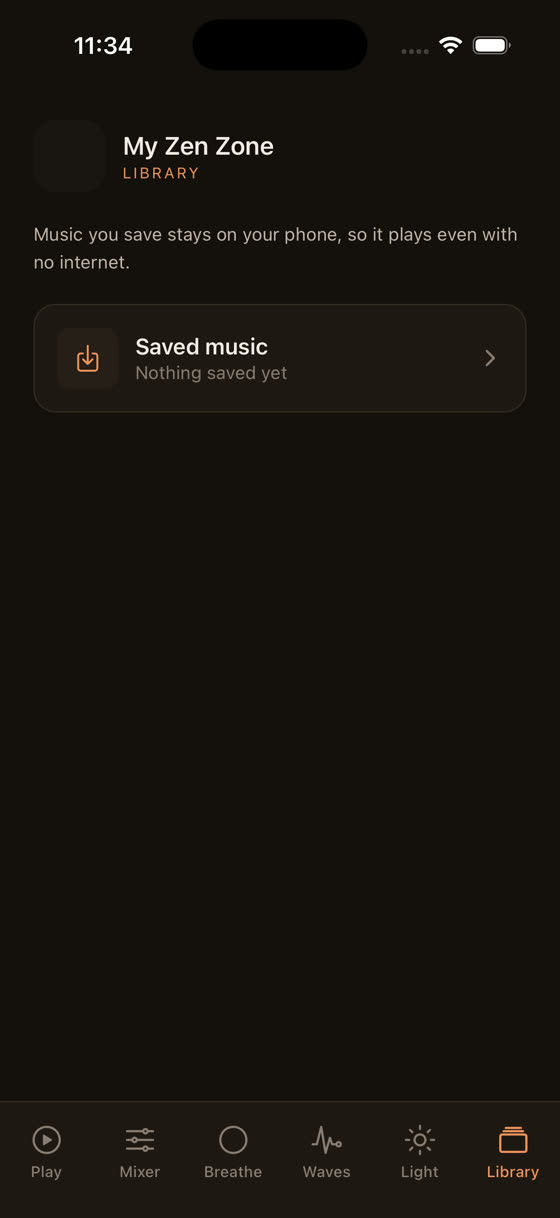
A simple wind-down screen, with the lights dimmed and a track already queued, makes it easier to actually keep to that order instead of improvising it while holding a baby. We built the light screen in My Zen Zone for adult sleep, but plenty of parents use it in the nursery for the same reason: it's a visual cue that says the active part of the evening is over.
Instrumental lullabies versus your own voice
Singing to a baby has real value that no recording replaces: proximity, warmth, the specific sound of a parent's voice, which babies begin recognising before birth. But singing every single night, for every single nap, for months, is a lot to ask of anyone's voice or patience. A reasonable split is to sing when you're present and able, and let a recorded instrumental lullaby carry the room when you need both hands free or when you're the one who's exhausted.
Instrumental versions also solve a practical problem: they can run far longer than you can sing. A baby who resurfaces briefly at the 20-minute mark of a sleep cycle needs the same steady sound still playing, not silence. This is one of the areas where a purpose-built sleep app earns its keep, because the track doesn't stop, loop with an audible seam, or cut out mid-phrase.
Layering lullabies with other sound, carefully
Some babies settle faster with a lullaby alone. Others do better with a very quiet layer of white noise or rain underneath it, echoing the constant low sound of the womb, which is often described as somewhere in the 50-70 decibel range, though that's a rough figure and not a target to chase with a meter at 2am. The key word is quiet. Loud white noise machines placed close to a crib can exceed hospital nursery noise guidelines, so if you layer sound, keep it low and place the speaker across the room rather than beside the cot.
This is where a fixed lullaby playlist starts to show its limits, because it can't be shaped to a specific baby or a specific night. In My Zen Zone the mixer lets you set a lullaby-tempo track under a thread of rain or a low hush of white noise, each on its own level, and save that exact balance for next time instead of rebuilding it from scratch. Some nights a baby wants just the melody; other nights the extra layer of steady noise is what actually gets them down. Having both available, adjustable in seconds, is more useful than any single "best" lullaby.
Choosing tracks when the classics feel worn out
If you or the baby have heard Brahms' Lullaby roughly nine hundred times, it stops mattering how well-designed it is. This is normal, and it's fine to rotate in new instrumental pieces as long as they share the same underlying shape: slow tempo, simple repeating phrase, no jarring dynamic shifts, nothing that resolves in a way that draws attention.
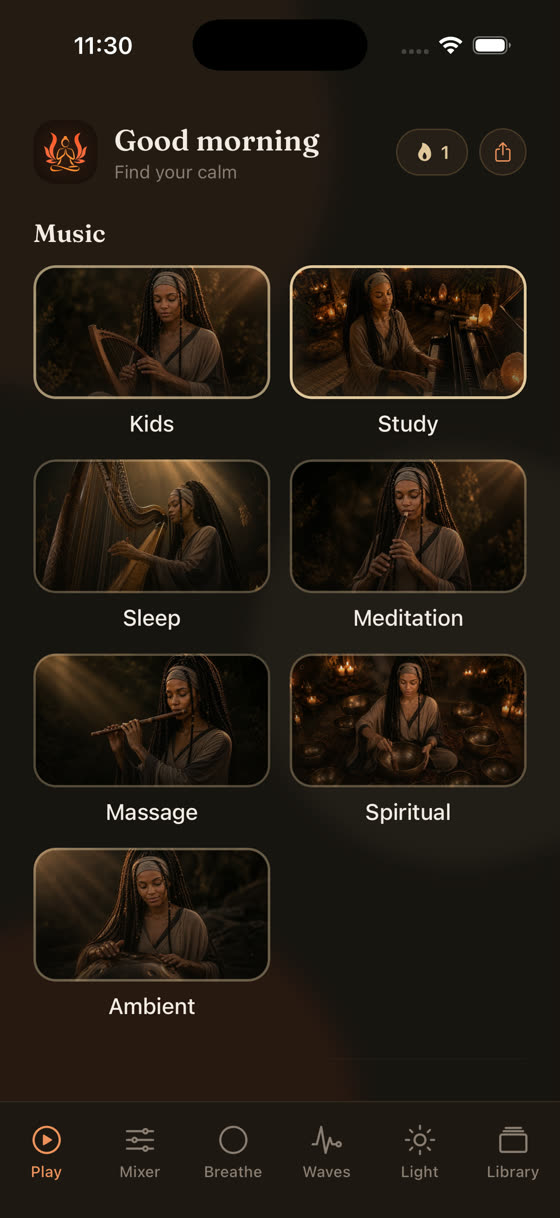
Because the library adds new tracks every two weeks, there's usually a fresh, slow instrumental piece to bring in once the old favourites go stale, without switching to something faster or busier just for variety's sake. That steady supply matters more for babies than it does for adult sleepers, since infant ears seem to fatigue on repetition faster than we'd like to admit, even while still needing predictability in tempo and structure.
What to actually do tonight
Pick one or two slow instrumental lullabies, ideally around 60-80 bpm, and commit to them for at least a week before judging whether they're working. Start the music a few minutes before the baby is overtired, not after crying has started. Keep the volume low enough that you could hold a quiet conversation over it. If you want to add background sound, keep it faint and the speaker at a distance, and consider using a mixer-based app so you can adjust the balance instead of settling for one fixed level. And if you're curious about the same principles applied to adult sleep, the mechanisms are nearly identical, which is worth reading about in our piece on the best music for sleep. The app itself is free to try at myzenzone.app/get, and the full library, mixer, and light screen are all in one place at myzenzone.app.
Common questions
How long should a lullaby play before a baby falls asleep?
There's no fixed number, but many parents find 20-40 minutes covers the settling window and the first sleep cycle. Rather than timing it precisely, use a track or playlist long enough to run uninterrupted, or a sleep timer set to fade out once the baby is reliably asleep, so nothing cuts off mid-phrase.
Is it bad to play the same lullaby every night?
No, repetition is the point. Babies settle faster around familiar, predictable sound rather than variety. It's fine, even useful, to repeat the same one or two tracks for weeks. Rotate in something new only once you notice the current choice has genuinely stopped having any effect.
Should lullabies have lyrics or be instrumental?
Either can work, but instrumental versions avoid the risk of a tired parent's voice sounding strained or rushed, and they don't compete with speech development the way constant sung lyrics arguably might overnight. A simple instrumental melody at low volume is a safe, flexible default for most bedtime routines.
Can white noise replace a lullaby entirely?
For some babies, yes, especially younger infants who respond more to steady texture than melody. Others settle faster with a clear tune to latch onto. There's no single right answer here, which is why testing both, or layering a low white noise track under a quiet melody, tends to work better than committing to just one.