The sounds that work best for anxiety and sleep are not the ones labelled "calm" on a streaming playlist. They're slow instrumental music in the 55-70 bpm range, layered with a steady, low-frequency texture like rain or brown noise, played at a volume that masks the small noises that make an anxious brain sit up and listen. The mechanism matters more than the genre. If you only remember one thing from this, remember that: texture and predictability beat pretty melody.
Why anxious minds respond to sound at all
Anxiety at bedtime is mostly a vigilance problem. Your nervous system is scanning for threat, and threat, to an exhausted brain at 11pm, looks like a creaking floorboard, a car outside, a silence that feels too total. Sound doesn't remove the anxiety. It changes what the brain has to listen to. A steady, low, unchanging sound gives the auditory system something boring and safe to track, so it stops reaching for the next random noise and treating it as news.
Tempo does something slightly different. Music around 55-70 bpm sits close to a relaxed resting heart rate, and there's a reasonable, if not definitive, body of evidence that slow external rhythm can nudge breathing and heart rate to slow down with it, a process some researchers call entrainment. It's not a lever you can pull hard. It's a gentle suggestion, repeated for twenty minutes, not a switch.
Where most anxiety-and-sleep advice gets it wrong
Most lists of "calming sounds" are built for someone who isn't actually anxious. They recommend spa music with swelling strings, which sounds peaceful in a waiting room and intrusive at 1am because it has dynamics: quiet bits, loud bits, a melody that resolves and then starts again. An anxious brain notices the resolution. It notices the loop point. Ambient streaming playlists are worse, often stitched from mismatched tracks with ads or silence between them, which is the exact opposite of the uninterrupted, unsurprising backdrop you actually need.
The other common mistake is treating all white noise as interchangeable. White noise is full-spectrum and can feel harsh or tinny through small phone speakers, which is partly why some people say it makes them more alert, not less. Brown noise is heavier in the low end, closer to a waterfall or distant traffic, and tends to sit underneath an anxious mind rather than at the front of it. Worth trying both before assuming "noise doesn't work for me."
The actual sounds worth reaching for
In practice, four categories do most of the work:
- Brown or pink noise for masking unpredictable household or street sounds, especially if you live somewhere thin-walled.
- Rain and water for their natural, irregular-but-bounded texture, close enough to white noise to mask, varied enough not to feel sterile.
- Slow instrumental drones and pads, under 70 bpm, with no vocals and minimal melodic movement, built to loop without an obvious seam.
- Low binaural or brainwave-style tones, layered quietly under something else rather than played alone, since on their own they can feel clinical.
We cover the broader case for all of this, including why tempo and key matter for sleep specifically, in best music for sleep, which is worth reading alongside this if sleep is the main goal rather than daytime anxiety.
Why one fixed track is never quite right
Here's the part most apps skip. No single pre-mixed track is going to suit your anxiety every night, because what your nervous system needs changes. Some nights rain alone is enough. Other nights you need rain plus a very quiet drone underneath to stop your thoughts latching onto the gaps between raindrops. A fixed MP3 can't do that. A mixer can.
That's the whole case for building your own layers instead of pressing play on someone else's. Three nature sounds or a sound plus a slow instrumental, each with its own level, so you can turn rain up and a drone down until the combination stops being noticeable as separate sounds at all. That's the point where it works, when you can't pick out the layers anymore.
Breathing as the other half of the equation
Sound handles the ears. Breath handles the rest of the nervous system, and the two reinforce each other more than people expect. A slow exhale, longer than the inhale, is one of the few things with decent evidence behind it for nudging the body out of a stress response, because it stimulates the vagus nerve more on the out-breath than the in-breath.
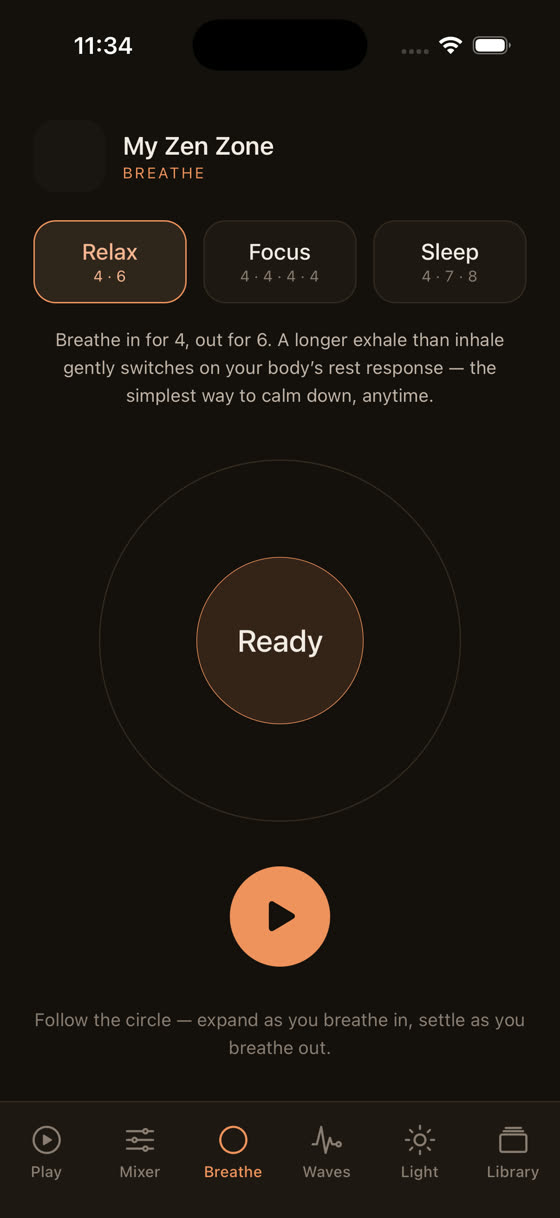
A simple 4-6 pattern, four seconds in, six seconds out, paced against slow instrumental music rather than silence, tends to be easier to sustain than counting alone in the dark. Five minutes of that before you even try to sleep often does more than twenty minutes of lying there willing yourself calm.
What to actually change tonight
Stop using a playlist that has gaps, ads, or songs with lyrics. Lyrics engage the language centres of your brain in a way instrumental music doesn't, which is exactly what you don't want when the goal is to quiet verbal, looping anxious thought. Pick one low, steady sound as a base. Add one slow instrumental layer under it if the base alone still leaves room for your thoughts to wander. Set a sleep timer so you're not relying on a track ending cleanly or an app deciding what plays next once you're already asleep.
If you're on wifi that drops out, or you travel, download the mix for offline use before you need it, not at 11pm when the anxiety's already arrived and a buffering icon is the last thing you want to see. Small, boring logistics like this matter more for anxious sleepers than for anyone else, because the interruption itself becomes the new thing to be anxious about.
When it's daytime anxiety, not bedtime
Everything above assumes you're trying to sleep. Anxiety during the day, at a desk or before something stressful, usually wants the opposite tempo profile: something steady enough to calm but not so slow it makes you drowsy mid-task. That's closer to focus territory than sleep territory, and if that's actually your situation, music for focus and study covers tempo and instrumentation choices that keep you calm without making you sleepy at your desk.
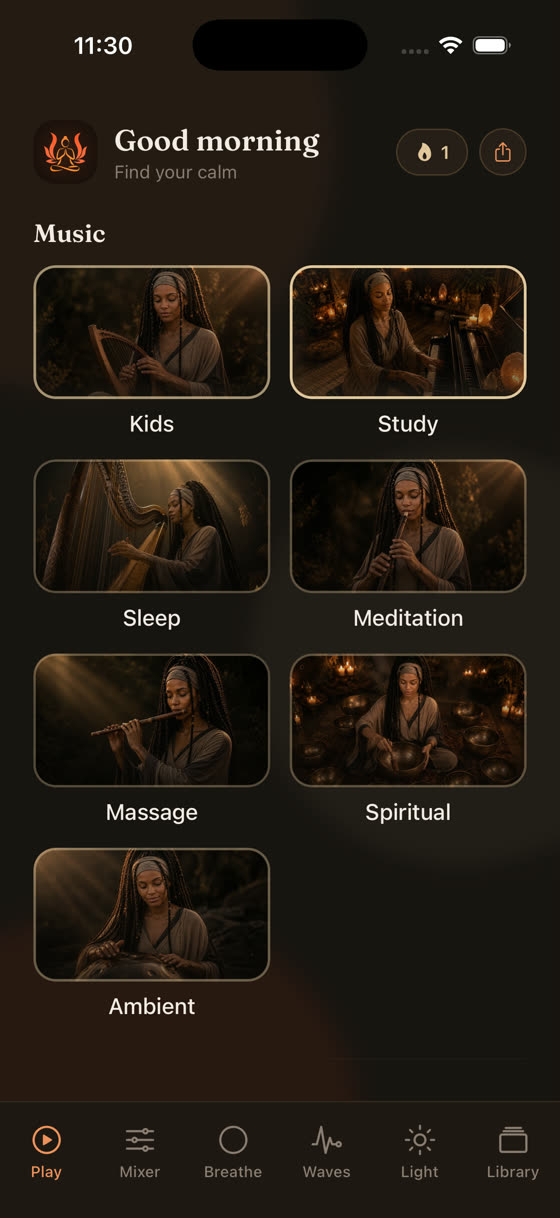
Having anxiety, sleep, focus and calm as separate worlds rather than one blended "relaxation" category matters here, because the sound that helps you fall asleep at 11pm is often the wrong sound for staying alert and calm at 11am. Treating them as the same problem is a quiet mistake a lot of generic apps make.
Building a library you don't get bored of
One real risk with anxiety and sound is habituation. A sound that reliably calms you in week one can start to feel neutral, even slightly irritating, by week six, simply because your brain has filed it as background. New textures help, not because novelty is magic but because a slightly unfamiliar sound re-engages the calming mechanism rather than running on autopilot. That's the practical case for a library that actually grows rather than one you've long since memorised: new tracks every two weeks, across every category, so there's always something you haven't heard a hundred times. If you want to try building your own mix tonight rather than reading about it, the app is the fastest way in, and the whole thing is also usable from a browser at myzenzone.app if you'd rather start on a laptop before bed than fumble with your phone.
Common questions
Is white noise or brown noise better for anxiety?
Brown noise is usually the better starting point. It's heavier in the low frequencies and tends to feel like a steady hum rather than a hiss, which many people find less grating through phone speakers at night. White noise masks more sharply but can feel harsh. Try both for a week each rather than assuming one is objectively superior.
Can music actually lower anxiety or does it just distract from it?
Honestly, it's mostly distraction plus some physiological nudging through tempo and breath pacing. There's reasonable evidence that slow music can slightly lower heart rate and perceived stress in the short term, but it isn't a treatment and won't resolve the underlying cause of anxiety. Think of it as lowering the volume on a noisy room, not fixing the room.
Should I use binaural beats for anxiety and sleep?
They can be worth trying, but the evidence is thin and mixed, and some people find the tones themselves a bit clinical or distracting when played alone. If you try them, layer them quietly under a nature sound or slow instrumental rather than listening to the tone by itself.
How loud should background sound be for sleep anxiety?
Quiet enough that you could hold a conversation over it without raising your voice much. Loud enough to mask small sudden noises like a radiator ticking or a car outside. If you can still hear every individual drop in a rain sound distinctly, it's probably too quiet to do its masking job properly.
Is it bad to rely on sound to fall asleep every night?
Not inherently. Plenty of people sleep better with consistent background sound and that's fine as a long-term habit, much like a fan or heating noise. The thing worth watching is whether you feel unable to sleep at all without it in any environment, which suggests the anxiety itself may need addressing separately.