The short answer
The music that helps you retain the most information is instrumental, slow, and familiar enough that your brain stops actively listening to it. In practice that means something in the 50-70 bpm range, roughly a resting heart rate, with no lyrics and no sudden dynamic shifts. If you've heard the track before, even better. Novelty is the enemy of retention, not the friend most study playlists assume it to be.
That's the whole answer. The rest of this is the mechanism behind it, where the common advice goes wrong, and what to actually press play on tonight.
Why lyrics sabotage your memory, specifically
This isn't a vague "lyrics are distracting" claim. There's a specific collision happening. Reading and writing both route through your brain's language system. So does listening to someone sing words. When you're trying to hold a sentence in working memory while a vocalist is feeding you a different sentence, the two compete for the same narrow channel. You don't notice the competition as fatigue in the moment, you notice it later as information that didn't stick.
This is why a podcast playing quietly in the background does more damage to recall than a thunderstorm at twice the volume. It's not loudness that matters, it's whether the sound is made of words. Instrumental music, even quite dense and layered instrumental music, doesn't fight your language system the same way. A cello line or a soft piano motif gets processed by a different part of your attention, which is exactly why it can sit underneath concentration instead of cutting into it.
The tempo that actually helps, and the myth attached to it
You've probably heard of the "Mozart effect," the idea that listening to Mozart before a task temporarily boosts spatial reasoning. It's worth being straight about this one: the original finding was narrow, hard to reproduce, and got wildly overstated by decades of marketing. Playing Mozart to a baby does not raise its IQ, and playing Mozart to yourself before an exam will not either. If an article cites it as settled science, that's a sign to keep reading critically.
What has more going for it is tempo matching to resting physiology. Music around 60-70 bpm tends to sit close to a calm heart rate, and there's a reasonable case that music in this range doesn't push your arousal up the way faster, syncopated, or heavily accented music does. Higher arousal narrows attention, which is useful for a sprint but bad for the sustained, even focus that memorising a reading list or working through problem sets actually needs. The goal isn't to feel more alert. It's to stay in a steady state long enough for encoding to happen without interruption.
Familiar beats novel, every single time
This is the part most study-music advice skips entirely, and it's probably the most useful lever you have. A new track, however calm, pulls a small amount of attention toward itself simply because your brain is parsing it for the first time: is this loud, is this going to change, is there a vocal coming. A track you've heard a dozen times gets none of that scrutiny. It becomes wallpaper, in the most useful sense of the word.
The practical upshot is that constantly switching playlists to "find the perfect study music" works against you. Pick two or three tracks and reuse them specifically for study sessions. Over a few weeks you'll notice the music itself starts acting as a cue, the way a particular desk or a particular smell can put you back into a working mindset. This is also a reasonable argument for not using whatever is trending that week. Consistency does more for retention than discovery does, at least in this one context.
Match the music to what you're actually doing
"Studying" isn't one activity, and the music that helps changes with it. Reading dense new material for the first time wants the quietest, most minimal backing you can find, something closer to a held drone or sparse piano than a full arrangement, because your working memory is already maxed out just parsing new sentences. Reviewing flashcards or redoing practice problems you've already learned once can tolerate more texture, because recall is a more automatic process than first-pass comprehension. Writing an essay sits somewhere in between: rhythmic enough to keep pace, but still instrumental and still steady.
If you're the sort of person who studies better with a bit of room noise, a cafe hum or rain against a window layered under the music, that's worth building deliberately rather than leaving to a generic ambience track. Being able to set music at one level and a background texture at another, rather than taking whatever single mix a track gives you, is the difference between noise that helps and noise that just happens to be playing.
That's the kind of control worth having open while you study, each layer at its own volume rather than locked together. For more on pairing specific sound types to specific focus states, the deeper breakdown is in music for focus and study.
Building a study session that actually holds up over two hours
Most people's study music habit is a single 40-minute playlist on loop, which quietly changes character every time it restarts, pulling attention back to itself at the seams. A longer, intentional setup does better. Pick one instrumental track or a short set of two or three, loop them specifically, and separate that from any ambient layer you're running underneath.
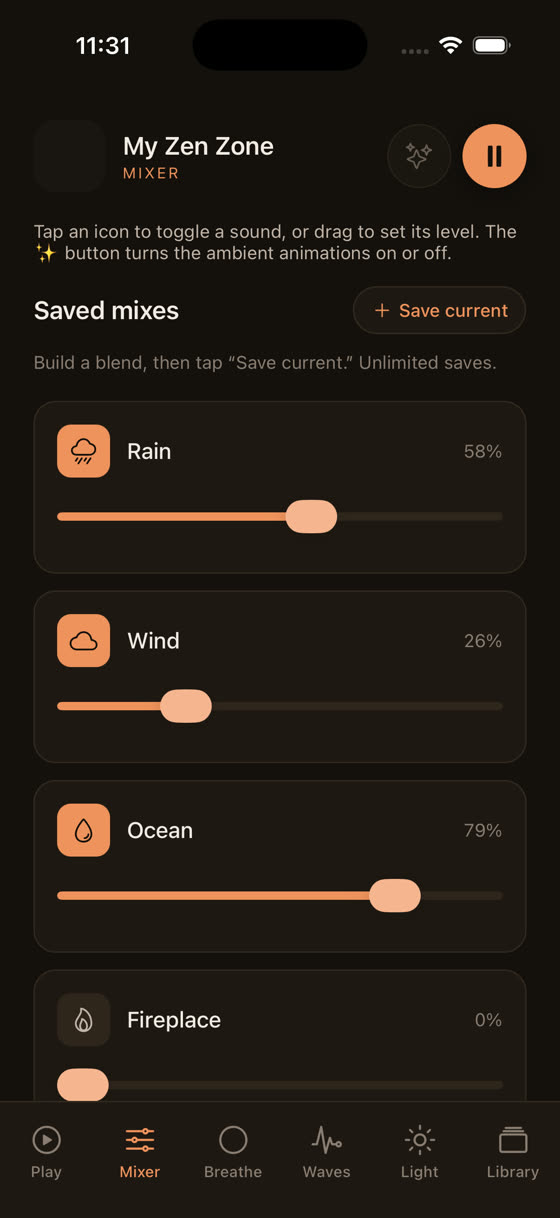
Setting three elements, say a quiet piano piece, a soft rain layer, and nothing else, each at its own level you've chosen rather than a fixed mix, means the balance stays right for your actual room rather than whatever room the track was mastered for. A loud radiator or a noisy street outside needs a different mix than a silent library. This is also where offline downloads matter more than people expect: a session that drops out for buffering twenty minutes in does more damage to retention than almost any choice of track, because that break forces your brain to re-enter the material from scratch.
When music is the wrong tool entirely
It's worth being honest here rather than selling music as a universal fix. Some tasks genuinely do better in silence, particularly anything involving proofreading your own writing, mental arithmetic, or memorising material in a language you're not fluent in. The evidence on background music and complex cognitive load is mixed, and for some people any sound at all, however calm, measurably slows down these specific tasks. If you've tried instrumental music under a hard maths set and it felt like it was fighting you, trust that over any article telling you otherwise, including this one.
The honest middle ground: treat music as useful for sustained, moderately demanding work like reading, writing, and reviewing, and be willing to drop it entirely for short bursts of genuinely hard, unfamiliar problem-solving. Silence is also usually the better call in the last twenty minutes before sleep if you've been studying late, which is a separate problem with its own separate answer over at best music for sleep.
What to actually do tonight
Open your study session with one instrumental track you already know, set at a level low enough that you could describe the room without it, not the track. If you want texture, add a single nature layer underneath at a lower volume than the music itself, not equal to it. Keep that combination for a week rather than changing it daily. If a hard problem set makes the music feel like friction, turn it off rather than pushing through.
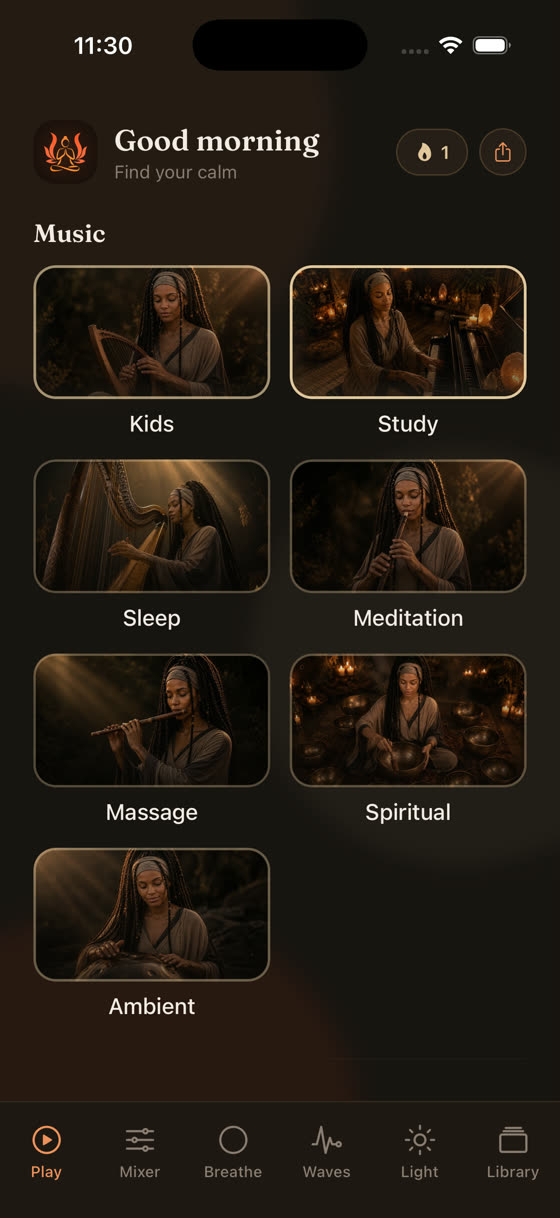
Each category sitting as its own space, rather than one long undifferentiated list, makes it easier to actually stick with a track long enough for it to become familiar instead of hopping between new ones every session. The library adds new instrumental pieces every two weeks, which is more useful for variety across months than for any single evening of cramming. You can see the full range at myzenzone.app, or go straight to /get if you want tonight's session sorted before you sit down.
Common questions
Does classical music really help you remember more than other genres?
Not specifically because it's classical. What helps is being instrumental, steady in tempo, and low in dynamic surprise, qualities a lot of classical piano happens to have. Ambient, modern composed instrumental, or film score style tracks with the same qualities work just as well. Genre is a proxy for these traits, not the mechanism itself.
Is it better to study in total silence than with any music at all?
For some people and some tasks, yes, particularly hard maths or memorising unfamiliar vocabulary. For most reading, writing, and review work, quiet instrumental music tends to help more than it hurts by masking sudden background noise. Test it on yourself for a week rather than assuming either answer is universally true.
Can brainwave or binaural tones help with memory specifically?
The evidence for binaural tones improving memory directly is thin and shouldn't be oversold. Some people find them useful simply as a steady, non-verbal background that's easier to tune out than music with melody. Worth trying as one option among several rather than treating as a guaranteed memory tool.
How long should a study music session last before I need a break?
This is really about attention span, not the music. Most people's sustained focus runs 25-50 minutes before quality drops, regardless of what's playing. Set a timer and take a short break rather than relying on the music to signal fatigue, since familiar background tracks are specifically designed not to interrupt you.
Should I use the same study playlist every day or switch it up?
Keep it mostly the same. Familiarity is what makes music fade into the background rather than competing for attention, and that effect builds over repeated sessions, not a single listen. Rotate in something new every few weeks rather than daily, so the music stays wallpaper rather than becoming a new thing to process.