Meditation will not change your bone structure, your jawline, or the size of your pores. What it can change is the tension you carry in your face and shoulders, the quality of your sleep, and the small habits (teeth grinding, brow furrowing, shallow breathing) that leave visible marks over months and years. The appearance shift people notice is real, but it is downstream of stress and sleep, not some direct cosmetic effect of sitting still.
The mechanism nobody explains properly
Most articles on this topic jump straight to "meditation reduces cortisol" and leave it there. The fuller picture is more useful. Chronic stress keeps the muscles around your eyes, jaw and forehead in a low-grade contraction most of the day, even when you're not aware of it. Over years, repeated muscle tension contributes to the depth of certain lines. It also affects circulation to the skin, and poor sleep (which high cortisol disrupts) slows the overnight repair processes your skin actually depends on. So the chain is: stress and poor sleep affect appearance, and meditation is one of several tools that can lower stress and improve sleep. It's an indirect route, three steps removed, not a direct one.
This matters because it changes what kind of meditation is worth your time if appearance is part of your motivation. A single 10-minute breathing session won't do much. A pattern of slower breathing most evenings, paired with earlier and more consistent sleep, is where the actual change happens.
What the research actually shows
Be honest about this: there is no solid study that scanned faces before and after a meditation programme and found measurable differences in wrinkle depth or skin tone. The research base here is thin, and anyone claiming otherwise is overselling. What does have decent evidence behind it is the connection between regular relaxation practice and lower perceived stress, and separately, the connection between sleep quality and skin appearance (things like under-eye puffiness, dullness, and the subjective sense of looking "tired"). Meditation's appearance effect, where it exists, is riding on the back of those two better-documented pathways. Treat it as plausible and indirect, not proven and direct.
The jaw, the brow, and where tension actually lives
If you want a concrete thing to pay attention to tonight rather than an abstract idea, start with your jaw. Most people carry tension there without noticing, especially during the last hour before bed when the day's unresolved stuff tends to surface. A short breathing pattern helps because it gives the nervous system a clear, physical signal to downshift: exhale longer than you inhale, and the jaw tends to unclench on its own.
The 4-6 pattern (four seconds in, six seconds out) is a simple one to use for this, and it's built into the app as a guided visual rather than something you have to count in your head.
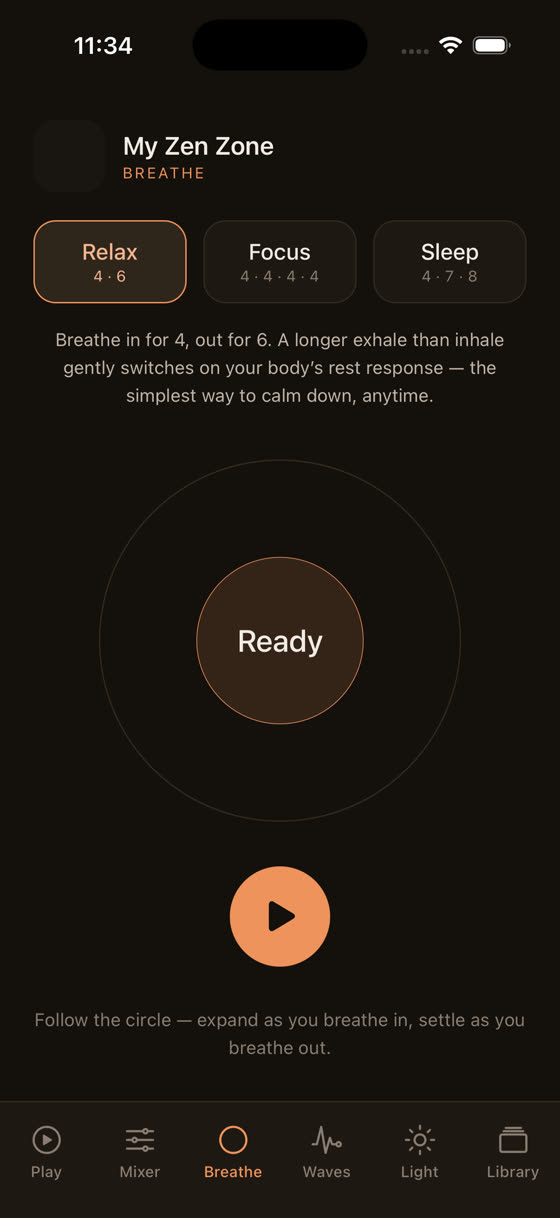
Five minutes of that before sleep does two things: it lowers heart rate toward a resting range, and it gives you something to do with the first wave of racing thoughts instead of lying there with your jaw set and your brow pulled in. Do this most nights for a few weeks and the tension-holding pattern itself starts to loosen, which is a more honest way to describe the "appearance change" than anything mystical.
Sleep is doing most of the actual work
If appearance is the goal, sleep is the bigger lever by a wide margin. A single night of poor sleep shows up fast: duller skin, more visible under-eye shadow, puffier eyelids from fluid retention. This is well documented and doesn't need meditation to explain it. What meditation offers is a reliable way to fall asleep faster and stay asleep, especially for the kind of racing-mind insomnia that has nothing to do with being tired and everything to do with not switching off.
We built the sleep category around exactly this gap: 60-70 bpm tempos, close to a resting heart rate, with no sudden dynamic changes that might pull you back to alertness. Pair that with a nature layer under the music, rain at a low level, maybe a thread of distant thunder, and you get a sound environment that masks the small noises that otherwise nudge you awake.
That mixer, three sounds each on its own slider, is the thing that separates a genuinely customised wind-down from a fixed playlist. Most sleep apps give you one track and a volume knob. Here you can drop the music down, bring the rain up, and find the exact balance that works for your room and your particular brand of restlessness.
Posture and the face you show the world
There's a less-discussed angle here: posture. People who meditate regularly, even briefly, tend to notice their posture during the practice itself, sitting upright, shoulders down, chest open, because that's usually part of the instruction. Carried into daily life, better posture changes how your face sits relative to gravity and how open your chest and shoulders look in a photo. It's a small thing, but it's also one of the more honest physical changes attributable to the practice, because it's behavioural rather than biochemical. You're not changing your skin. You're changing how you hold yourself, which changes how you read to other people.
What most articles on this get wrong
The common mistake is presenting meditation as a skincare intervention with a mechanism of its own, as if calm thoughts somehow reach the dermis. They don't. The honest version is that meditation is one way among several (sleep, hydration, diet, sun protection) to lower the stress load that visibly ages people faster than it should. If you're already doing the other things and sleeping badly, meditation might be the missing piece. If you're sleeping fine and eating badly, it won't fix that. Treat it as part of a system, not a standalone fix, and you'll have more realistic expectations and probably stick with it longer.
Making it a habit that actually sticks
The honest barrier to any of this working is consistency, not technique. People try meditation for three days, don't see a difference, and stop. The practices that hold up over months tend to be the ones built around existing routines: five minutes with your coffee, ten minutes after the kids are in bed, a guided session instead of scrolling before sleep.
If silence has never worked for you, a guided session with a voice talking you through it, layered over music rather than replacing it, tends to hold attention better in the early weeks.
That's a different approach from most guided meditation apps, which stop the music to let the voice speak and then fade it back in. Here the voice sits on its own level alongside the music and any nature sound, so you can bring the voice down once you know the session and let the music carry you the rest of the way, which is closer to how an actual meditation teacher would ease you off their voice over time. The full library adds new sessions and tracks every two weeks, so the habit has somewhere new to go once the early tracks feel familiar, which is usually the point where people quietly give up on other apps.
A realistic bottom line
Expect less jaw tension, a calmer resting face, better sleep and therefore less of the dullness and puffiness that comes with bad sleep, and possibly better posture if you're paying attention during practice. Don't expect fewer wrinkles by next month or a different face in the mirror. The appearance change, where it happens, is a side effect of two things actually working: lower stress and better sleep. Chase those directly and the rest tends to follow on its own schedule, not yours.
Common questions
How long before meditation shows any visible effect on sleep or stress?
Most people notice easier sleep onset within one to two weeks of a consistent evening practice, five to ten minutes most nights. Visible changes like less puffiness or a calmer resting face tend to lag behind that, often three to four weeks in, because they depend on sleep quality compounding over several nights, not one good session.
Does meditation reduce cortisol enough to matter for skin?
It can lower perceived stress and resting heart rate, both linked to cortisol, but there's no solid study tying meditation-driven cortisol drops directly to measurable skin changes. The more reliable path is meditation improving sleep, and sleep quality having a well-documented effect on skin tone and puffiness.
Can facial tension from meditation help with wrinkles?
Lowering chronic jaw and brow tension may reduce the muscle contraction that deepens certain expression lines over years, but this is a slow, cumulative effect, not something you'd notice after a few sessions. Think of it as removing one small contributing factor, not reversing lines that already exist.
Is guided meditation or silent meditation better for this?
Neither is inherently better for appearance-related effects, since both work through the same stress and sleep pathways. Guided sessions tend to help beginners stay consistent, which matters more than the style itself, because the benefit comes from regular practice over months, not from any particular technique.
Will meditation help with dark circles under the eyes?
Only indirectly, by improving sleep quality and duration, since dark circles are mostly driven by thin under-eye skin, genetics, and fatigue-related fluid retention. If poor sleep is the main cause in your case, better sleep from a calming wind-down routine will likely help more than meditation on its own during the day.