Yes, for a small number of people, mindfulness meditation can make things worse before it makes them better. It's not common, and it's not a reason to avoid sitting quietly with your thoughts altogether, but it's also not the universally safe activity it gets marketed as. The honest answer is that meditation is a technique, not a vitamin. Like any technique that changes where your attention goes, it can surface things you weren't ready to look at, and for a specific minority it can trigger anxiety, dissociation, or a spiral of intrusive thoughts rather than calm.
Most articles on this topic either dismiss the question entirely or swing the other way and scare people off meditation for good. Neither is useful. What actually matters is understanding the mechanism, knowing who is more likely to run into trouble, and having a fallback that still gets you to a calmer state without the risk.
The mechanism: why turning inward isn't always relaxing
Mindfulness instructions usually ask you to notice thoughts and sensations without pushing them away. For most people, most of the time, this is genuinely settling. You stop fighting the mind and it quiets down on its own. But if someone sits down already anxious, already ruminating, or carrying unprocessed trauma, removing the usual distractions and filters can do the opposite. Instead of watching a thought pass like a cloud, they get stuck inside it. The silence that's supposed to be restful becomes a magnifying glass.
This is different from the normal restlessness everyone feels in the first few minutes of sitting still. That's just the mind adjusting. What we're talking about is a sustained spike in anxiety, a sense of unreality, or old memories surfacing with enough intensity that the person can't just shrug it off afterwards. It's rare, but it's documented clinically, and it tends to show up more in long, unguided, silent practice than in short, structured sessions.
Who is more likely to have a difficult experience
A few patterns show up repeatedly in clinical reports and in teacher training literature, though it's worth saying plainly that the formal research here is still thin. People with a history of trauma, PTSD, or dissociative episodes are more likely to find that stillness brings material to the surface faster than they can process it. People with certain anxiety disorders can find that body-scanning or breath-focus amplifies physical sensations into panic rather than calm. And people in the early stages of a psychotic episode, or vulnerable to one, are sometimes advised by clinicians to avoid long silent retreats altogether, since prolonged altered states of attention can interact badly with that vulnerability.
None of this means meditation is dangerous for the average person reaching for ten quiet minutes before bed. It means context and dose matter. A 10-minute guided session with a calm voice talking you through it is a very different proposition from four unguided days at a silent retreat.
What most articles on this get wrong
The usual framing treats meditation as one thing. It isn't. There's a real difference between open, unguided awareness practice, where you're left alone with whatever comes up, and guided or structured practice, where a voice or a breathing pattern gives your attention somewhere specific to rest. The second is far gentler and far less likely to go sideways, because your attention has a handrail. It's also the difference between meditation as a spiritual or clinical practice and simply listening to calming music, which was never meant to confront anything. If what you actually want is to slow your heart rate and drift off, you don't need to go looking inward at all.
A gentler way in: structure instead of silence
If you've tried sitting in silence and found it stirs things up rather than settling them, the fix usually isn't to force through it. It's to add structure. A breathing pattern gives the mind a job instead of a void.
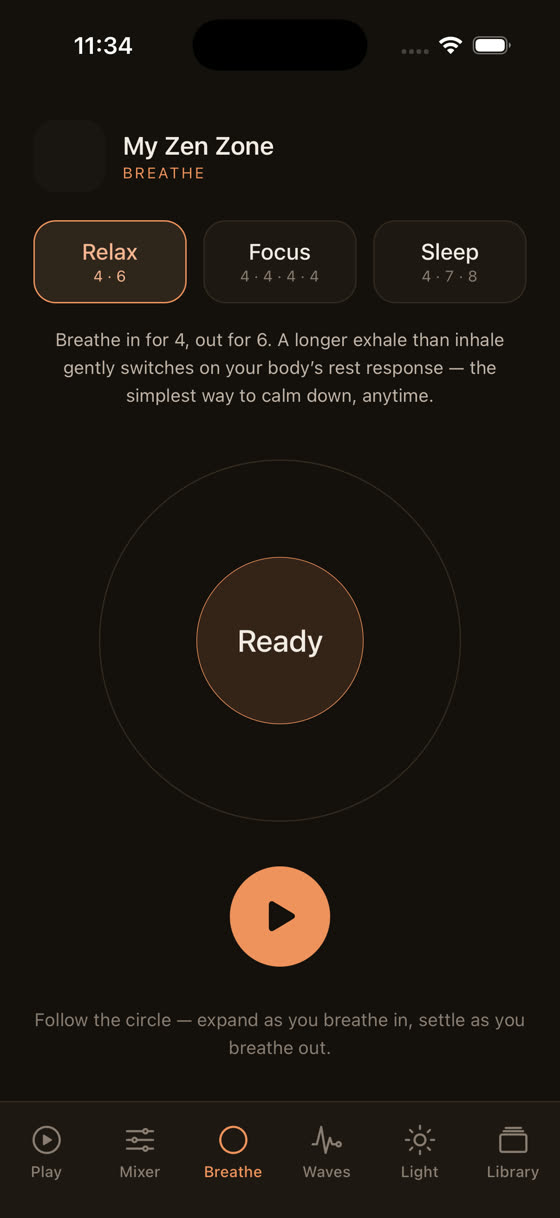
A 4-6 pattern, four counts in and six counts out, slows your exhale relative to your inhale, which nudges the nervous system toward rest without asking you to sit with an empty mind. It's mechanical, almost boring, and that's exactly the point. There's nothing to interpret, nothing to spiral around.
Guided sessions work the same way, but they go further wrong in most apps because the voice stops the music to talk, which breaks the mood you were just building. In My Zen Zone the voice plays as its own layer over the music rather than replacing it, so the sense of calm never actually stops while someone talks you through a body scan or a wind-down.
You can hear exactly how that works: voice, music, and a background nature sound each with its own level, all moving together rather than one interrupting the other.
Where music does the job meditation sometimes can't
This is really the bridge worth making plain. If silent, unguided meditation isn't agreeing with you, ambient and instrumental music can get you to a similar physiological place, slower heart rate, softer breathing, a quieter mind, without asking you to sit alone with whatever surfaces. A track built around 60 to 70 beats per minute, close to a resting heart rate, with no lyrics to parse and no instruction to examine your thoughts, does a lot of the same work as a guided relaxation without any of the risk profile.
The mixer is the clearest version of this. Three nature layers, rain, low wind, a distant stream, each at its own level, let you build a sound environment rather than a meditation instruction. You're not being asked to notice anything. You're just in a quieter room than the one you were in a minute ago. We've written more on the specific tempos and instrumentation that help with sleep in best music for sleep, if that's the problem you're actually trying to solve tonight.
When meditation is still worth it, and how to keep it low-risk
None of this is an argument against meditation. For most people it's one of the more useful tools available for anxiety, focus, and sleep, and there's no need to be afraid of a 10-minute guided session. The practical advice that clinicians and experienced teachers tend to agree on is fairly simple: start short, stay guided rather than fully silent for the first stretch of practice, and notice how you feel in the hour after, not just during. If a session leaves you more agitated, more dissociated, or chasing an old memory you can't put down, that's useful information, not a failure on your part.
If you're using meditation for focus during the day rather than sleep at night, shorter and more structured tends to work better anyway. A five-minute guided reset between tasks beats a thirty-minute sit that leaves you either foggy or wired. There's more on building that kind of short, repeatable focus practice in music for focus and study.
What to do differently tonight
If you've had a rough experience with meditation before, or you're nervous about starting because of what you've read, the simplest fix is to swap silence for structure tonight. Pick a guided session rather than sitting unguided. Keep it under fifteen minutes. Set a sleep timer so it ends on its own rather than leaving you wondering whether to keep going.
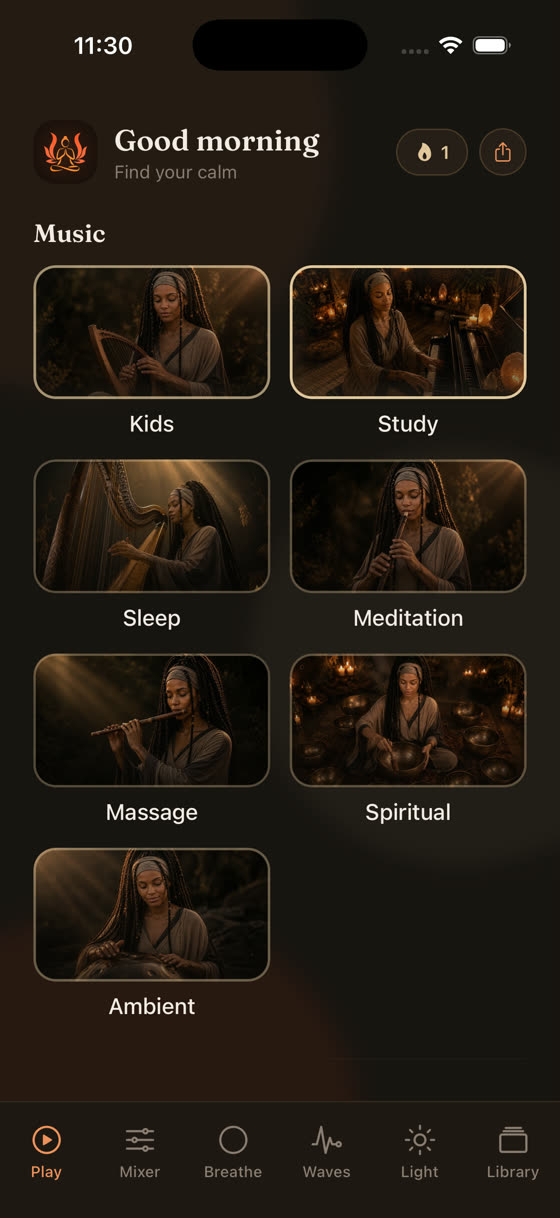
Each category, sleep, focus, meditation, calm, is its own space rather than one long undifferentiated playlist, so you can choose something built for where you actually are tonight rather than hunting through a generic list. The library adds new tracks every two weeks, all composed and recorded by one musician rather than licensed in bulk, which means the pacing and instrumentation stay consistent across the whole catalogue instead of swinging wildly from track to track.
If none of this feels right and you'd rather just test it, the app is free to try on iPhone and Android, and a subscription opens the full library in a browser too at myzenzone.app.
The honest bottom line
Mindfulness meditation is safe and genuinely useful for the overwhelming majority of people who try it. For a smaller group, particularly those with trauma histories, certain anxiety conditions, or vulnerability to dissociation, unguided and prolonged practice can surface more than it resolves. The research on how common this is remains limited, so treat strong claims in either direction with some scepticism. The practical answer is to start guided, start short, pay attention to how you feel afterwards, and have a quieter, music-only option ready for the nights when silence isn't what you need.
Common questions
Is it normal to feel more anxious after meditating?
A little restlessness in the first few minutes is normal and usually settles. Feeling noticeably more anxious for hours afterward, or unable to stop a spiral of thoughts, isn't typical and is worth noticing. If it happens more than once, switch to shorter guided sessions rather than longer unguided sitting, and mention it to a doctor if it persists.
Can meditation cause panic attacks?
In rare cases, yes, particularly for people with existing panic disorder or anxiety conditions, where close attention to breath or body sensations can tip into a panic response rather than calm. This is uncommon but documented. If breath-focused practice has triggered panic before, a slower guided session with music underneath tends to be gentler than silent, unguided practice.
Should I stop meditating if it brings up difficult memories?
Not necessarily stop entirely, but pause and shorten the practice, and consider talking to a therapist if the memories are trauma-related. Unguided silence can surface more than you're ready to process alone. A guided session with a calm voice and music underneath gives your attention somewhere to rest instead of leaving you alone with what's come up.
What's a safer alternative to silent meditation for sleep?
Guided relaxation with music underneath, or simply ambient instrumental tracks around 60-70 bpm, achieve a similar wind-down effect without asking you to sit with an empty mind. Pairing a breathing pattern like 4-6 with a soft nature layer is a gentler entry point than long unguided silence, especially for a first attempt.
How long should a beginner meditate for?
Five to ten minutes is plenty to start, and there's no benefit in forcing longer sessions before you know how your mind responds. Guided sessions in that range, with a sleep timer so you're not left wondering when to stop, are a lower-risk way to build the habit than diving into a thirty-minute unguided sit.