The short answer
No, rain sounds on their own don't cause nightmares in a healthy sleeper. If bad dreams started after you began playing rain at night, something riding along with the rain is almost always the real cause: a thunderclap sample, a bad loop, the volume, or your own history with storms. The rain itself, the steady part, is one of the least dream-triggering sounds there is.
What's actually happening when a sound gets into a dream
During REM sleep your ears don't switch off. Decades of basic sleep research have shown that external sounds played while someone is dreaming can get woven into the dream, usually reworked into something that fits the story already in progress. But not every sound gets incorporated equally. Steady, structureless noise, which is exactly what rain is acoustically, rarely becomes a plot point because it has no onset, no meaning, and nothing for a dreaming brain to react to. A doorbell, a voice, a siren, a sudden bang, these get pulled into dreams far more readily, because they arrive as an event, not a texture.
This is the piece most articles about rain and sleep skip. Rain is technically closer to pink or brown noise than to music or speech. It has a broad, flat-ish frequency spread and no repeating melody for your brain to track, which is exactly why it's good at masking a slamming door or a snoring partner. The same quality that makes it a good masking sound is what makes it a poor nightmare ingredient.
The real culprits: thunder, loops, and horror-coding
Three things commonly get blamed on "rain" that aren't actually the rain:
- Thunder. A loud, unpredictable transient triggers a startle response and can pull you out of deep sleep or straight out of REM. You wake with a jolt, a dream fragment still attached, and understandably blame the app rather than the one sudden loud sample buried in it.
- Bad loop points. A lot of free rain tracks are 30 to 90 seconds long and loop with an audible click or seam. That repeated tiny interruption, every minute, all night, reads to a sleeping brain as something worth half-noticing, which fragments sleep even if you never consciously hear it.
- Horror-coding. Film and television have spent a century using rain on a window as shorthand for dread. If you've absorbed that association, or if a storm coincided with a genuinely bad night in your own life, the fear is learned and emotional. It isn't in the waveform, it's in your memory of what rain usually means.
Volume and mix matter more than people think
Most rain apps hand you one track at a fixed, often too-loud level. If a sound sits too hot relative to the room, part of your attention keeps orienting toward it instead of letting go. Rain for sleep should sit roughly where it would if you were in bed with a window cracked during a light shower: present, but well under anything you'd call background music. It should be something you stop noticing within a few minutes, not something that competes with your own breathing.
This is really a mixing problem, not a rain problem, and it's worth watching how different a layered, properly balanced version sounds against one looping mp3.
Instead of one flat rain file at whatever volume the file happens to be exported at, you can bring rain in low, add something steadier underneath like distant surf or a soft drone, and nudge each layer independently until nothing in the mix is loud enough to pull you back toward the surface.
What most advice about rain sounds gets wrong
You'll find confident claims in both directions: that rain sounds are proven to improve sleep, or that they disturb REM and cause nightmares. Both overstate thin evidence. Most of the research on ambient noise and sleep comes from short lab studies on masking disruptive hospital or traffic noise, not from long-term nightmare tracking tied to rain specifically. The nightmare literature that does exist is mostly about trauma, medication, and stress, not audio texture played at bedtime. It's fair to say rain sounds are low-risk for most people and genuinely helpful for masking, while also being honest that nobody has proven they prevent bad dreams either.
Who should actually be more careful with rain
A few groups have a real reason to be selective:
- Anyone with a sensitivity to dripping or water sounds specifically, which is a known trigger for some people with misophonia.
- Anyone whose nightmares are trauma-linked to storms or flooding. That's a genuine trigger worth avoiding, and it has nothing to do with rain being inherently dangerous as a sound.
- Young children prone to night terrors, where an unannounced thunder sample is simply a bad idea regardless of sleep stage.
- Anyone already dealing with fragmented, anxious sleep, where a poorly engineered loop adds one more small disruption to a night that doesn't need any more.
Building a rain you can actually trust
The fix for almost all of this is control, not avoidance. Rather than one rain mp3 looping at a fixed volume with thunder baked in, it helps to build your own version: rain at a low level, one other steady texture underneath it, thunder left out entirely if you don't want it.
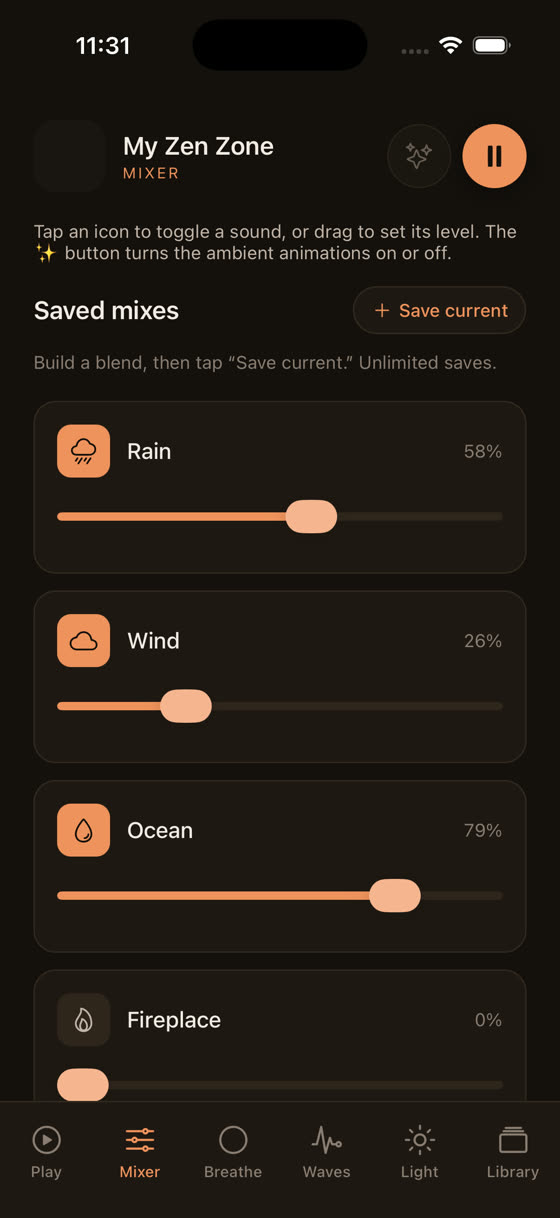
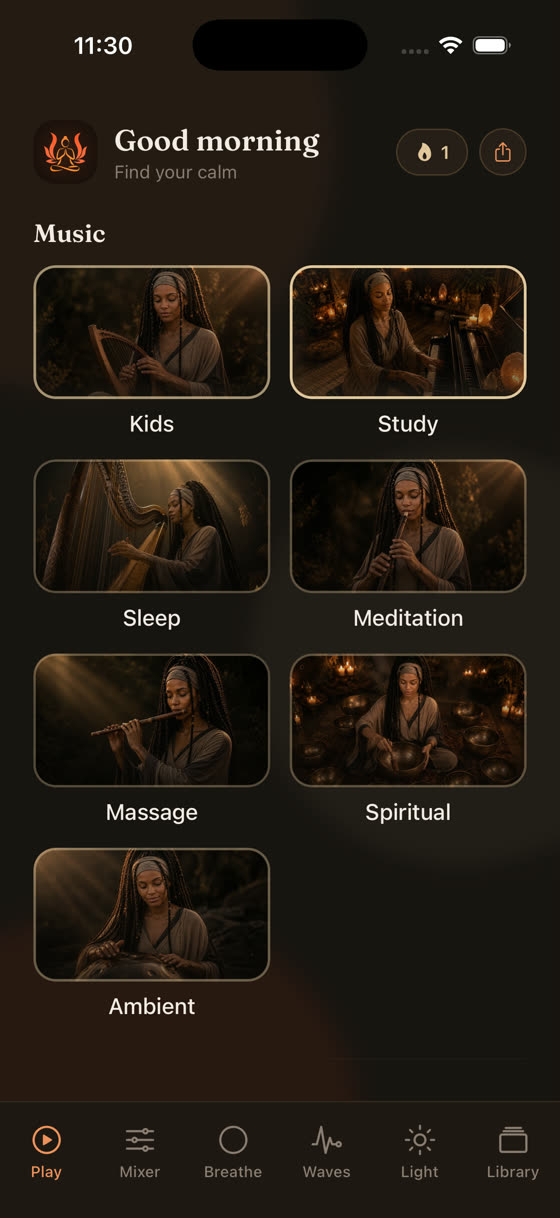
That's the whole idea behind the mixer, three or more nature sounds, each on its own slider, so the rain never has to come bundled with a startle you didn't choose. Pick your sounds from a library organised by mood rather than hunting through one long undifferentiated list.
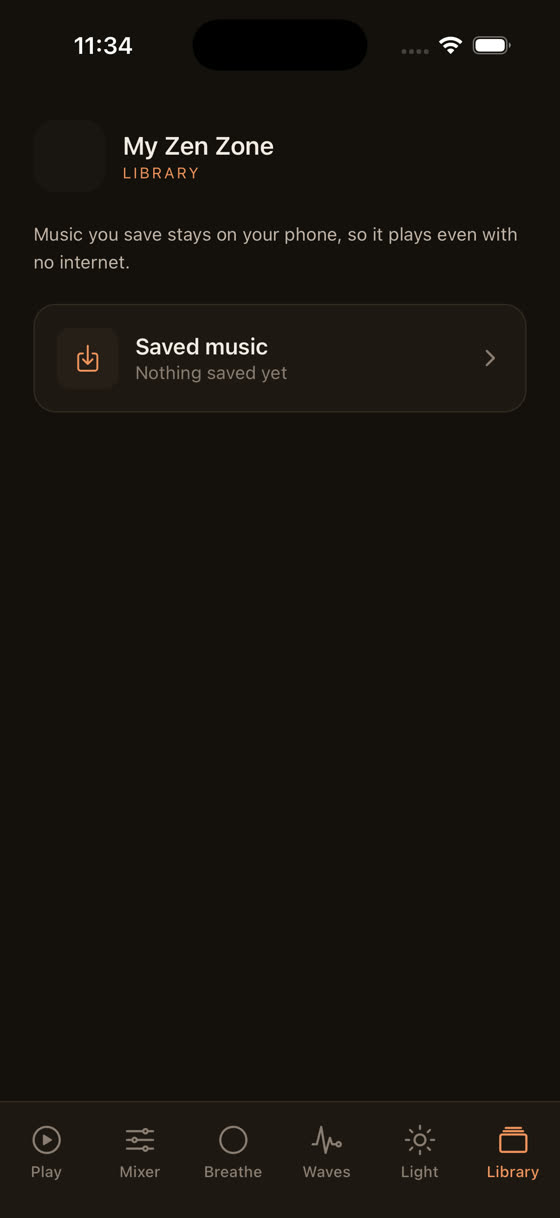
Everything downloads for offline playback too, so there's no mid-stream buffering glitch at 3am to misread as a sudden noise in your sleep.
What to try tonight
Turn the volume down further than feels necessary, to the point where you can still faintly hear your own breathing over it. Leave thunder off. Set a sleep timer so the sound fades out instead of looping at the same level all night, since a long, slow fade is gentler on a lightly sleeping brain than an abrupt stop or an unbroken loop until morning. Dim the screen with a proper wind-down light rather than staring at full brightness while you choose a track.
If storms carry a specific personal association for you, there's no reason to force the issue. Swap it for a different texture for a few weeks and see whether the dreams change; that tells you more than any article can. For a broader rundown of what else works well at night, this guide to music for sleep covers tempo and instrumentation in more depth.
If rain still isn't working for you
Not every brain settles to rain. Some people find the randomness of individual droplets too busy to ignore, in which case a flatter, more uniform brown noise or a slow instrumental piece around 50 to 60 bpm can work better precisely because there's less going on moment to moment. The library adds new tracks every two weeks, so if rain has never quite suited you there's usually something else worth trying, and a subscription opens the same catalogue in a browser if you'd rather build a wind-down playlist at a desk before bed. You can see the full range at myzenzone.app or start with the app itself.
Rain isn't the nightmare machine. The badly engineered loop, the thunder clap you didn't ask for, or an old personal association usually is. Build the version you control and most of that risk disappears.
Common questions
Is it bad to sleep with rain sounds every single night?
No evidence suggests nightly use is harmful. Your brain habituates to it the same way it habituates to any consistent background sound. The main downside is practical: if you can only fall asleep with it, a dead phone battery or unfamiliar hotel room without it can briefly make sleep harder. Rotating sounds occasionally avoids building that dependency.
Why do I specifically dream about storms when I play rain sounds?
This is priming, not a property of rain itself. Hearing rain as you fall asleep puts storms somewhere in your recent thoughts, and the sleeping brain often reaches for whatever's readily available when building a dream. It's the same reason a worry from your day often resurfaces that night, regardless of what's playing in the background.
Do white noise machines cause nightmares in babies or toddlers?
Steady white or pink noise at a low, controlled volume is generally considered low-risk and is widely used for infant sleep. The concern is usually volume and sudden loud samples like thunder, not the noise type itself. If using one, keep it quiet, placed away from the crib, and avoid machines with unexpected loud effects layered in.
What's a better option than rain if I get anxious at night?
Try a flat, uniform brown noise or a slow drone with no event-like sounds at all, nothing that could read as a trigger or a startle. Pairing it with a paced breathing exercise before you try to sleep, rather than relying on sound alone, often does more for anxiety-driven wakefulness than switching ambient tracks.
Can I remove just the thunder and keep the rain?
Yes, if you're using a mixer-style app rather than a single fixed audio file. Layered nature sounds let you bring rain in at whatever level you want while leaving thunder, wind, or any other element out entirely, instead of being stuck with whichever sounds the original recording happened to include.