Yes, you can listen to music while sleeping, and for a lot of people it genuinely helps them fall asleep faster and wake up less during the night. The catch is that most of the advice out there stops at "yes" and never explains what actually makes the difference between music that helps and music that quietly wrecks your sleep without you noticing.
The short answer, and the longer one underneath it
There's no research showing music played at night is harmful to a typical sleeper. The evidence that it helps is also thinner than most wellness articles let on, mostly small studies, self-reported sleep quality, a handful of hospital trials with patients who were already struggling. So the honest position is: it's safe for almost everyone, it helps a meaningful chunk of people, and the way you do it matters more than whether you do it at all.
What changes the outcome isn't the genre label on the playlist. It's tempo, loudness, whether the track has lyrics, whether it loops predictably, and whether it stops itself or keeps playing at 3am when your brain has already done its work and doesn't need the input anymore.
Why music helps some people fall asleep at all
Falling asleep is partly a nervous system problem. Your heart rate, breathing rate and muscle tension need to drop before the brain will let go. Music at roughly 60-70 bpm, close to a resting heart rate, gives your body something steady to synchronise with, the same way a metronome pulls a drummer back on time. This is sometimes called entrainment, and while the strict neuroscience version of that claim is debated, the practical effect is familiar to almost anyone who's tried it: a slow, repetitive, low-contrast piece of music gives your attention somewhere boring and safe to sit, instead of circling the day's unfinished conversations.
There's also a simple conditioning effect. If you play the same kind of music most nights, your brain starts treating it as a cue, the same way a bedtime routine or a specific pillow becomes a cue. That's one reason a library that never repeats itself can actually work against you if you chase novelty every night. Consistency of mood matters more than variety here.
The volume and headphone question nobody answers properly
Sleeping with earbuds in is the part most articles skip entirely. Pressure against the ear canal all night can be uncomfortable, and for some people it increases the risk of ear wax build-up or minor irritation. A speaker across the room, even a phone propped on a nightstand, avoids that problem completely and is the better default for most people. If you do prefer headphones, look at flat sleep-specific ones or a headband style, and keep the volume low enough that you could still hear a smoke alarm or a child in another room. That second point is the one safety consideration worth taking seriously: music should never be loud enough to mask something you'd need to wake up for.
As a rule of thumb, background music for sleep should sit around the level of a quiet conversation in the next room, not loud enough to fill the space, just enough to give your attention something to rest on.
What most sleep advice gets wrong about the music itself
Nearly every "music for sleep" list recommends things like piano, rain sounds, or lo-fi beats without saying why some tracks in those categories work and others don't. The real variable is dynamic range. A piece that swells from quiet to loud, or drops in a key change, or introduces a new instrument eight bars in, is doing exactly what good music is supposed to do when you're awake and listening on purpose. At 2am, that same swell can nudge you out of deep sleep without you consciously noticing why you stirred.
Lyrics are the other thing people underestimate. Even soft vocals ask your brain to process language, and language processing is an alerting activity, not a calming one. That's why most purpose-built sleep music is instrumental, and why a spoken-word podcast, however soothing the narrator's voice, works differently than music does. If you want to compare what's actually built for this versus what just gets recommended out of habit, this rundown of what to look for in sleep music goes into the specifics.
Tempo, instrumentation, and what to actually pick tonight
If you're choosing blind, go slower than feels interesting. 55-70 bpm, sustained tones rather than plucked or percussive ones, minimal melody movement. Pads, soft strings, and sustained synth tones tend to work better than piano or guitar, because a struck note has an attack and decay that your ear tracks, where a sustained pad just sits there like a held breath. Nature layers, rain, low wind, distant water, can work well underneath this kind of music because they're broadband and unpredictable in a way your brain filters out quickly, unlike a sudden car horn or a door closing nearby.
This is where having more than one sound source matters. A single rain recording looping every ninety seconds becomes noticeable the third time around, and noticeable is the opposite of what you want at midnight.
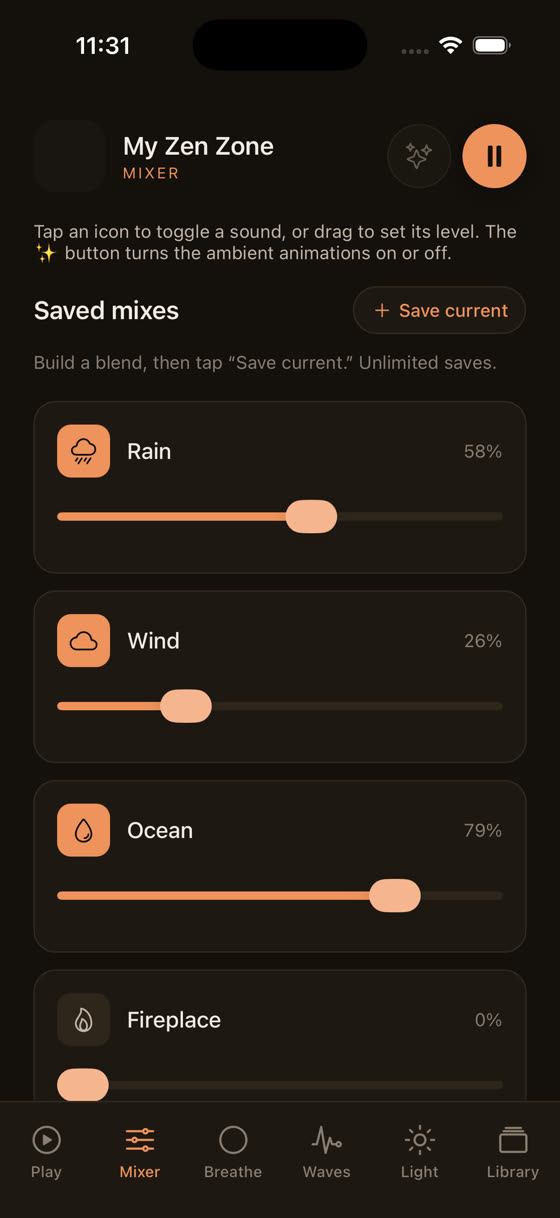
Layering three different sounds, each sitting at its own level, a slow music bed underneath, rain at a lower level, wind lower still, avoids the obvious loop point that a single track eventually reveals. Most sleep apps hand you one fixed file. Being able to build your own blend and save it is a genuinely different experience from pressing play on someone else's preset.
The timer problem: why playing all night can work against you
Here's the part that gets missed most often. Once you're asleep, continued sound exposure can still cause micro-arousals, brief shifts toward lighter sleep that you won't remember in the morning but that add up across the night. This matters most in the dynamic, unpredictable music people often default to, but it can happen even with calm music if it never stops.
The fix isn't to avoid music, it's to time it. A 30 to 60 minute sleep timer that fades out once you're reliably under covers most people's actual need, which is help falling asleep, not accompaniment for eight hours.
Watching the fade happen in real time, music dropping out gradually rather than cutting off, shows why an abrupt stop can be as jarring as an abrupt swell. A timer that tapers the volume down over several minutes, rather than stopping flat, is a small detail that makes a real difference to whether you notice it ending at all.
Building a wind-down routine instead of just pressing play
Music works better as the last ten minutes of a routine than as a standalone fix. Dim the lights, put the phone down somewhere you won't check it, and let a slow track or a breathing pattern be the signal that the day is actually over.
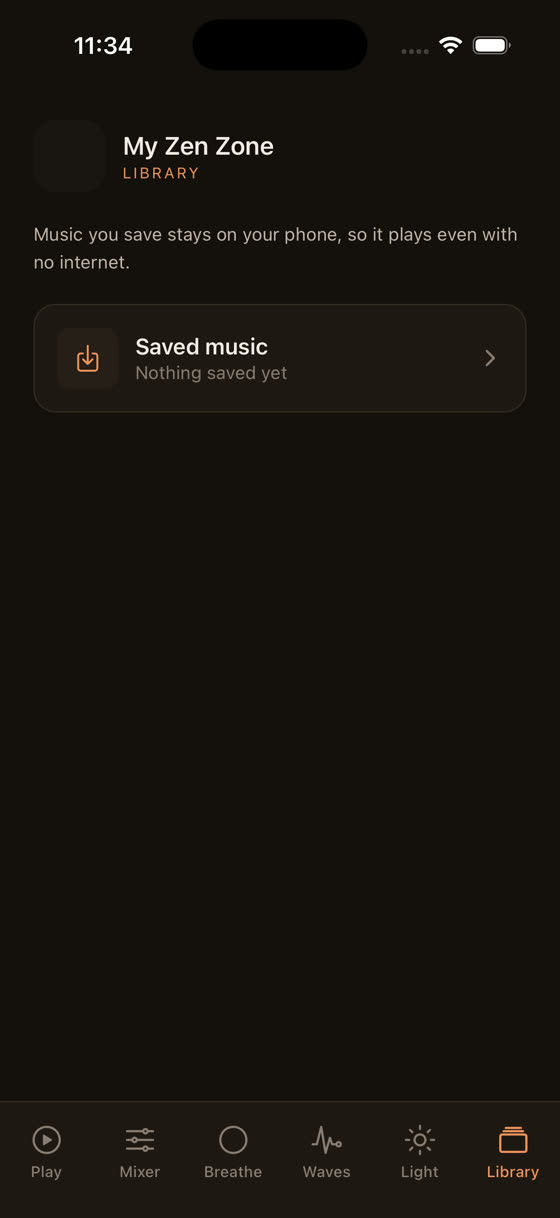
A dimming light screen paired with slow music gives your eyes and ears the same message at once, which tends to work faster than either cue alone. If you fall asleep easily but wake at 3am with your mind racing, a short breathing pattern before you reach for your phone is often more useful than more music.
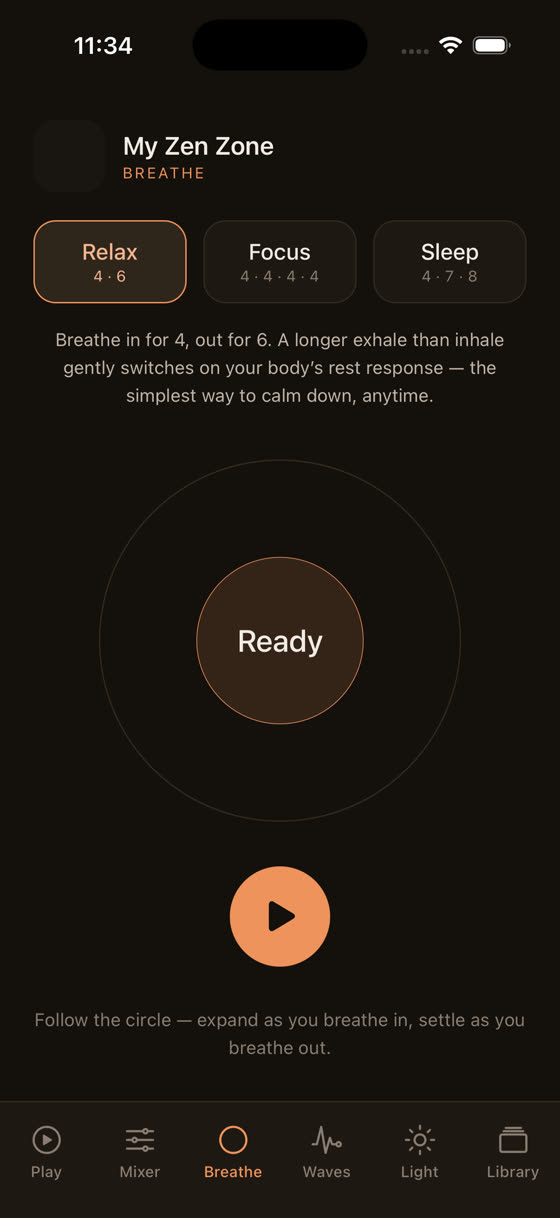
A 4-6 breathing pattern, four seconds in, six seconds out, slows your exhale relative to your inhale, which is one of the more reliable ways to nudge your nervous system down a gear without needing any sound at all.
What to actually do tonight
Pick something slow and instrumental, keep it well under conversational volume, set it on a timer rather than letting it run indefinitely, and use a speaker instead of earbuds if you can. If you want to build a layered soundscape rather than rely on one fixed track, that's worth setting up once and reusing, the same blend becoming its own cue over time the way a scent or a specific blanket does.
The library inside My Zen Zone is built around exactly this, composed specifically for sleep rather than repurposed from a general playlist, with a mixer, a fading sleep timer, and new tracks added every fortnight so the same calm mood doesn't mean the same six songs for a year. You can try the whole thing through the app on iPhone, Android, or in a browser.
Common questions
Does it matter if I use a speaker or headphones overnight?
A speaker across the room is usually the safer, more comfortable default, since it avoids pressure on the ear canal and lets you still hear important sounds like an alarm. If you prefer headphones, flat sleep-specific ones or a headband style are gentler than standard earbuds for lying on all night.
Will music stop me reaching deep sleep?
Calm, low-dynamic music at a low volume is unlikely to meaningfully disrupt deep sleep for most people. The risk rises with loud, unpredictable, or lyric-heavy tracks that can cause brief arousals you won't remember. A timed fade-out rather than all-night playback reduces this further.
Is white noise better than music for sleep?
Neither is objectively better; it depends on what your brain settles with. White or pink noise masks sudden sounds more evenly, while slow music gives attention something structured to follow. Many people do best layering a low nature or noise bed under quiet music rather than choosing one over the other.
How long should sleep music play before it turns off?
Thirty to sixty minutes covers most people's actual need, which is help falling asleep rather than accompaniment for the whole night. A gradual fade rather than an abrupt stop avoids the jolt of silence suddenly replacing sound partway through your sleep cycle.
Can I use the same sleep music every night, or should I rotate it?
Repetition is actually useful here. Hearing the same calm track or blend regularly turns it into a cue your brain associates with sleep, similar to a bedtime routine. Rotating constantly for novelty can work against that conditioning, so it's fine to have two or three go-to tracks rather than a different one nightly.