Yes, Netflix has dabbled in sleep content: ambient nature footage, a slow-TV style show or two, and the occasional sleep-themed series. No, none of it is designed the way a sleep sound actually needs to be designed. If you've ever fallen asleep to a Netflix video and woken up at 2am to a loud trailer or the next episode autoplaying, you already know the problem.
What's actually on Netflix under "sleep"
Search "sleep sounds" in Netflix and you'll get a handful of things: ambient nature videos with titles like rain or fireplace loops, some slow-TV documentaries following trains or coastlines, and occasionally a reality show that uses sleep as its hook rather than its purpose. None of this was built by someone thinking about tempo, loop points, or what happens to your nervous system at minute forty. It was built to keep a streaming platform's numbers up, which is a different job entirely.
That's not a criticism of Netflix. It's just not what the platform is for. A video platform is optimised to keep you watching. A sleep tool is optimised to help you stop watching and switch off. Those two goals pull in opposite directions, and it shows the moment you actually try to use one for the other.
The autoplay problem nobody mentions
Autoplay is the biggest issue, and it's rarely called out directly. Netflix's whole interface is built around continuing: the next episode starts in five, ten, fifteen seconds unless you intervene. If you're trying to fall asleep, intervening is exactly the thing you can't reliably do. You drift off during the calm bit, and twenty minutes later a new episode starts with a different volume, a different tone, sometimes a jump-scare cold open. Your brain registers the change even half-asleep. Sleep architecture doesn't love being interrupted by a sudden shift in sound.
A proper sleep sound avoids this by design. It loops cleanly, it doesn't change register without warning, and it has an actual stopping point you control, not one dictated by what's next in a content queue.
Screens are the other half of the problem
Even if the sound itself were perfect, you're still looking at a screen to get to it. Phone or TV, that's light exposure right before sleep, and it's also a prompt to keep scrolling. Most people don't open Netflix, start a rain video, and immediately close their eyes. They watch the thumbnail grid for a minute, maybe check what's new, maybe get pulled into something else entirely. The platform is built to make that happen. It's not a flaw, it's the business model.
This is really the core issue with using any video app for sleep: the interface works against the outcome you want. A dedicated app can make the opposite choice, because keeping you awake and scrolling isn't the goal.
What a sleep sound needs that video doesn't give you
Good sleep audio tends to sit around 60 to 80 beats per minute, close to a resting heart rate, with no sudden dynamic swings. Nature sound alone works for some people, but most do better layering two or three things at low, specific levels: rain at one volume, a low drone underneath it, maybe a distant thunder layer barely audible. That kind of balance is almost impossible on a video platform, where you get one fixed audio track and a volume slider, nothing more.
That's the difference a proper mixer makes: three sounds, three independent levels, built live rather than baked into a single file. You can push rain up and thunder down until it sits exactly where your ear wants it, then leave it running for hours without anything changing shape or cutting out. We wrote more about the mechanics of this in our piece on what actually makes music work for sleep, if you want the detail on tempo and layering.
Guided sleep content: Netflix's version versus a built-for-purpose one
Some streaming platforms have tried narrated sleep content, a voice talking you down over soft music. The trouble is the voice usually replaces the music rather than sitting alongside it, so you get a loud narrator over quiet background, or the track stops entirely once the talking starts and restarts awkwardly when it ends.
In My Zen Zone, a guided session is built the opposite way: voice, music, and nature sound are three separate layers you balance yourself, and the voice never stops the music, it plays over it. Turn the voice down to almost nothing and let the music carry you the rest of the way, or bring it up if you want more guidance. That one structural choice is the thing most sleep and meditation apps, Netflix included, don't offer.
What the app does instead of a fixed video loop
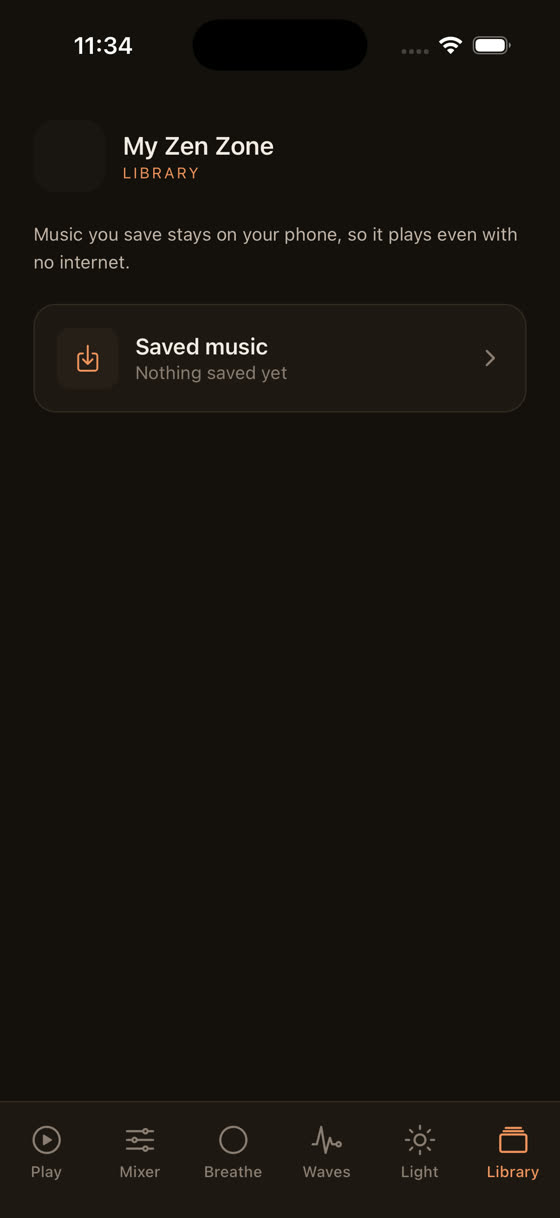
Winding down isn't only about sound. The light screen is built for the twenty minutes before you actually try to sleep, a dim, warm visual with no content to scroll through and nothing new to check. Pair it with the breathing screen set to a slower pattern and you've got a routine that has a natural end point, rather than an infinite scroll that ends only when you fall asleep mid-decision about what to watch next.
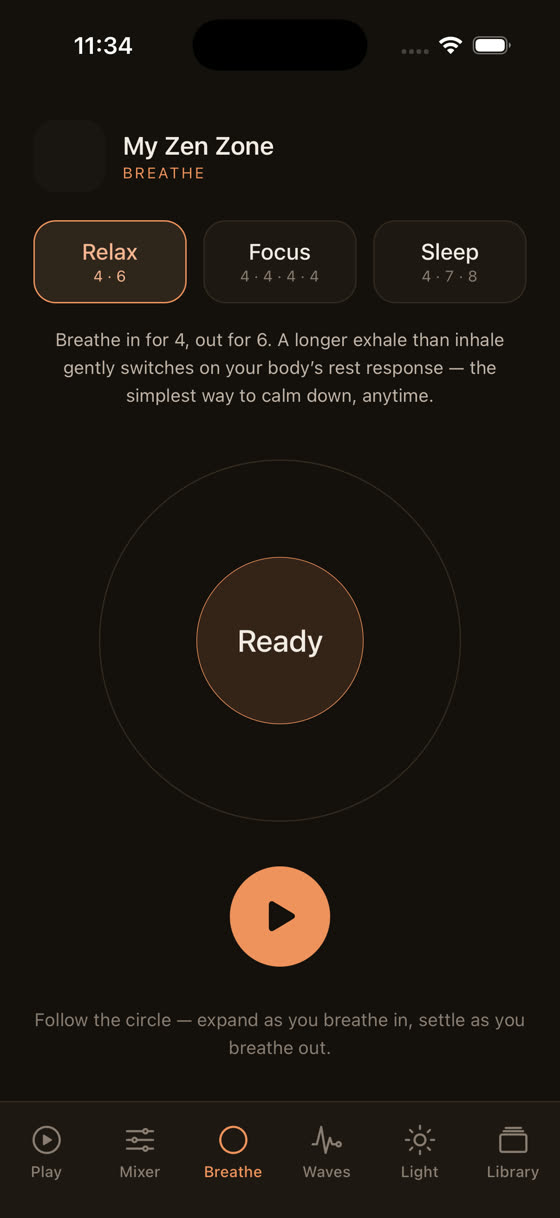
A 4-6 pattern, in for four, out for six, is a simple enough shape to follow with your eyes half closed, and it doesn't require you to keep choosing anything. That's the real advantage over a streaming app: once you've picked the sound, there's nothing left to decide. No next episode, no "you might also like," no thumbnail grid pulling at your attention right when you're trying to let go of it.
The sleep timer actually matters here
One practical thing Netflix gets partly right and partly wrong: most of its content does eventually end, or you can set a sleep timer on some devices. But it's inconsistent across shows, series, and devices, and it still leaves you with a screen to wake up to if you stir. A dedicated sleep timer built around audio, not video, fades out cleanly rather than cutting off or looping into something new. Set it for forty-five minutes, or for the whole night, and the track just stops being there when it's done, nothing left playing, nothing left lit up on the nightstand.
Try this tonight instead
If you've been using Netflix as background noise, the fix isn't complicated. Put the phone or laptop down before you want to actually fall asleep, not while you're still deciding. Pick one sound world rather than a video, something with no visual pull at all. Set a timer so you're not relying on willpower to turn it off. And if you want guidance rather than just ambient sound, look for something where the voice sits over the music instead of replacing it, so the transition out of the guided bit into plain sound is seamless rather than jarring.
None of this requires giving up screens entirely during the day, and it won't fix every sleep issue, evidence on sound and sleep quality is genuinely mixed and we won't pretend otherwise. But swapping an autoplay queue for something built specifically to loop, layer, and then stop is a small change that tends to make the last twenty minutes before sleep noticeably calmer. You can see the whole library, sleep, focus, meditation, and calm, laid out as its own space rather than buried in a show menu, over at myzenzone.app, or just grab the app and try the mixer tonight.
Common questions
Is there a dedicated sleep sounds category on Netflix?
Netflix occasionally surfaces ambient or slow-TV style videos when you search "sleep," but there's no proper dedicated sleep category maintained the way music streaming or sleep apps do it. What shows up changes region to region and isn't guaranteed to stay consistent week to week.
Why do I wake up when Netflix autoplays the next thing?
Autoplay changes the audio and often the volume abruptly, and your brain registers that shift even during light sleep stages. A looping audio track with no content changeover avoids this entirely, which is one reason dedicated sleep sound tools tend to work better overnight than a video queue.
Can I just mute the video and keep the sound from something else?
You can, but you lose control over volume balance, looping, and timing, and you still have a screen on next to you emitting light. A phone running a sleep app face-down with a timer set does the same job with far less light and far more control over how the sound actually behaves.
Does white noise or rain sound actually help you sleep?
Evidence is genuinely mixed and fairly limited, so it's worth being honest that nothing here is guaranteed. What tends to help is masking sudden household noises and giving your mind one steady, unchanging thing to settle into rather than silence that gets interrupted by creaks, traffic, or a partner moving.
What's a better alternative to using Netflix for sleep?
Something built specifically for audio: a mixer where you can layer two or three sounds at your own levels, a sleep timer that fades out rather than cuts off, and no autoplay queue pulling you toward another episode. That structural difference matters more than which specific sound you choose.