The short answer
Yes. A chemical relaxer changes the internal structure of your hair, and that change is permanent for the hair it touches. It is not a coating that washes out like a conditioner. The question worth asking isn't whether it causes any damage, because it does by design, but how much, and whether it's manageable. Done carefully, with proper spacing and aftercare, most people keep healthy, workable hair. Done carelessly, with overlapping applications or product left on too long, you can end up with breakage that no serum fixes.
What's actually happening to your hair chemically
Hair gets its strength and shape from keratin, a protein held together partly by disulfide bonds — sulfur-to-sulfur links between protein chains that act like tiny rivets. A relaxer, whether it's lye-based (sodium hydroxide) or a gentler no-lye formula (guanidine hydroxide or similar), breaks a portion of those bonds and lets the hair re-form into a straighter shape before the bonds reset. That's the whole trick. It's also the whole risk. Break too many bonds, or re-form them under too much heat or too much time, and the hair shaft loses the structural rivets that gave it elasticity in the first place. The result is hair that feels thinner, snaps more easily, and doesn't bounce back the way it used to.
The mistakes that turn "some damage" into "a lot of damage"
Almost every bad outcome traces back to one of a handful of avoidable errors. Overlapping — applying fresh relaxer to hair that's already been chemically straightened — is the biggest one, because it reprocesses hair that has no more bonds left to spare. Leaving the product on longer than directed because "it doesn't feel like it's working yet" is another. So is combining chemical relaxing with heat styling or colour treatments in the same week, which stacks three stressors onto hair that can really only absorb one at a time. And relaxing too frequently, every four weeks instead of the usual eight to ten, doesn't give new growth time to be the only part treated.
Who should think twice, or at least space things out
If your hair is already coloured, bleached, or fine in texture, it has less structural reserve to lose. Previously relaxed ends are the most vulnerable part of the head, since they've already been through the process once. Some people also notice scalp sensitivity or irritation with certain formulas, which is worth mentioning to whoever is applying it, professional or not. None of this means relaxing is unsafe as a rule. It means it rewards patience and a strand test more than it rewards doing it yourself in a hurry on a Sunday night.
What actually helps afterward
Protein and moisture balance matters more after a relaxer than before one. A protein treatment every few weeks helps rebuild some of the structural support that was lost, and a genuinely moisturising conditioner keeps the hair shaft flexible so it bends instead of snapping. Trimming damaged ends sooner rather than later stops small breakage from working its way up the strand. None of this undoes the chemistry, but it manages the consequences, which is really all anyone can do once the bonds are broken.
The stress side nobody talks about
Here's the part most hair-care articles skip. Chronic stress affects the body's hormone levels, including cortisol, and there's a reasonable but still developing body of evidence linking prolonged stress to disrupted hair growth cycles. This is separate from chemical damage, but it compounds it. Hair that's already weakened by a relaxer has less margin to cope with a stressed, poorly slept body on top of it. We're not going to overstate this into a guarantee that calming down will fix your hair, because that's not honest. But if you're already managing one stressor on your hair, it's worth not adding a second one through poor sleep.
Building a calmer routine around treatment day
Sitting through a twenty- to thirty-minute processing time is, for a lot of people, genuinely tense. Low light, a timer ticking somewhere in your head, the smell. Some low, layered background sound makes that wait pass differently than silence or a phone scroll.
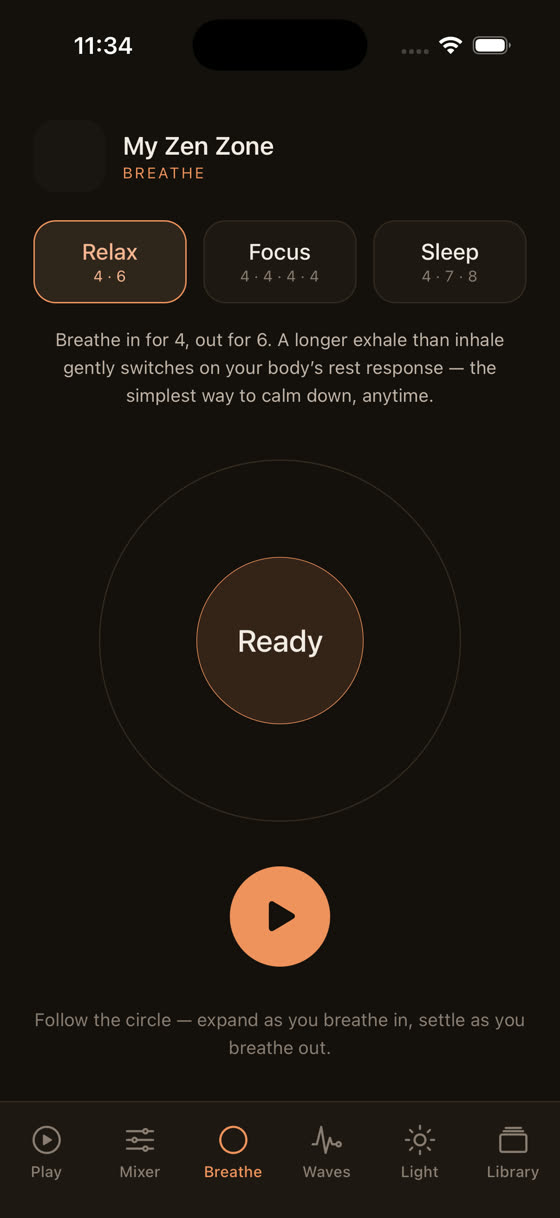
If nerves are the issue before you even sit down, a few minutes of paced breathing beforehand can take the edge off.
And on the evening of a treatment, when your scalp might feel tight or your hair feels unfamiliar, a slow wind-down before bed does more for next-day recovery than another product applied too soon.

None of this is a hair-care feature. My Zen Zone is a music app, built around hundreds of original tracks for sleep, focus, meditation and calm, with new ones added every two weeks. But the mixer that lets you layer soft rain under a slow piano track at your own levels, and the breathing screen with a 4-6 pattern, exist for exactly these small, ordinary moments of tension — a chemical process, a bad night's sleep, a day that's run too fast. If sleep is the part you're struggling with most, this piece on music for sleep goes into tempo and what actually helps a body wind down.
The honest bottom line
Relaxing your hair does damage it, by design, through breaking and reforming the bonds that give each strand its shape. The amount of damage is mostly in your control: spacing, technique, and what you do in the weeks after matter more than the chemistry itself. Stress and sleep are a smaller, slower-acting factor, worth managing for their own sake rather than as a hair-repair strategy. If you want a steadier routine around the parts of your day that aren't about hair at all, the app is free to start with, and the library only grows from here.
Common questions
How often can I safely relax my hair?
Most dermatologists and stylists suggest every eight to ten weeks, touching up only new growth rather than reapplying over already-relaxed hair. Going shorter than six weeks regularly increases the risk of overlap damage. If your hair feels fragile before that window is up, it's worth waiting longer rather than sticking to a fixed schedule.
Can hair relaxer cause hair loss?
Relaxers themselves act on the hair shaft, not the follicle, so they don't directly cause hair loss. But scalp irritation, burns from leaving product on too long, or excessive breakage near the scalp can look like thinning. If you notice bald patches or scalp pain, that's worth a dermatologist visit rather than a hair-care fix.
Is there a way to relax hair without any damage?
Not entirely, since the process works by breaking disulfide bonds, which is itself a form of structural change. What you can control is the degree: a careful strand test, correct timing, no overlapping, and proper aftercare keep the damage minimal and manageable rather than severe.
What's the real difference between lye and no-lye relaxers?
Lye relaxers (sodium hydroxide) work faster and are generally considered more effective at straightening but can be harsher on the scalp. No-lye versions (often guanidine hydroxide) are gentler on skin but can leave more mineral buildup on the hair, which needs a clarifying wash to remove.
Does being stressed actually make my hair worse?
There's reasonable evidence that chronic stress can disrupt hair growth cycles through raised cortisol, though the research is still developing and results vary person to person. It's not a guaranteed cause-and-effect, but poor sleep and prolonged stress are worth addressing for general health regardless of what they do to hair.