The short answer
Yes, Sleep Cycle costs money if you want the full app. The basic alarm clock and a simplified sleep graph are free to use indefinitely. Everything past that — long-term sleep trends, snore and sleep talking recordings, the full sound library, and detailed phase analysis — sits behind a subscription called Sleep Cycle Premium. It's billed monthly or, at a lower effective rate, annually, and there's usually a free trial window before the card gets charged. So the app itself doesn't cost anything to download, but the version most people actually want does.
What the free tier really gives you
The free layer is functional but thin. You get a smart alarm that tries to wake you during a lighter sleep phase within a window you set, plus a basic sleep quality percentage each morning. That's genuinely useful on its own — it's the core mechanic of the app. What you don't get for free is much context: no long-run charts showing whether your sleep is improving over a month, no breakdown of what disrupted you at 3am, and a much smaller set of ambient sounds to fall asleep to. It's enough to try the concept. It's not enough to actually understand your sleep.
What you're paying for behind the paywall
Premium unlocks the stuff that makes tracking meaningful rather than novel. That includes detailed sleep phase graphs, heart rate trend data if your phone or wearable supports it, snore detection with playback, and a bigger set of wind-down and sleep sounds. It also usually includes some sleep-aid content — short audio pieces meant to help you fall asleep faster. This is where the pricing model of most sleep apps quietly reveals itself: the tracking is the hook, the content library is the retention tool. You stay subscribed less because of the data and more because of the sounds and routines you've built around it.
How these apps actually decide when to wake you
It's worth understanding the mechanism, because it explains both the value and the limits. Sleep Cycle (and apps like it) use your phone's microphone or accelerometer to detect movement and breathing sound through the night. More movement gets interpreted as lighter sleep, less as deeper sleep. The alarm then fires at the lightest point it detects inside the window you've chosen, on the theory that waking from light sleep feels less jarring than being pulled out of deep sleep. It's a reasonable idea. It is not the same as clinical sleep staging, which uses brainwave activity, eye movement and muscle tone recorded in a lab. Phone-based tracking is an estimate, not a diagnosis, and most of these apps say so in their small print even while their marketing leans harder on the numbers than the uncertainty behind them.
What most reviews of this get wrong
A lot of articles answer "does it cost money" and stop there, as if the free-versus-paid split were the whole story. The bigger question is what you're actually buying: a wake-up timing gimmick, or a full pre-sleep routine. If you subscribe expecting clinical-grade insight into your sleep architecture, you'll be disappointed by the confidence intervals nobody shows you. If you subscribe for a smarter alarm and a few better sounds to fall asleep to, you'll probably feel it was worth the price. The honest framing is that you're paying for a nicer bedtime experience with a loosely-informed wake-up feature attached, not a sleep lab in your pocket.
Where the money is actually better spent
If your main problem is falling asleep in the first place rather than being woken gently, a tracking subscription is solving the wrong end of the night. That's a different job, and it's the one we've built My Zen Zone around: original music and layered sound designed specifically for the twenty minutes before you're out, not for measuring what happens after.
The mixer is the part that changes things most. Instead of one fixed sleep sound, you set your own blend — rain at one level, a low drone underneath it, a slow piano line barely audible on top — and save it as your own mix for the next night.
That's worth watching moved live, because it shows something most sleep apps don't offer at all: three separate levels, adjusted while the sound is playing, rather than a single volume slider on a preset track. We've written more on why layering matters over picking one "best" track in best music for sleep, if you want the fuller argument.
What a subscription buys inside My Zen Zone
The comparison to Sleep Cycle is useful because the shape of the deal is similar — free access to a slice of the app, a subscription for the rest — but what sits behind the paywall is different. Here it's the whole library: every sleep, focus, calm and meditation track, all composed and recorded by one musician rather than licensed from a stock catalogue, with new music added every fortnight. A subscription also opens the same library in a browser, so the routine you built on your phone works at a desk too, which matters if focus music during the day and sleep music at night both matter to you. More on that daytime half of it is in music for focus and study.
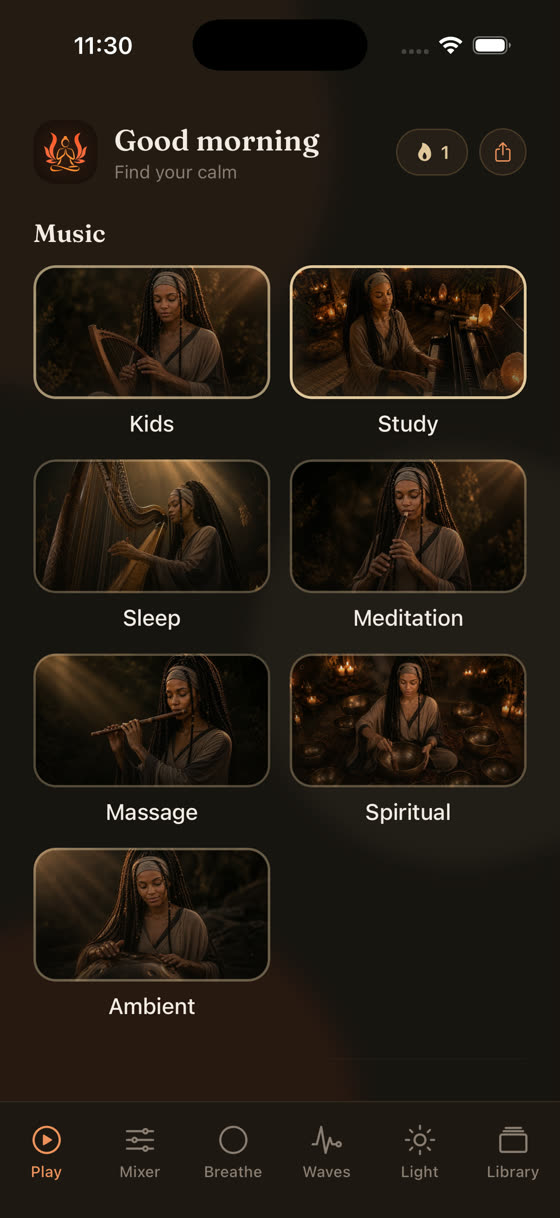
Each category — Sleep, Focus, Meditation, Calm, Music — behaves like its own small world rather than one long shuffled playlist, which is the free-tier problem most sleep apps have: a handful of loops standing in for genuine variety.
Guided sessions without stopping the music
One more thing worth naming, because it's rare: guided meditation and wind-down sessions here play over the music instead of replacing it. Most apps pause the ambient track the moment a voice starts. Here, Voice, Music and nature sound are three separate layers you balance yourself.
Watch how the voice sits under the music rather than on top of silence — that's the difference between a guided session feeling like an instruction and feeling like part of the room you're already in.
What to actually do tonight
If you're deciding whether to pay for a tracking app, try this first: skip the data for a week and just fix the twenty minutes before lights-out. Dim the room, drop the phone brightness, and put on something slow and repetitive rather than anything with a clear melody to follow — 60 to 70 bpm is roughly a resting heart rate, and music near that tempo doesn't ask your attention to do anything.
The light screen is built for exactly that last stretch, a slow dim you can watch or ignore while a track runs down. Pair it with the sleep timer so nothing's still playing at 3am pulling you back toward wakefulness, and you'll likely learn more about what actually helps you sleep than a week of phase graphs would tell you. If after that you still want the tracking, the two ideas aren't mutually exclusive — plenty of people run a tracking alarm and a separate wind-down routine side by side. You can see the full library and start a trial at /get.
Common questions
Can I use Sleep Cycle without paying anything?
Yes, the free version gives you the smart alarm and a basic daily sleep score. It works indefinitely without a subscription. You just won't get long-term trend data, snore recordings, or most of the sound library, which all sit behind Sleep Cycle Premium.
Is Sleep Cycle's tracking actually accurate?
It's an estimate based on movement and sound picked up by your phone, not the brainwave data used in clinical sleep studies. It can spot rough patterns like restless nights, but treat the phase graphs as a general guide rather than a precise reading of your actual sleep stages.
Why do sleep apps charge a subscription instead of a one-off fee?
Ongoing costs like server storage for your nightly recordings, new sound content, and continued development are recurring, so most sleep and wellness apps bill that way rather than as a single purchase. It also lets them offer a free trial before you commit.
Is it worth paying for a sleep app if I mainly struggle to fall asleep, not wake up?
Probably not the tracking part. If falling asleep is the harder problem, a wind-down routine with ambient sound, a dimming light, and a timer addresses that more directly than a smarter alarm does, which is really solving the waking-up end of the night.
Does My Zen Zone track sleep like Sleep Cycle does?
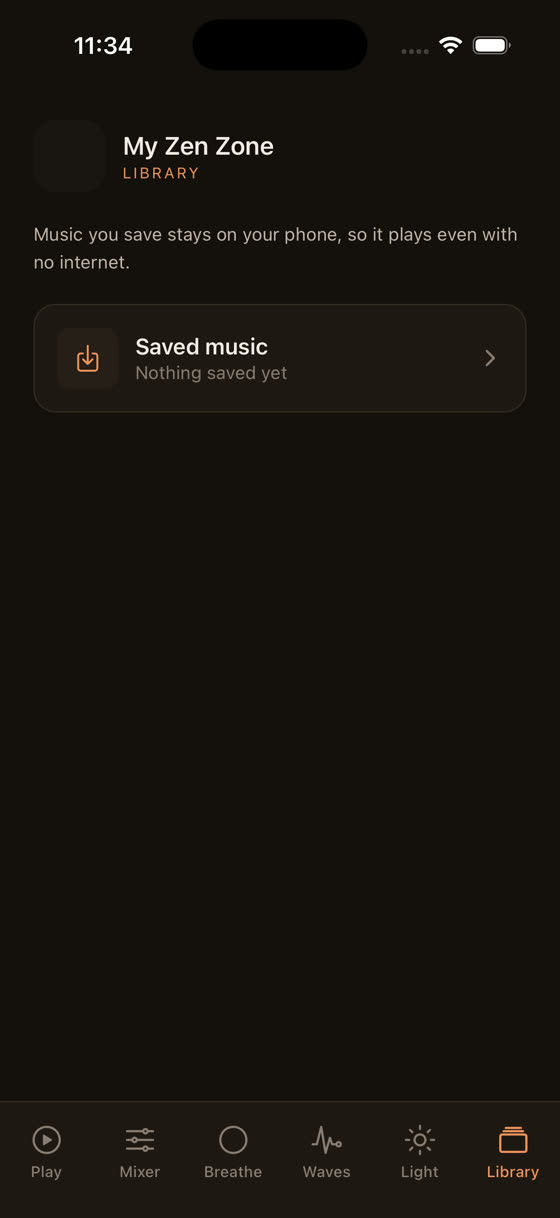
No, it doesn't monitor movement or measure sleep phases. It focuses on the part before sleep and after waking: original music, layered nature sounds, guided sessions, and a light screen, with a mixer you control yourself rather than a fixed algorithm deciding for you.