The direct answer
You cannot fully fall asleep with your eyes open in the way you fall asleep at night, in bed, eyes shut, brain cycling through stages. True sleep involves a drop in muscle tone and a shift in eye movement that makes open eyes physically uncomfortable, and eventually they close on their own, even if you're fighting it. What you can do is get very close: a light, half-aware, deeply restful state, sometimes called microsleep or an eyes-open drowse, where your body gets a real dose of rest without anyone watching you knowing you're not fully present. That's usually the actual goal behind this question. Not literal sleep with eyes open, but a way to rest during a long meeting, a lecture, a flight in a middle seat, or a night shift break, without visibly nodding off.
Why your eyelids close when you actually fall asleep
Blinking and eyelid closure aren't just habit. Your eyes need a tear film to stay clear and comfortable, and the closing reflex protects the cornea from drying out. As you drift toward sleep, the muscle that holds your eyelids open, the levator palpebrae, loses tone along with the rest of your skeletal muscles. This is the same general process, called atonia, that goes deeper in REM sleep and stops you from acting out dreams. Eyelids are simply the first and most visible casualty. Try to keep your eyes open past the point your body wants to sleep and you'll notice the lids getting heavy, blinking slowing down, then long blinks that turn into brief closures you don't remember. That's not you failing at a trick. That's the reflex doing exactly what it's built to do.
The condition where eyes stay open during sleep
There is a real medical phenomenon called nocturnal lagophthalmos, where a person's eyelids don't fully close during sleep, usually because of nerve damage, prior eyelid surgery, thyroid eye disease, or simply loose eyelid skin with age. People with this condition do sleep, genuinely, with their eyes partly open, but it's involuntary and often causes dry eyes, irritation, and disrupted sleep quality rather than being a useful skill. It's worth mentioning only to be clear: nobody is training themselves into this state on purpose, and if your eyes are open during actual sleep without your intending it, that's worth mentioning to a doctor rather than treating as a party trick.
Microsleep: the closest thing to what people are actually asking for
Microsleep is a brief, involuntary lapse into sleep lasting a few seconds, most famously studied in the context of drowsy driving, where someone's eyes stay open, sometimes even facing forward, while their brain briefly goes offline. It's dangerous behind a wheel because you lose seconds of awareness with no memory of it. But the underlying mechanism explains why some people can look awake, eyes open, gaze fixed, while genuinely dozing for a moment. This isn't a technique to cultivate. It's what sleep deprivation does to a brain that's overdue for rest. If you're finding yourself in involuntary microsleeps during the day, the more useful question isn't how to do it better, it's why you're that short on sleep in the first place, and what's actually helping you sleep at night might need a look.
The state you can genuinely train: eyes-open rest
Where this gets useful is a different target altogether: staying still, breathing slowly, and dropping into a deeply relaxed but not unconscious state, with your eyes open the whole time. Zen practitioners have done this for centuries in zazen, sitting with eyes open, gaze soft and lowered, unfocused on any one point. Yoga nidra teachers sometimes cue students to keep a very slight opening rather than fully closing the eyes, specifically to stay this side of sleep rather than drift past it. The technique isn't about tricking your eyes into thinking they're closed. It's about defocusing your gaze, softening the muscles around your eyes and jaw, and slowing your breath enough that your nervous system gets the same signal it would from lying down with eyes shut, without the visible cue of closed lids. Done well, this can lower heart rate and quiet a racing mind almost as effectively as a short nap, without anyone across the table noticing anything beyond a slightly distant look.
A practice you can actually use, tonight or mid-afternoon
Start with breath. A slow exhale-longer-than-inhale pattern, something like four seconds in and six seconds out, brings your heart rate down within a couple of minutes. This is the exact ratio behind the My Zen Zone breathing screen, which paces you visually so you don't have to count in your head.
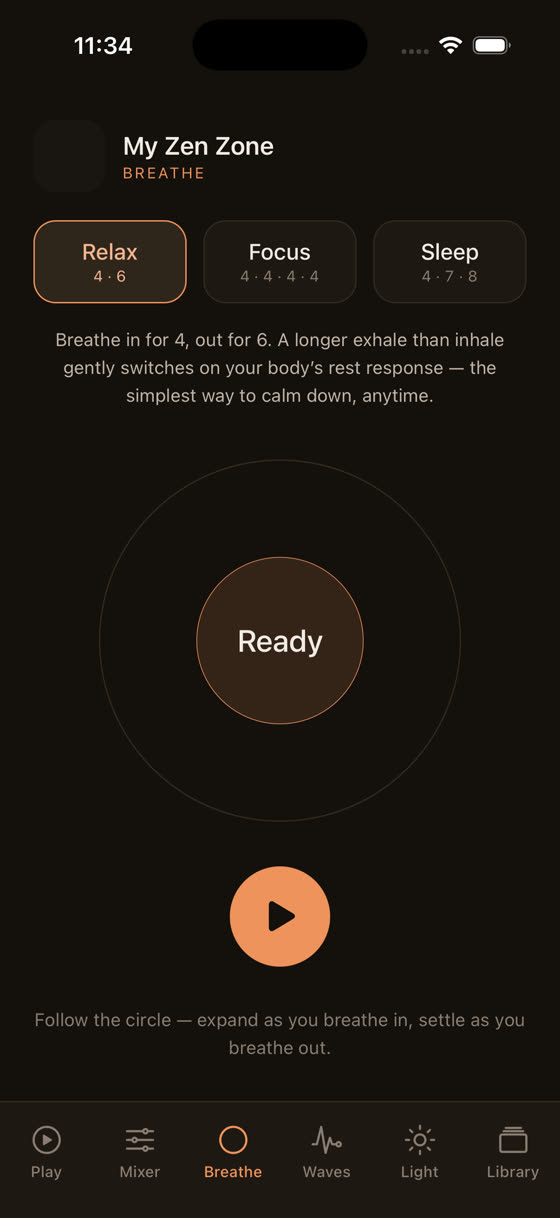
Pair that breath with a soft, unfocused gaze, eyes open but not looking at anything specific, and a low, steady sound underneath so your ears have something to settle into rather than tracking every noise in the room. This is where the sound mixer earns its place: three layers, each at its own level, rain a little louder than wind, a low drone underneath both, so your attention has one gentle place to rest instead of scanning for threats.
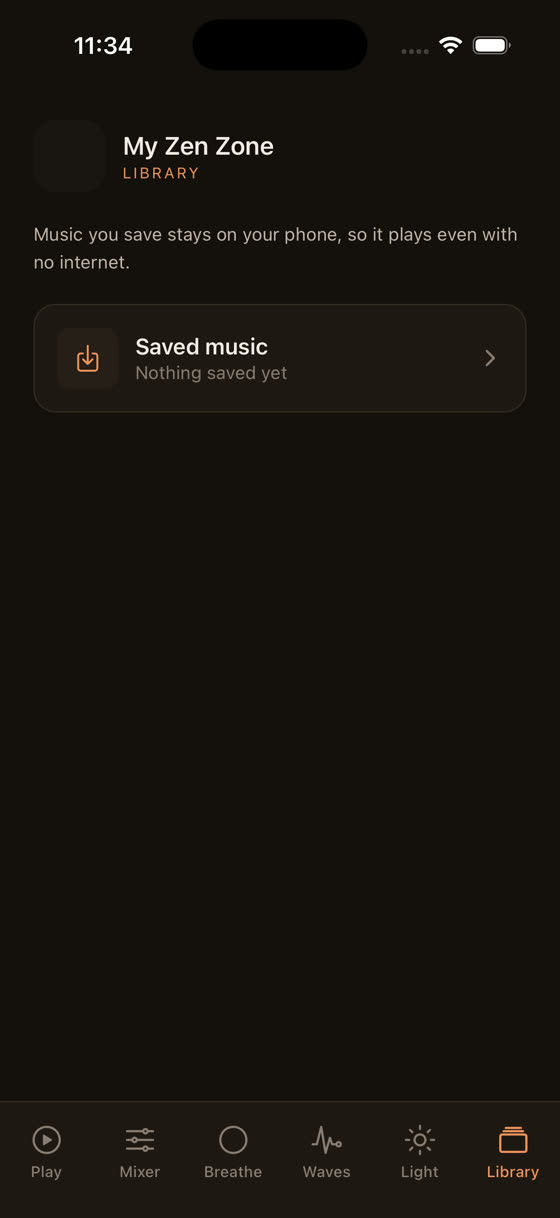
If you're doing this in the evening, right before actual sleep, the light screen is built for exactly that transition, a slow dim you can watch with heavy eyes as the room and your gaze both settle down together.
Where this genuinely doesn't work, and can be risky
None of this substitutes for sleep, and it shouldn't be used to push through genuine exhaustion in situations where alertness matters. Driving, operating machinery, or any task where a lapse in attention has consequences is not the place to experiment with eyes-open rest states. Microsleep happening on its own, uninvited, is a warning sign your body is overdue for real sleep, not a skill to lean on. If you're chronically finding yourself needing to look awake while quietly resting, day after day, that's worth treating as a symptom of insufficient sleep at night rather than solving with a technique for the daytime. The eyes-open rest practice above is best used occasionally, for genuine short recovery, not as a workaround for a sleep debt that keeps growing.
Where this fits with actual sleep and focus
The honest use case for eyes-open rest is narrow: a few minutes of real recovery when closing your eyes isn't an option, not a replacement for the sleep you get at night with your eyes properly shut. For that, the same slow-breath, low-drone principle applies at a much longer timescale, which is most of what good sleep music is trying to do, giving your nervous system a steady, low, predictable sound to settle into instead of silence that your brain fills with its own noise. During the day, if you need alertness rather than rest, a different tempo and different sound design entirely, closer to what's covered in focus music for studying, does a better job than trying to hover in a half-asleep state at your desk. The app adds a new batch of tracks roughly every two weeks, composed and recorded by one musician working across sleep, focus, meditation and calm, so the tools for both ends of this, alert focus and genuine eyes-shut sleep, keep expanding rather than sitting still. You can see the shape of the whole library, sleep, focus, meditation and calm each as their own space, from the home screen.
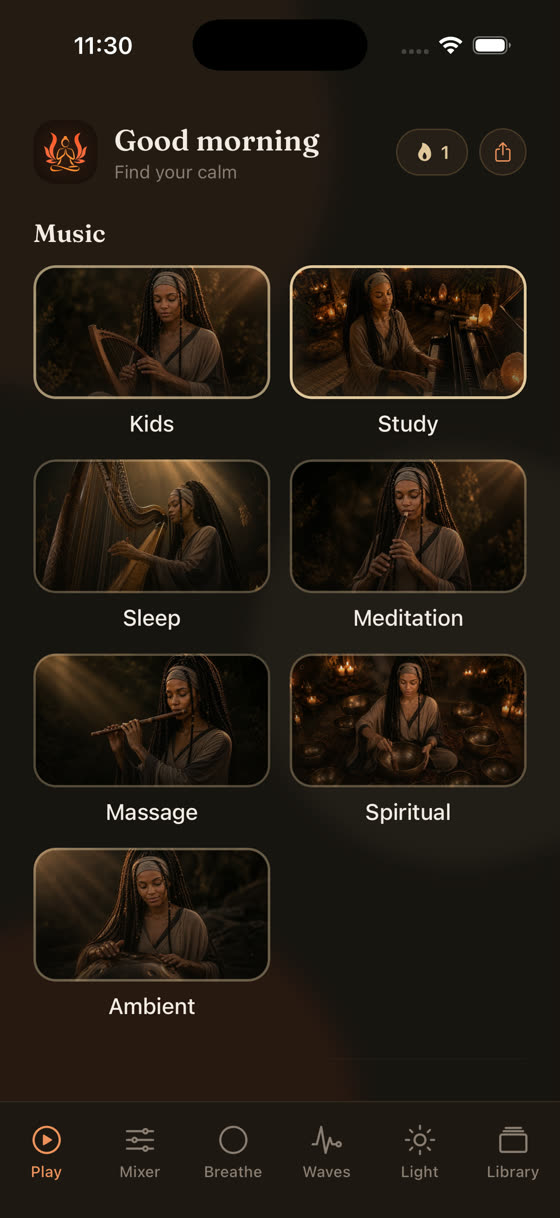
If any of this is useful, the full mixer, breathing screen, light screen and the growing library are available through the app, on iPhone, Android, or in a browser with a subscription.
Common questions
Is it dangerous to try to sleep with your eyes open?
Trying to force real sleep with eyes open isn't dangerous in itself, mostly just uncomfortable, since your eyes will dry out and your lids will fight to close. The real danger is involuntary microsleep during tasks requiring alertness, like driving. If your eyes stay open during actual sleep without you trying, that's a medical condition worth mentioning to a doctor.
Why do my eyes sometimes stay open when I'm falling asleep sitting up?
Sitting upright removes some of the postural cues your body uses to fully let go into sleep, so you can end up in a light, unstable state where eyelids stay partly open even as you drift. This is common on trains, in lecture halls, and during long meetings, and it's closer to microsleep than proper rest.
What's the difference between meditation with eyes open and falling asleep?
Open-eye meditation keeps a soft, unfocused gaze while your breath slows and your mind quiets, but you stay aware the whole time, able to open your eyes fully and respond if needed. Sleep involves losing that awareness and muscle tone entirely. The two can feel similar in the body but are different states of consciousness.
Can background noise or music help with resting while eyes stay open?
Yes, a steady, low, predictable sound gives your attention somewhere to settle instead of scanning the room, which helps the nervous system relax even with eyes open. Layered nature sounds or a low drone at a comfortable, unobtrusive volume tend to work better for this than anything with melody or sudden changes.