To relax the pelvic floor, you stop trying to control it and instead let the out-breath do the work. Drop your jaw, let your ribs fall, and imagine the muscles between your sit bones widening like a hand slowly opening. That single cue, paired with slow exhalation, does more than any deliberate squeeze-and-release routine, because the pelvic floor rarely responds well to being told what to do directly.
Most advice on this topic treats the pelvic floor like a bicep: tense it, hold it, release it, repeat. That works for building strength. It does very little for chronic tightness, and for a lot of people it makes things worse, because the instruction to "relax" a muscle you're already gripping without noticing just adds another layer of effort on top of the problem.
Why this muscle group tightens without you noticing
The pelvic floor is a sling of muscle at the base of the torso, and it works as a team with your diaphragm. When you inhale, the diaphragm descends and the pelvic floor should lengthen slightly to make room. When you exhale, both lift back up. This is sometimes called the piston relationship, and it happens dozens of times an hour whether you're aware of it or not.
The trouble starts when the piston gets stuck in one position. People who sit hunched at a desk for hours, who hold their stomach in out of habit, or who breathe shallowly into the chest instead of the belly often end up with a pelvic floor that stays slightly contracted all day. It never fully releases, so by evening it's tired the way your shoulders are tired after carrying a bag on one side. Stress compounds this directly: the pelvic floor is one of the muscle groups that tightens as part of the general fight-or-flight response, alongside the jaw, the shoulders, and the hands. If you clench your jaw when you're anxious, there's a reasonable chance you're also gripping down here, just without the feedback of noticing your teeth are together.
The breath is the actual lever, not the muscle itself
Because the pelvic floor and diaphragm move together, you can influence one by moving the other. This is the exception most guides skip: you're not relaxing the pelvic floor by focusing on the pelvic floor. You're relaxing it by changing how you breathe, and letting the muscle follow.
A slow exhale, roughly twice the length of the inhale, does this reliably. Try inhaling for a count of four through the nose, feeling the belly and lower ribs expand outward rather than the chest lifting, then exhaling for a count of six through slightly parted lips, feeling everything in the pelvis soften and drop as the breath leaves. The pelvic floor should feel like it's being gently lowered on each exhale, not squeezed.
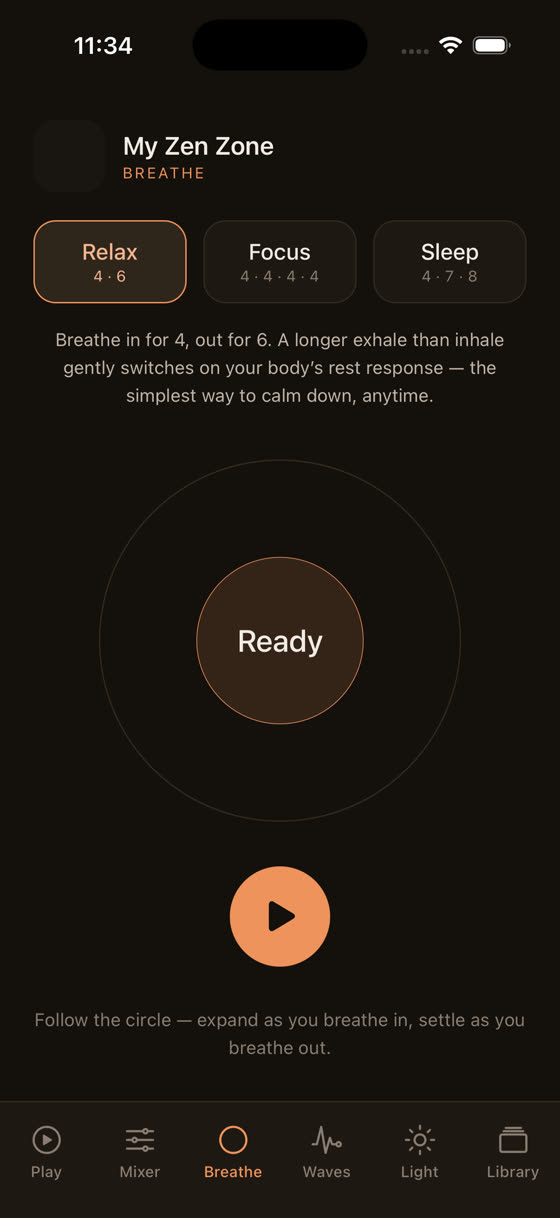
A visual pace helps here more than counting in your head, because counting itself can become another form of gripping. The breathing screen in the app runs a 4-6 relax pattern you can just follow with your eyes, which takes the mental arithmetic out of it entirely and leaves you free to focus on the physical release.
A sequence to actually run tonight
Lie on your back with knees bent, feet flat, about hip-width apart. This position takes the pelvic floor out of any load-bearing role, which is exactly the point.
- Take three normal breaths, doing nothing, just noticing where the tension sits.
- On the next exhale, let your jaw unclench and your tongue rest away from the roof of your mouth. This sounds unrelated. It isn't; the jaw and pelvic floor often hold tension in tandem.
- Begin the 4-6 breathing pattern, four in and six out, for eight to ten cycles.
- On each exhale, picture the muscles between your sit bones widening rather than lifting. Widening is a more accurate cue than "relax", which is too vague to act on.
- Let your knees fall gently outward, supported by pillows if that's more comfortable, for another minute of breathing.
Ten minutes is enough to notice a difference. This isn't a stretch you're trying to deepen or a muscle you're trying to lengthen through force. It's closer to letting your shoulders drop after you realise they've been up by your ears for an hour.
Where most people go wrong
The most common mistake is doing Kegels when the actual problem is tightness, not weakness. Kegel exercises train the pelvic floor to contract, which is useful if the issue is control or strength, but if the muscle is already chronically tight, adding more contraction work on top makes the resting tension worse, not better. If you've been doing Kegels for tightness-related discomfort and it hasn't helped, that's worth mentioning to a doctor or physiotherapist rather than doing more of them.
The second mistake is holding the stomach in as a habit, often left over from posture advice or just self-consciousness. A pulled-in stomach restricts the downward movement of the diaphragm, which restricts the pelvic floor's ability to lengthen on the inhale. If you catch yourself sucking your stomach in during the day, that's a reasonable place to start loosening things, well before bedtime even begins.
The third is trying to relax the pelvic floor as an isolated task, disconnected from the rest of the body. It rarely works in isolation. It responds much better as part of a broader wind-down, jaw, shoulders, hands, breath, all releasing in sequence, because the nervous system doesn't compartmentalise tension the way we'd like it to.
Sound, environment, and why background matters more than people think
A tense body in a noisy or unpredictable environment tends to stay tense, because part of the nervous system is still listening for what's coming next. This is where the audio environment actually does physical work, not just atmospheric work.
Layering two or three low, steady sounds, rain at a low level under a slow instrumental track, for instance, gives the ear something constant to settle into, which frees up attention that would otherwise be spent monitoring the room. The mixer lets you build that balance yourself rather than accepting a fixed playlist, nudging each layer until nothing in the mix is sharp or unpredictable enough to keep you alert.
Positions and timing that make this easier
Lying with knees bent, as described above, is the most accessible position, but a few others work well depending on where you are. Sitting on a firm chair with feet flat and a slight forward lean takes pressure off in a way that's useful at a desk, which matters if you're the sort of person who holds tension through a long work session; it's part of why breathing resets are worth building into a study or work break, not just bedtime, and it's a theme covered in more depth in our piece on music for focus and study.
Child's pose, knees wide and hips sinking back toward the heels, is another option if getting to the floor is comfortable for you. It puts gentle, passive stretch through the same region without any active effort, which suits people who find deliberate relaxation instructions counterproductive.
Timing matters too. Doing this work right before sleep, rather than hours earlier, means the release carries you into the night rather than getting undone by an evening of sitting tensely at a screen. If you're building a full wind-down, our guide to the best music for sleep covers tempo and instrumentation choices that pair well with this kind of breathing work.
When to bring in someone else
Persistent pelvic floor tightness that doesn't ease with breathing and position changes, especially if it comes with pain, urinary symptoms, or discomfort during specific activities, is worth raising with a doctor or a pelvic floor physiotherapist. This is a specific, trainable area of physiotherapy, and a professional can tell the difference between tightness, weakness, and something else entirely in a way that general advice, including this article, cannot. Nothing here is a substitute for that assessment.
Making it a nightly habit rather than a one-off fix
The muscle habits that create daytime tension don't undo themselves after one good session. The value is in repetition, ten minutes most nights, not a perfect ten minutes once.
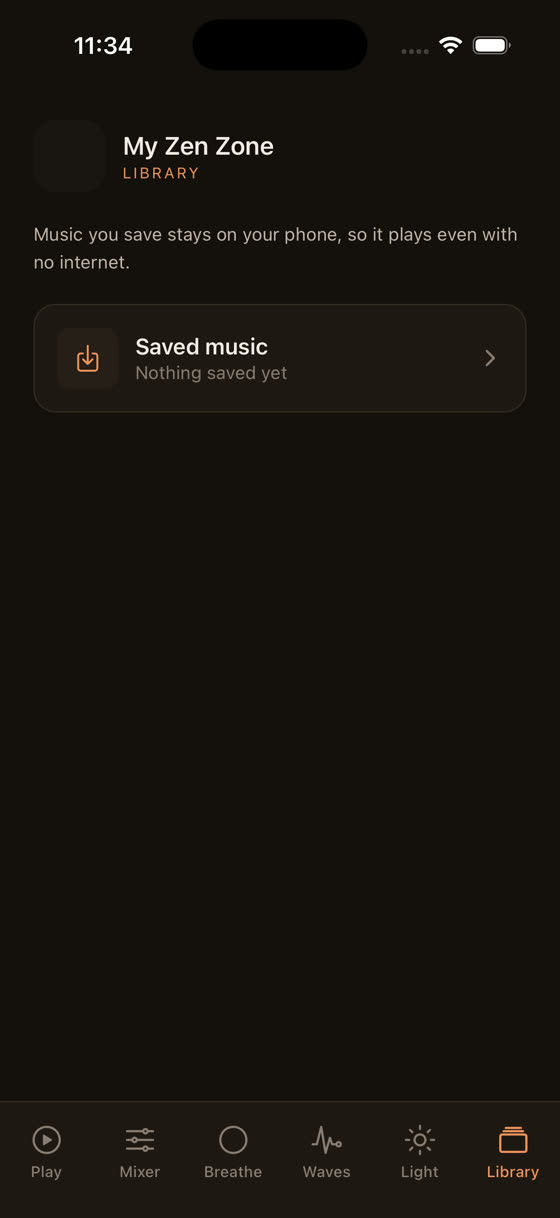
Pairing the breathing sequence with a consistent visual and audio cue, a dimming light screen, the same low instrumental track, helps the body learn the pattern faster, the same way a bedtime routine works for anyone trying to fall asleep more easily. The library adds new material every two weeks, so the track you fall asleep to doesn't have to become the one track you've heard four hundred times. You can start building that routine today at myzenzone.app or go straight to the download page and try it tonight.
Common questions
Can anxiety alone cause pelvic floor tightness?
Yes. The pelvic floor is part of the general muscular stress response, alongside the jaw and shoulders, so ongoing anxiety can keep it mildly contracted without any physical cause. Addressing the anxiety directly, alongside breathing work, tends to help more than focusing on the muscle in isolation.
How long does it take to notice a difference?
Some people feel looser within one ten-minute session, especially if the tightness is recent and stress-related. Longstanding tension built up over months or years usually needs a few weeks of nightly practice before the change feels reliable rather than temporary.
Are Kegel exercises bad for pelvic floor tightness?
Not bad exactly, but often the wrong tool. Kegels build strength through contraction, which doesn't address a muscle that's already chronically tight. If tightness is the main issue, lengthening and breathing work usually helps more, and a pelvic floor physiotherapist can confirm which approach fits your situation.
Does posture during the day actually affect this at night?
It does, because muscle tension carries over. Sitting hunched for hours, holding the stomach in, or breathing shallowly into the chest all keep the pelvic floor slightly engaged. Loosening those habits during the day, even briefly, means there's less residual tension to release come evening.
Is this the same as the relaxation used in yoga or Pilates?
Related but not identical. Yoga and Pilates often include pelvic floor awareness as part of core work, which can build useful body awareness, but the emphasis is frequently on engagement and control rather than release. The breathing-led approach here is specifically about letting go, not strengthening.