What a sleep time app actually is
A sleep time app is software that helps you fall asleep and stay asleep, usually through sound, a timer, and sometimes tracking. Most people open one for two reasons: they lie awake with a racing mind, or their bedroom is too quiet and every creak or car horn pulls them back up. The app fills that gap with something steady to listen to, cuts it off automatically so it doesn't play all night, and in some cases logs how long you were actually out.
That's the simple version. The more useful version is knowing what these apps are made of, because "sleep app" now covers three very different tools wearing the same label: pure trackers that use your phone's motion sensor or a wearable, sound machines that loop white noise or nature audio, and music apps built specifically to slow the body down. They solve different problems, and mixing them up is why so many people try one, feel nothing, and give up on the whole idea.
The mechanism: why sound changes how fast you drop off
Falling asleep is partly a nervous system problem. Your heart rate, breathing rate, and muscle tension need to come down before sleep onset, and a busy mind at 11pm is often just a body that hasn't gotten the signal to slow yet. Music written specifically for sleep tends to sit around 55-70 beats per minute, close to or below a resting heart rate, with no sudden dynamic changes, no lyrics to process, and long, unresolved harmonic movement instead of clear melodic hooks that keep your attention engaged.
This is the bit most general advice skips. It's not "calm music" in the abstract, it's tempo and structure chosen so your attention has nothing to grab onto and follow. A track with a chorus you can hum is doing the opposite job to one built for sleep, even if both sound quiet on the surface. We've written more on how this plays out in practice in our guide to music for sleep, including which instruments tend to work and which ones, surprisingly, don't.
Sound machines versus sleep music: not the same tool
A white noise machine masks sound. It gives your brain a flat, unchanging wall of frequency so a dog barking two streets over doesn't register as something worth waking up for. That's a genuinely useful, well-evidenced idea, especially for light sleepers or shared walls. But masking noise and music written to slow your physiology are different jobs, and a lot of apps only do the first one while marketing themselves as the second.
The honest answer is that some nights you want masking, some nights you want something with more shape to hold your attention while your mind settles, and some nights you want both at once, layered underneath each other at different volumes. Rain at one level, a low drone underneath it, a soft piano line barely audible on top. That's the combination that actually gets used most in practice, not any single sound on its own.
That's what a proper mixer is for: three or four sounds, each with its own fader, so you build the exact combination that works for your room and your particular brain, rather than accepting whatever one preset the app shipped with.
What most sleep app reviews get wrong
Most roundups rank apps by feature count: how many tracks, whether it has a smart alarm, whether it syncs with a wearable. Almost none of them ask whether the audio was actually composed for this purpose or just licensed in bulk from a stock library and relabelled "sleep sounds." That distinction matters more than any feature list. A track built with a real understanding of tempo, register, and repetition behaves completely differently in your ear at midnight than a generic ambient loop that happened to get tagged "relaxing."
The other thing that gets ignored is variety fatigue. Your brain habituates to a track after enough repeat listens, the same way a song you loved starts to fade into background noise after the fiftieth play. A library that never grows will start to lose its effect after a few months, quietly, without you noticing why sleep got harder again. This is one reason new material every couple of weeks isn't a marketing line, it's a functional requirement if the tool is meant to keep working a year in.
The features that actually matter at 11pm
Strip away the badges and star ratings, and a handful of features decide whether a sleep app earns a permanent spot on your phone.
- A sleep timer that fades out rather than cutting off abruptly, so you're not startled awake by silence at 3am.
- Offline downloads, because streaming a track over a shaky connection at bedtime is how three minutes of buffering turns into you scrolling your phone, wide awake, at the worst possible moment.
- A real mixer rather than fixed presets, so the rain-and-piano combination you found by accident one night is actually reproducible the next.
- A light screen for the ten minutes before you put the phone down, since a blazing white interface at bedtime undoes half the point of the audio.
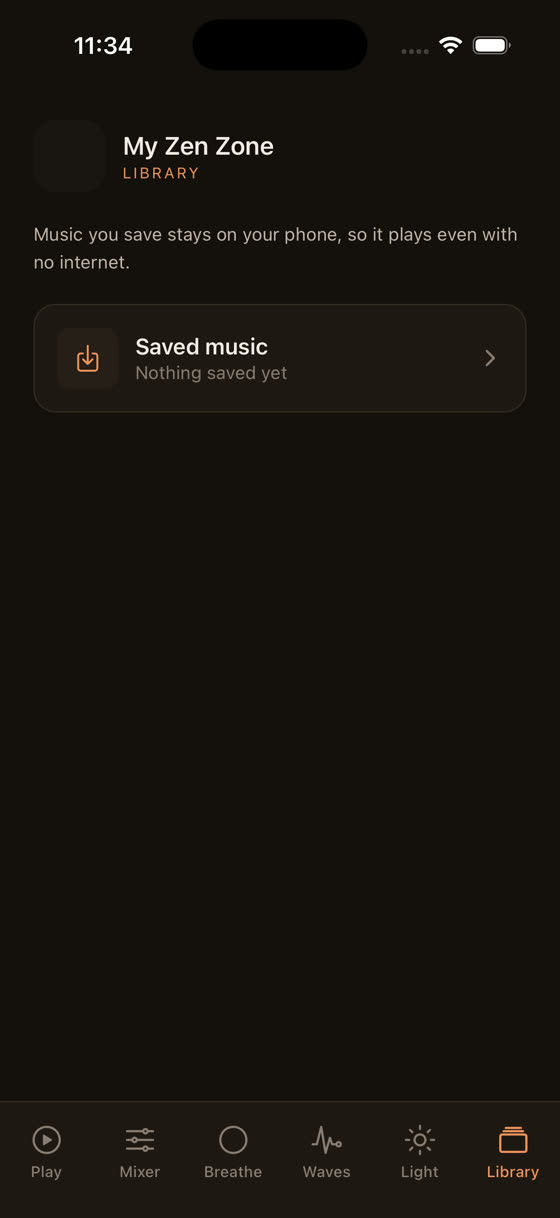
A screen that dims itself and slows down visually while the track plays underneath does more for winding down than people expect. It's a small detail most apps skip entirely, treating the player screen as an afterthought once the sound starts.
How My Zen Zone approaches this differently
Every track in the library is written and recorded by one musician working specifically toward these tempos and this purpose, not pulled from a general stock catalogue. That matters for exactly the reasons above: tempo, register, and repetition are chosen deliberately for the sleep category rather than inherited from a track meant for a coffee shop playlist.
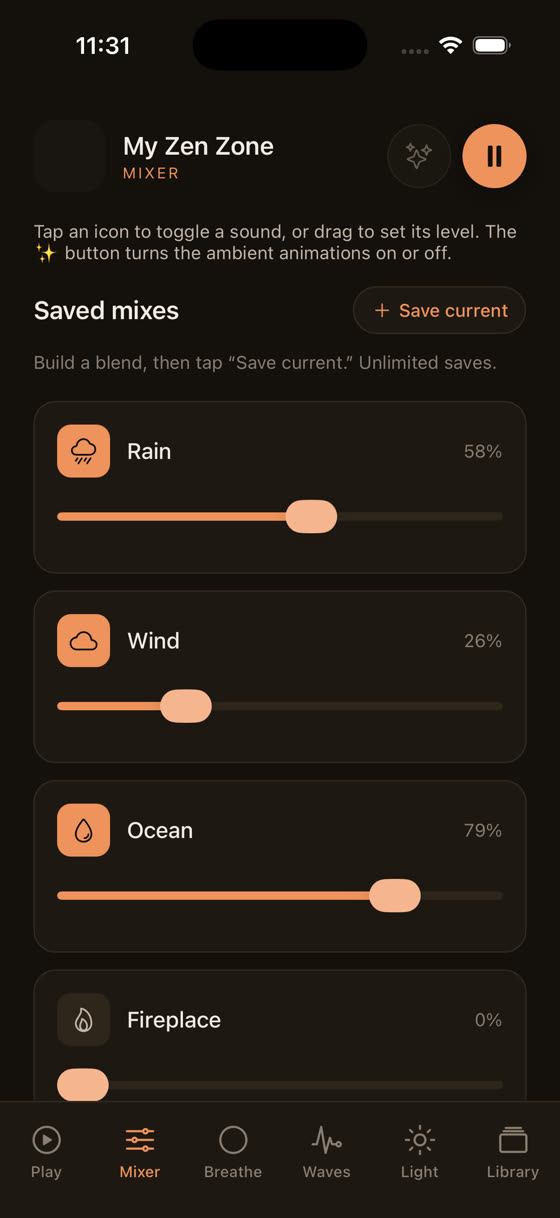
The mixer lets you set three nature sounds and a music bed at independent levels, so you're not stuck with someone else's idea of the right rain-to-music ratio. Build it once, save it, and it's there the next night without rebuilding from scratch.
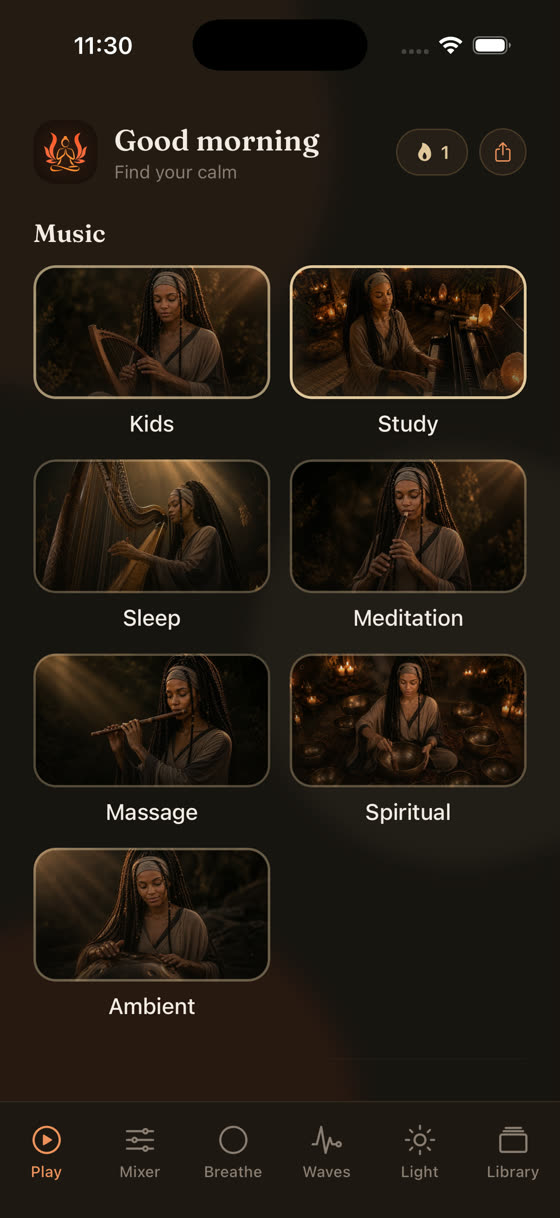
Sleep sits as its own category alongside Focus, Meditation, Calm and Music, each with its own built world rather than one undifferentiated playlist trying to do every job at once. And because the library adds new material roughly every two weeks, the habituation problem above has a built-in answer: there's always a track you haven't heard fifty times yet.
What to actually change tonight
If you've tried a sleep app before and it didn't stick, the fix usually isn't a different app, it's a different setup. Try layering two sounds instead of one. Set the timer to fade rather than cut. Dim the screen before you press play instead of after. Pick a track by tempo rather than by mood label, since "calm" on a thumbnail tells you nothing about whether it's actually slow enough to help.
None of this is a guarantee, and it's worth saying plainly: sound can support the conditions for sleep, it isn't a cure for insomnia or a medical treatment, and if sleep problems are persistent and severe, a GP is the right first call, not an app. What a well-built sleep app does is remove the small frictions, the silence that lets your mind wander, the harsh light at the wrong moment, the noise that jolts you awake, so your body has a fair chance at doing what it already knows how to do.
You can see the whole approach, sleep and otherwise, at myzenzone.app, and if focus rather than sleep is tonight's problem, our piece on focus and study music covers the same idea from the opposite end of the day. Or just get the app and try building your own mix before bed tonight.
Common questions
Do sleep apps actually work or is it placebo?
There's limited formal research on music apps specifically, so be wary of anyone claiming proof. What's better supported is that slow tempo audio and steady background sound can support relaxation and mask disruptive noise, which helps some people fall asleep faster. It's not a guaranteed fix, and it won't resolve chronic insomnia on its own.
Should I use a sleep app every night or only when I can't sleep?
Using it nightly, even when you're tired enough to drop off quickly, tends to work better than saving it for bad nights. Your brain builds an association between the sound and sleep onset over time, similar to how a consistent bedtime routine works. Reserving it only for insomnia nights means you're relying on it exactly when it has the least established habit to lean on.
Is white noise better than music for sleep?
Neither is universally better, they solve different problems. White noise masks unpredictable sounds like traffic or a snoring partner. Music written for sleep, at a slow tempo with no lyrics, helps slow your body down before sleep onset. Many people do best combining both at low, separate volumes rather than picking one over the other.
Will a sleep app stop working if I use it too long?
Familiarity can dull the effect of any single track over months of repeat listening, the same way a favourite song eventually fades into background noise. A library that keeps adding new material avoids this better than one fixed playlist, since you can rotate to something your brain hasn't habituated to yet.
Does the type of instrument matter for sleep music?
Yes, to a degree. Sustained tones, low piano, soft pads and slow strings tend to work better than anything percussive or rhythmically complex, since a clear beat gives your attention something to track. Vocals, even soft ones, usually work against sleep because language naturally pulls focus even at low volume.