The Short Answer
If you're used to falling asleep with someone on the phone, the app that actually replaces that habit is one that layers a calm spoken voice over quiet music, lets you set a sleep timer so it doesn't run all night, and gives you a mixer so voice, music and background sound can each be turned up or down on their own. That combination is what a phone call gives you without you noticing: a voice, a bed of ambient sound, and something that eventually stops. Most apps only give you one of those things. My Zen Zone's guided sessions are built as separate layers for exactly this reason, so the voice sits over the music rather than replacing it.
Why Falling Asleep on a Call Works in the First Place
There's nothing mysterious about it. A familiar voice, speaking slowly, at a pace close to your own resting breath, tells your nervous system you're not alone and nothing needs your attention right now. That's most of what's happening. The content of the call barely matters after the first few minutes, which is why people fall asleep mid-sentence and don't remember the last ten minutes of it the next morning. It's a routine your body has learned to associate with switching off, in the same way some people can only sleep with a fan on or a specific pillow.
The habit is the mechanism, not the phone itself. That's good news, because it means the habit can be rebuilt around something that doesn't need another person to be awake at the same time as you.
The Problems Nobody Mentions
Falling asleep on a call has real downsides that rarely get said out loud. The phone gets hot against your face after twenty minutes of a live call, which is uncomfortable and, over months, not something you want happening nightly. Battery drains fast on a live connection. If you're on mobile data rather than WiFi, that adds up. And unless both people fall asleep at roughly the same time, someone is lying there listening to breathing for an hour, unable to hang up in case it wakes the other person, and unable to fall asleep themselves because now they're the one keeping watch.
There's also no sleep timer on a phone call. It either runs until someone's phone dies, or one of you wakes at 4am to a call still connected and a dead battery by morning.
What an App Needs to Actually Replace That
Not silence, and not just any playlist. The features that matter, in order:
- A spoken voice option, not just instrumental tracks, because that's the actual thing you're replacing
- The ability to blend that voice with quiet music rather than have it stop and start on its own
- A sleep timer, so it fades out and stops rather than running for six hours to an empty room
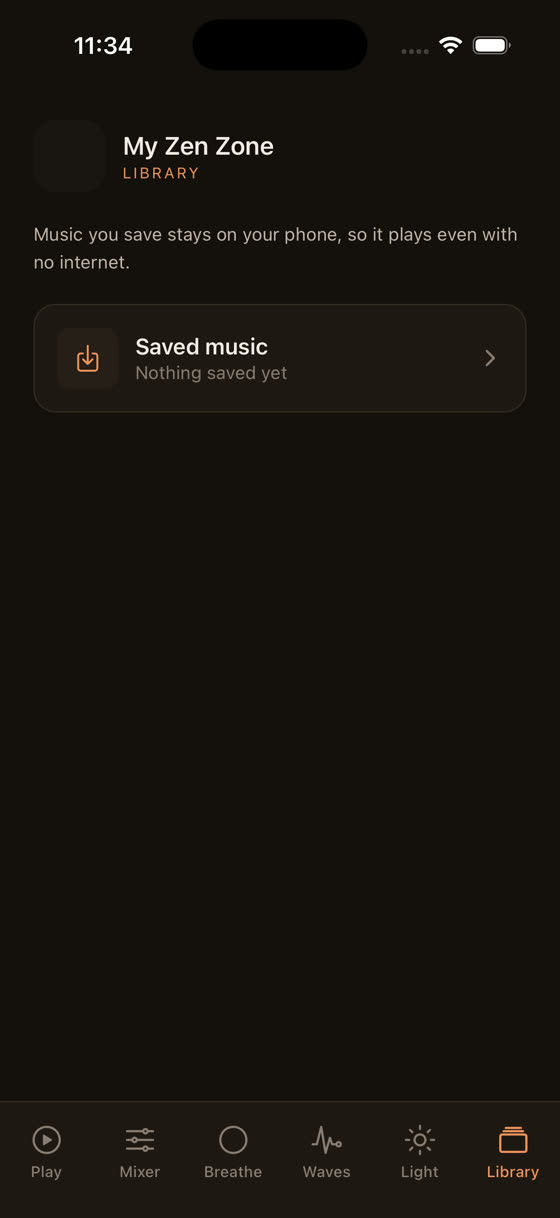
- Offline downloads, so it isn't dependent on WiFi holding up at 2am
- Some control over volume balance, because a voice mixed too loud over music defeats the point
Most sleep and meditation apps hand you a fixed playlist and call it a night. That's fine for background noise, but it's not what a phone call was actually giving you.
Layering a Voice Over Music, Not Instead of It
Here's what most guided meditation apps get wrong: the music stops, a voice plays for eight minutes, then the music comes back in, often abruptly. That gap is jarring at exactly the moment you don't want to be jarred. A phone call never does that. The voice and the ambient sound of wherever the other person is sitting blend together the whole time, which is part of why it feels so easy to drift off during one.
In My Zen Zone, guided sessions are recorded as separate layers rather than one fixed file, so the voice sits on top of the music at whatever level you choose, and the music keeps going underneath it the entire time.
That clip shows a guided session running with its own play button and its own level, moved independently while the music continues underneath. It's the closest thing to what a call actually sounds like: a voice over a steady background, not a voice interrupting one.
When There's No Voice at All: Building Company with a Mixer
Some nights you don't want a script, guided or otherwise. You just want the sense of not being in a completely silent room, which is often the real thing a call was providing. This is where a proper sound mixer earns its place. Rain at one level, a distant low drone underneath it, maybe a single higher texture like wind or birdsong pulled right down. Balanced against each other, three ordinary sounds start to feel like a room with something happening in it rather than a void.
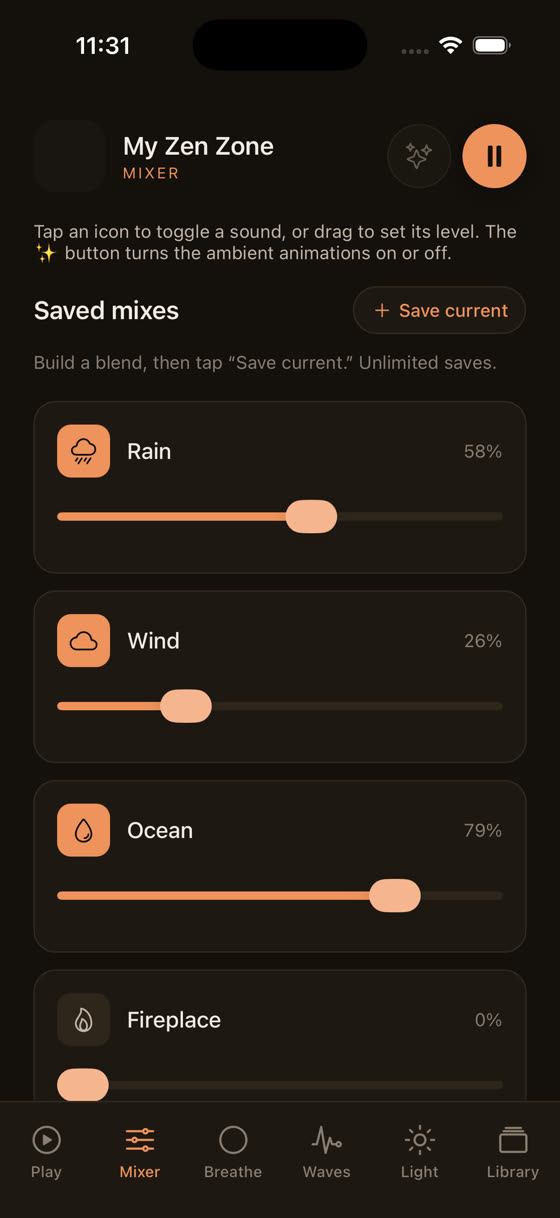
That's the feature worth paying attention to if you're comparing apps: most give you a single nature-sound track at a fixed volume. A mixer with independent levels per sound lets you build something that actually matches the specific kind of company you're missing, which is a more useful skill than it sounds once you've used it a few times. There's more on how tempo and sound choice affect this in our piece on the best music for sleep.
Slowing the Body Down Before You Even Press Play
A voice or a mixer only works well if your body is already halfway there. Screen light is the obvious culprit, and most people know it and ignore it anyway. A dimmed, warm light screen for a few minutes before you start anything else does more than people expect, mostly because it removes the one stimulus telling your brain it's still daytime.
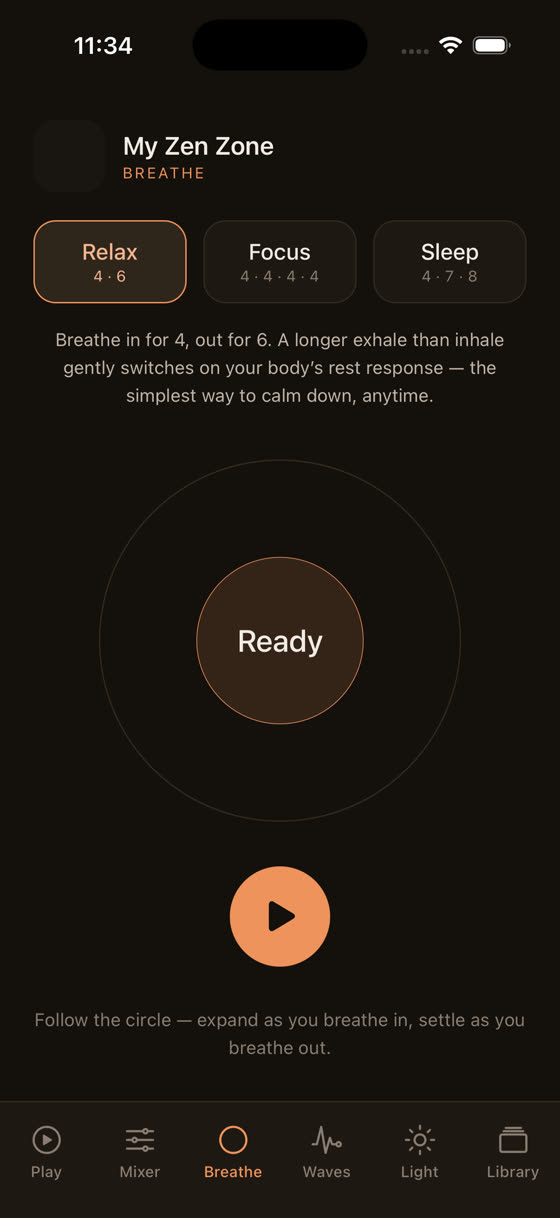
Breathing pattern matters too. A 4-6 pattern, breathing in for four counts and out for six, nudges your heart rate down toward a resting range without any effort beyond counting. It's not complicated and it's not new, but doing it for two minutes before a guided session or a music mix makes a noticeable difference to how quickly the rest works.
A Practical Setup for Tonight
Dim the room and the screen first, before you open anything. Spend two minutes on a breathing pattern rather than scrolling while you decide what to play. Pick either a guided sleep session with the voice pulled low against the music, or a nature mix built from two or three sounds at different levels if you'd rather not have a voice tonight. Set a sleep timer for somewhere between thirty and sixty minutes, not longer, so the audio actually stops rather than looping for hours. If you're worried about the room's WiFi dropping overnight, download the track first through the app and put your phone in flight mode; downloaded audio doesn't care whether you're connected.
Weaning Off the Call Habit Gradually
If the call is with a partner and neither of you wants to stop entirely, that's fine, this doesn't need to be all or nothing. A reasonable middle step is keeping the call short, ten minutes of actual conversation, then both switching to your own audio once you're ready to properly wind down, rather than one person listening to the other's breathing for an hour. Over a few weeks that shortens the call and lengthens the part where you're each falling asleep to your own sound, at your own volume, without a dying battery between you.
The library at My Zen Zone adds new tracks every two weeks, all composed and recorded by the same musician rather than licensed in bulk, so the sound stays consistent even as the options grow. If focus rather than sleep is the actual goal on other nights, this piece on focus music covers the different tempo and structure that works for staying alert instead of winding down.
Common questions
Is it bad to fall asleep on the phone every night?
There's no strong evidence it causes harm, but the practical downsides are real: heat against your face, battery drain, and one person often staying half-awake listening for the other to actually drift off. If it's working for you, it's not broken. If you want an alternative some nights, a voice-and-music app does most of the same job.
Can I use a guided sleep session and nature sounds at the same time?
Yes, if the app layers them separately rather than locking you into one fixed track. In My Zen Zone you can run a guided voice session and add a nature sound underneath it, each at its own level, so you're not choosing between a voice and ambient sound.
Will the sleep timer cut off the audio abruptly?
A well-built sleep timer fades the volume down rather than stopping mid-sentence or mid-note. Check this before relying on one nightly; an abrupt cutoff can actually wake you, which defeats the purpose of setting a timer in the first place.
What if I don't like anyone's voice for guided sessions?
Skip the voice entirely and build your own mix from nature sounds and low instrumental layers instead. The comfort of a call often comes more from ambient presence than the specific words being said, so a mixer of rain, drone and quiet music can cover the same ground.