The best meditation app for sleep is the one that lets you build the exact sound you need at 11pm, rather than handing you someone else's idea of relaxing. That means a library deep enough to have options, and a way to blend sound, voice, and music yourself instead of pressing play on a fixed track and hoping. Everything else - the branding, the ambient photography, the calming voiceover in the ad - is secondary to that.
What most reviews of these apps get wrong
Most "best meditation app" roundups compare app store ratings and subscription price. They rarely ask what actually happens in your body when you use the thing. A meditation track aimed at sleep should sit around 60-70 bpm, roughly a resting heart rate, because music at that tempo doesn't ask your nervous system to keep up with anything. Faster tempos, even gentle-sounding ones with piano and strings, can keep you subtly alert. A lot of "relaxing" playlists on general streaming services are actually 80-100 bpm film-score material dressed up as sleep music. It sounds soft. It isn't slow.
The other thing reviews skip: almost every guided meditation app stops the music when the voice starts. You get narration, then silence, then maybe music fades back in at the end. That's a jarring structure for someone trying to drift off, because your brain notices the change in texture even half-asleep. We built this differently - the voice is a layer that plays over the music and nature sound, not instead of it, and you set its level yourself.
Why a fixed playlist works against you at night
Your ideal falling-asleep sound changes night to night. Some nights rain works. Some nights rain is what keeps you awake and you want low drone tones instead. A single pre-mixed track can't adjust to that, so people end up scrolling through options at midnight, phone screen lighting up their face, which defeats the purpose entirely. A mixer solves this properly: three or four sound sources, each with its own level, so you build the combination that works tonight and save it.
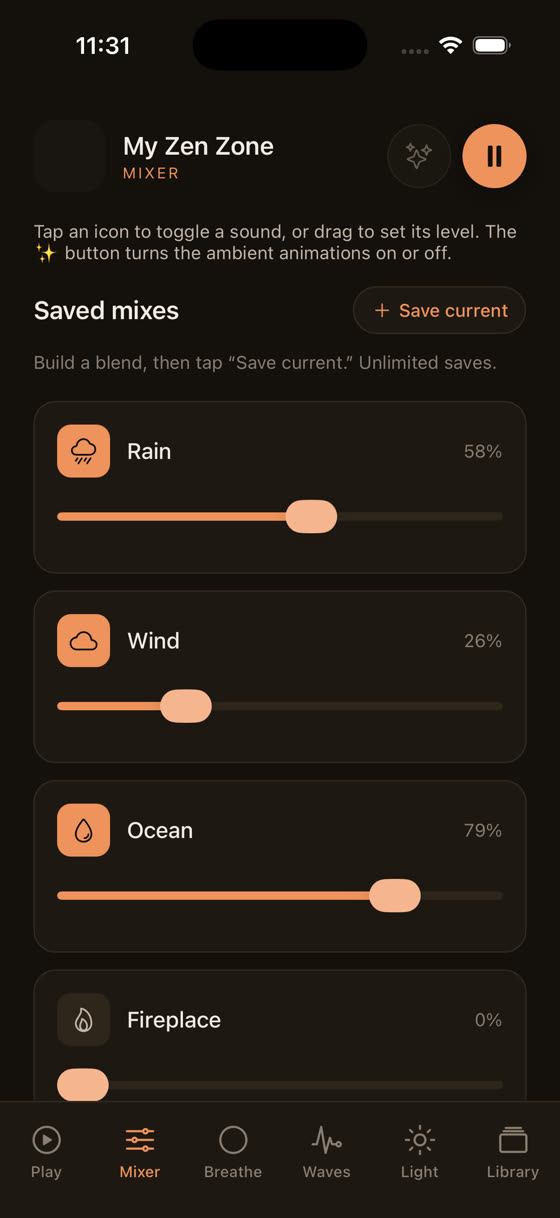
This is the single biggest difference between an app like this and a folder of MP3s or a general streaming playlist. It's also why we keep coming back to it across the app - in the guided sessions, in the plain music library, in the nature-sound-only mode. If you want the fuller argument for why the right sound matters more than most people think, we've written about it separately at what actually makes music good for sleep.
Guided meditation versus music alone
Guided sleep meditations work well for people whose problem is a racing mind rather than physical tension - the 11pm inventory of tomorrow's emails, an argument replayed for the fourth time. A voice giving you something specific to follow, a body scan, a slow count, a breath pattern, gives that mental loop somewhere else to go. Music alone works better for people who fall asleep fine once the mind quiets, and just need the room to feel less silent and less exposed.
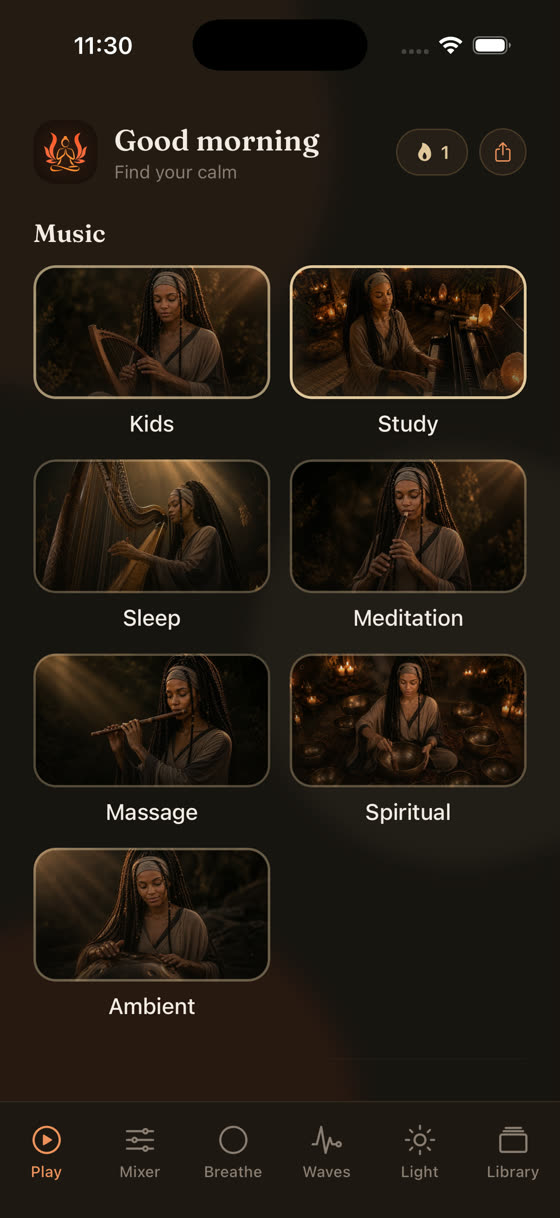
Neither is objectively better. The honest answer is that it depends on what's actually keeping you up, and that can change week to week depending on stress, travel, or just a bad day. This is why we didn't build the app around one format. You can open a guided session tonight and a 45-minute ambient piece with no voice at all tomorrow, from the same home screen.
The role of breathing before the music even starts
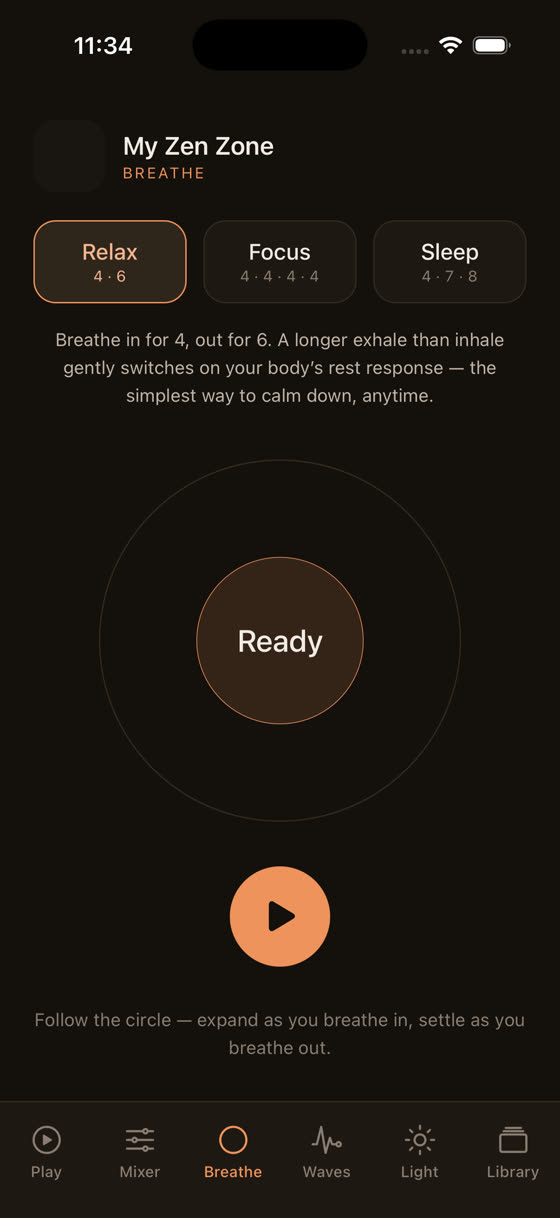
One thing genuinely under-discussed in sleep content: slowing your breath rate before you press play matters as much as what you play. A short session on a 4-6 pattern, breathe in for four counts, out for six, engages the parasympathetic nervous system in a way that's well documented and doesn't require any special equipment or app. We put a simple breathing screen in front of the music library for exactly this reason - two or three minutes on it before a track starts changes how quickly the music actually lands.
Light, screens, and the fifteen minutes before bed
The irony of using a phone to help you sleep isn't lost on anyone. Blue light from a screen at full brightness works against everything the music is trying to do. Our light screen exists for the specific window between opening the app and actually closing your eyes - warm, dim, something to look at that isn't scrolling, while a track plays underneath. It's a small thing, but the fifteen minutes before you try to sleep matter more than people give them credit for, and most sleep advice skips over the fact that your phone itself is usually part of the problem.
Brainwave tones: what's known and what isn't
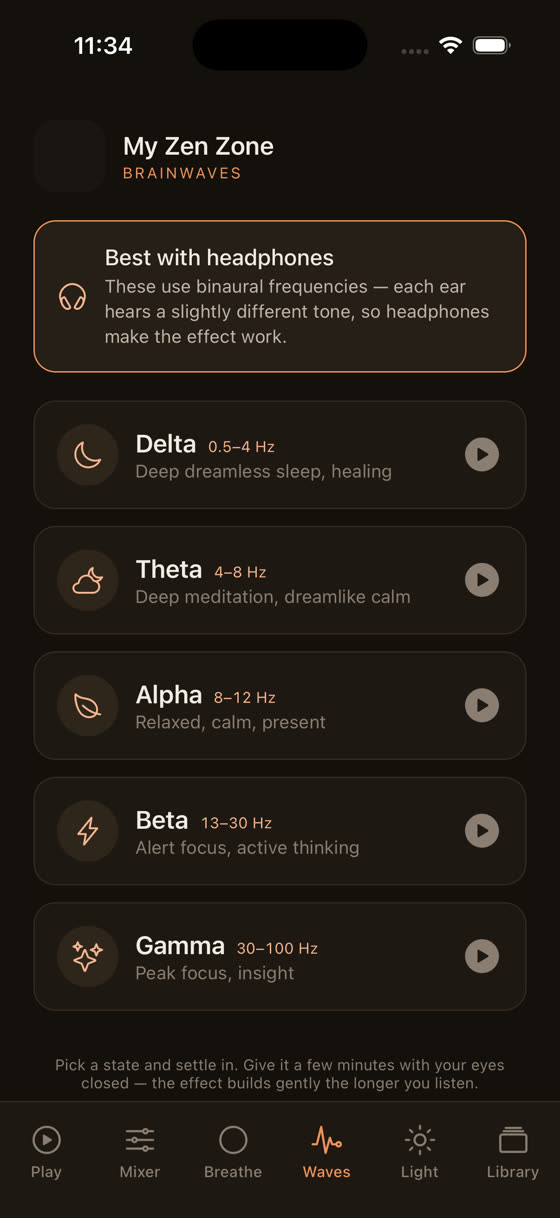
Binaural and isochronic tones get talked about as though they're proven sleep technology. They're not - the research is genuinely thin, and results are inconsistent across studies, so we won't tell you they'll knock you out. What we will say is that many people find the low, steady pulse underneath ambient music pleasant and easy to fall asleep to, independent of whatever the specific brainwave claims are. If you want to try them, they're worth testing for yourself rather than trusting a marketing claim, and they sit alongside the rest of the mixer rather than as a separate product.
What actually changes if the music changes every night
A library that never grows gets exhausted fast, especially if you use it daily. We add new tracks every two weeks, all composed and recorded by the same person rather than licensed from a stock library, which means the whole catalogue has a consistent character instead of feeling like a grab-bag. If you've worn out a favourite you can go find something newer rather than replaying the same eight-minute loop for the fortieth night running. That consistency of voice, one musician across hundreds of tracks, is also why the sleep material and the focus and study music in the same app don't feel like two different products stitched together.
What to check before you commit to any app
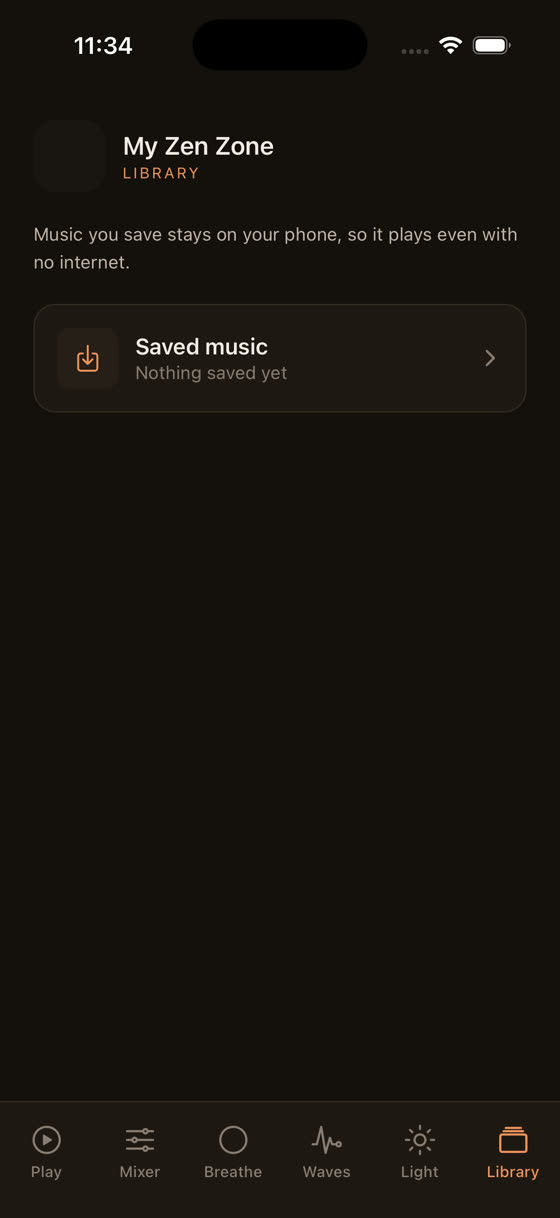
A few practical things matter more than star ratings. Can you download tracks for offline use, for flights or areas with poor signal? Is there a sleep timer so the music stops instead of looping all night and possibly waking you later? Can you actually mix sounds, or is every track fixed? Does a subscription work across your phone and a browser, so you're not locked to one device? These are the questions that predict whether you'll still be using the app in three months, not whether the onboarding screens look nice.
If you want to see all of this rather than take it on description, the full library and mixer are free to try at myzenzone.app/get, or you can look through what's there first at myzenzone.app.
Common questions
How long should a sleep meditation track be?
Long enough that you don't need to think about it again once you press play. Most people do best with 30-45 minutes or a track that loops, plus a sleep timer set for an hour or two so it stops rather than playing all night. Very short 5-10 minute tracks tend to end while you're still awake, which can be more disruptive than helpful.
Is it better to use headphones or a speaker for sleep meditation?
A speaker across the room is usually more comfortable for full-night use, since headphones can be uncomfortable side-sleeping and some people worry about volume near the ear over hours. Headphones do give a more immersive mix if you're doing a shorter guided session before turning the light off, rather than sleeping with them in all night.
Do I need a guided meditation every night, or can I just use music?
No, and most people don't. Guided sessions are most useful on nights your mind is actively racing. On calmer nights, plain ambient music or a nature-sound mix without any voice at all is often enough, and some people find a voice every single night starts to feel repetitive rather than calming.
Can meditation music actually help with insomnia?
It can help with the wind-down process, slower breathing, a quieter room, less mental noise, but it isn't a treatment for insomnia and we wouldn't claim otherwise. If sleeplessness is persistent or severe, that's a conversation for a doctor, not something an app or a playlist should be expected to solve on its own.