The Short Answer
The best meditation app for anxiety is the one you'll actually open at 11pm when your chest is tight, not the one sitting at number one on someone's ranked list. Star ratings tell you nothing about whether an app can meet you in the specific moment anxiety shows up, which is rarely convenient and rarely calm enough for a ten-minute guided script from scratch. What actually helps is fast access to a few physical mechanisms: slower breathing, a lower heart rate, and something for your attention to hold onto other than the loop in your head.
That's the real test for any app. Not how many tracks it has, not how polished the narration sounds, but how quickly it gets you from a racing chest to something closer to a resting state. Everything below is about that gap and how to close it.
What's Actually Happening When Anxiety Spikes
Anxiety is a sympathetic nervous system response. Heart rate goes up, breathing becomes shallow and fast, and attention narrows onto threat, real or imagined. This is useful if you're being chased. It's less useful at 2am when the threat is an email you haven't sent yet.
Slow music and paced breathing work because they give your body a competing signal. A track sitting around 60 to 70 beats per minute, roughly a resting heart rate, doesn't force your body to slow down, but it removes one of the cues telling it to stay alert. Breathing with a longer exhale than inhale does more directly: it activates the vagus nerve and nudges the parasympathetic system back on. This isn't mysterious or new age. It's the same mechanism behind box breathing used in clinical and military settings, just packaged differently.
The point is that meditation apps for anxiety aren't really selling calm feelings. They're selling quick access to these two levers: pace of breath, and something specific enough to occupy attention without adding more to think about.
Where Most 'Best App' Lists Get It Wrong
Most roundups compare app store ratings, subscription price, and how many guided sessions are included, as if anxiety at midnight cares about catalogue size. What they rarely test is the actual moment of use. Can you get from opening the app to a slower breath in under a minute? Can you use it without wifi if you're travelling or your signal's bad? Does the guided voice force you to listen to a script you've heard forty times, or can you adjust what's underneath it?
Most apps also treat every anxious moment the same, offering one fixed meditation track regardless of whether you're trying to fall asleep, calm down before a meeting, or just get through a bad ten minutes at your desk. That's a real gap, because what helps at 7am before a presentation is not what helps at 1am when you can't switch off.
The Feature That Actually Matters: Mixing Your Own Sound
Fixed playlists assume everyone's nervous system responds to the same input at the same volume. It doesn't. Some people need rain louder than the music underneath it. Some people find a single tone underneath everything too much and want it barely audible. This is why a mixer, where you set independent levels for different sounds rather than picking one static track, makes a real difference for anxiety specifically, because anxious states are so individual and so changeable hour to hour.
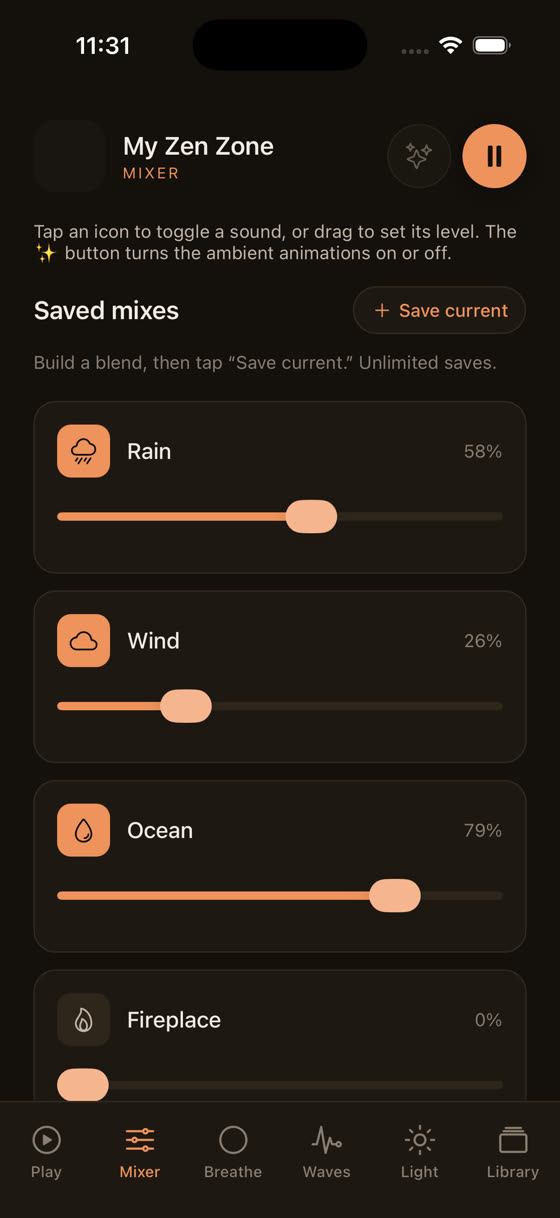
Being able to bring rain up and a low drone down, or drop the music out entirely and keep just the nature sound, means you can respond to how you actually feel right now rather than accepting whatever the app decided in advance.
Watch the levels move in real time and you'll notice this isn't a fixed preset with a volume knob. It's three separate sounds, each adjustable on its own, which is the one thing most competing apps genuinely don't offer.
Guided Sessions That Don't Stop the Music
Most guided meditations work by replacing music with a voice: the track fades, someone talks for ten minutes, then music comes back or the session simply ends. For a lot of anxious minds this is jarring. The music was doing real work holding your attention, and suddenly it's gone, replaced by silence and a voice that may or may not match how you're actually feeling.
A better approach treats voice as one layer among several rather than a replacement for the others. The guided session plays over the music and nature sound, each with its own level, so you can bring the voice down if the words themselves start to feel like noise, or bring it up if you need the structure. That flexibility matters more for anxiety than for general relaxation, because anxious attention is unpredictable. What settles you at the start of a session might irritate you three minutes in.
A Breathing Pattern Worth Learning Tonight
If you take one concrete thing from this post, make it this: a 4-6 breath pattern, inhaling for a count of four and exhaling for a count of six, done for two or three minutes, is one of the fastest ways to shift out of a sympathetic spike. The longer exhale is doing the work here, not the inhale.
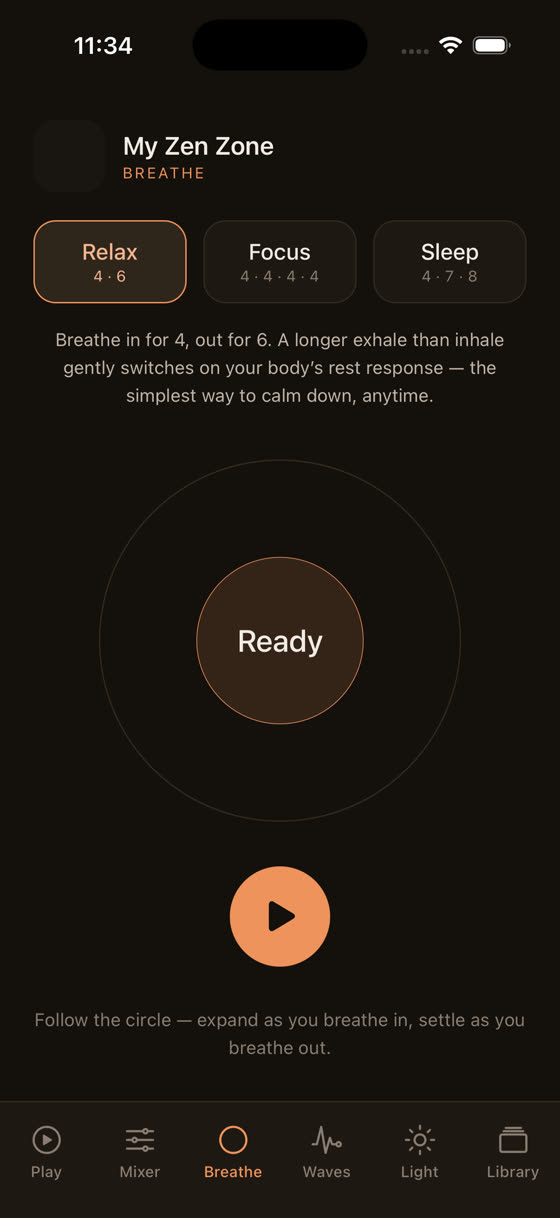
You don't need an app to do this, but a visual pace-setter removes one more decision from a mind that's already overloaded. Try it before you try to reason your way out of the anxious thought. The physiology needs to change before the thinking does.
Morning Anxiety vs 2am Anxiety Need Different Tools
Daytime anxiety, the kind that shows up before a meeting or mid-task, usually needs something that lets you stay functional. That's closer to what we've written about in music for focus and study, where the goal is a steady undercurrent that narrows attention without pulling it away from work entirely.
Nighttime anxiety is a different problem. There's no task to return to, which means the mind fills the space with everything you didn't get to during the day. Here the goal isn't focus, it's disengagement, which is closer to the territory covered in what actually helps with sleep. Slower tempo, longer tracks, no sudden changes in dynamics that might pull you back to alert.
Brainwave Tones and the Evidence, Honestly
Binaural beats and brainwave tones get mentioned a lot in this space, and it's worth being straightforward: the research on them is thin and mixed. Some people find a low steady tone genuinely useful as background, something to settle into rather than a proven mechanism for changing brain states. Treat it as one option among several, not a guaranteed fix.
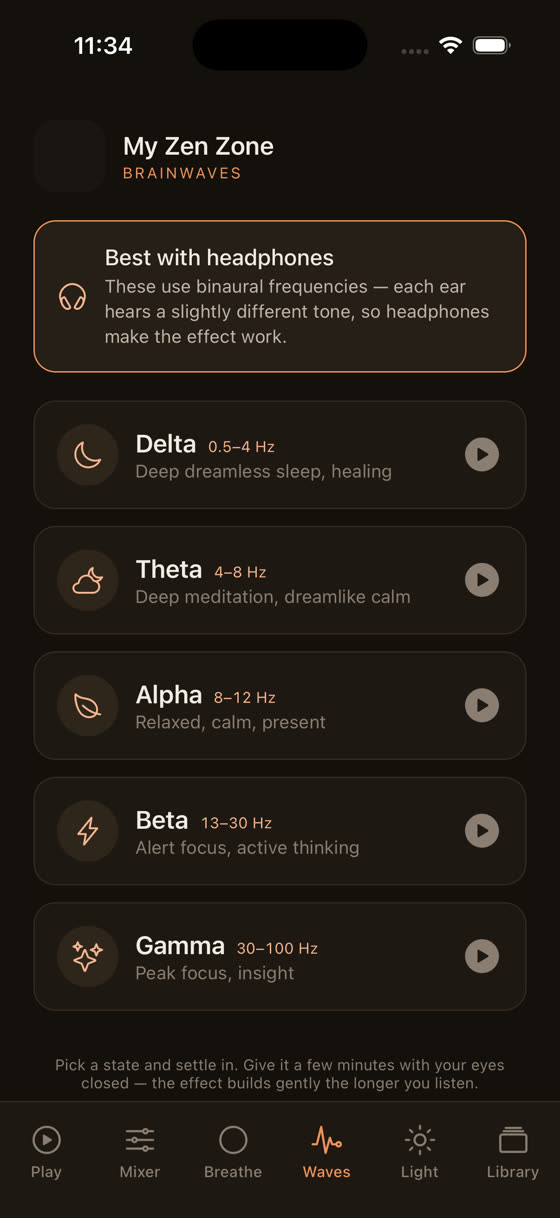
The same honesty applies to any light or visual wind-down tool. A dimmed, slow-shifting light screen can help signal to your body that it's time to slow down, mostly by removing bright, active light from the room rather than through anything more specific.
What We Actually Built, and Why
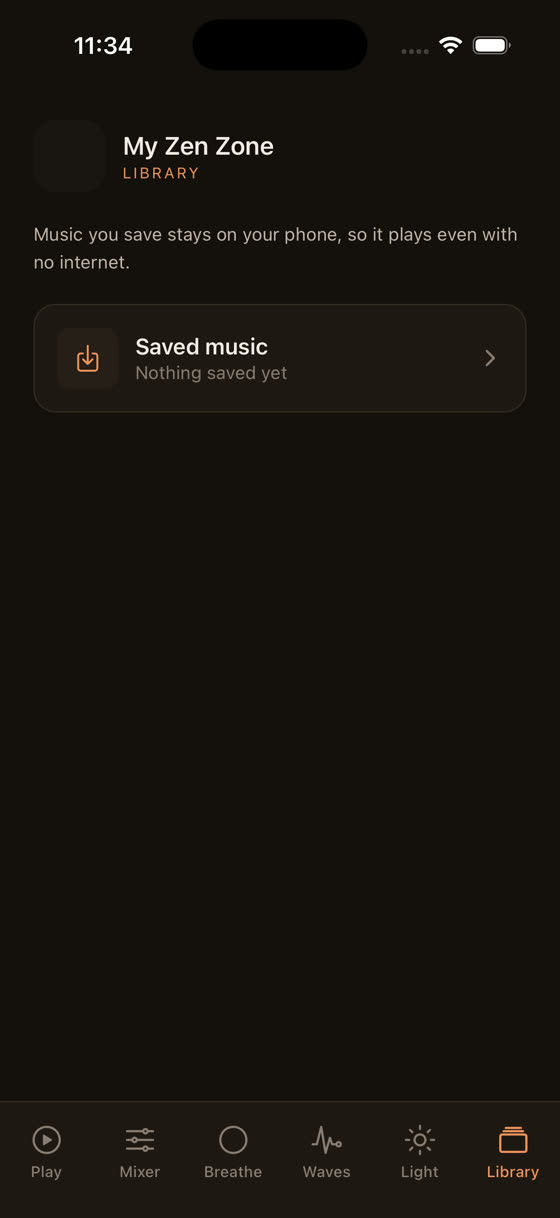
My Zen Zone runs on one composer working across sleep, focus, meditation and calm, with new tracks added every two weeks so the library keeps growing rather than sitting static. That matters for anxiety specifically because familiarity fades fast when you're using something nightly, and a library in the hundreds of tracks means you're not stuck on the same three loops within a month.
Everything above, the mixer, the layered guided sessions, the breathing screen, works offline once downloaded, and a subscription opens the same library in a browser if you're at a desk rather than reaching for your phone. You can see the whole thing at myzenzone.app, or go straight to get the app and try the mixer on whatever's making tonight harder than it should be.
Common questions
How long should a meditation session for anxiety actually last?
There's no fixed rule, but two to five minutes of paced breathing is often enough to shift a sympathetic spike. Longer guided sessions, ten to twenty minutes, suit settling in for sleep rather than managing an acute moment. Match the length to the situation, not to what the app defaults to.
Do binaural beats actually reduce anxiety?
The evidence is thin and results are mixed across studies. Some people find a steady low tone genuinely calming as background sound, but it shouldn't be treated as a proven treatment. Use it as one optional layer alongside breathing and music rather than relying on it alone.
Can meditation apps replace therapy or medication for anxiety?
No. These tools can help with day-to-day regulation and sleep, but they aren't a substitute for professional support if anxiety is persistent, severe, or affecting daily functioning. If that's the case, speak to a doctor or therapist; use the app alongside that, not instead of it.
Why does the guided voice play over the music instead of replacing it?
Because stopping music to insert a voice can jolt an already anxious mind out of whatever calm it had found. Keeping voice, music and nature sound as separate adjustable layers means you can lower the voice if it starts to grate, without losing the music that was doing the actual work.
What's a good first thing to try tonight if I'm anxious at bedtime?
Start with the breathing screen set to a 4-6 pattern for two minutes, then bring in a low nature sound like rain at a level you barely notice. Skip the guided voice on the first night if you're not sure it'll help. Add layers once you know what your body actually responds to.