The Short Answer
The best place to relax near you is not a destination. It's a state you can build almost anywhere with three things: a predictable low sound floor, dim warm light, and a defined stopping point so your brain knows the task is over. Once those three are in place, a parked car, a bathtub, a park bench, and your own bed all work about equally well. Search results want to hand you a spa with good reviews or a garden fifteen minutes away. Fine if one exists. But most people typing this at 11pm on a Tuesday aren't going to drive anywhere. They need their nervous system to downshift right where they already are.
Why "Nearby" Is the Wrong Question
Your autonomic nervous system doesn't check your postcode. It responds to sensory input: sound, light, temperature, and whether your body has been given a reason to stop scanning for threats. A quiet forest can feel calming, but so can a noisy café if the noise is even and unpredictable-free, which is why some people concentrate better with background hum than in dead silence. The forest isn't magic. It removes sudden, sharp, meaningful sounds — a phone buzz, a door slam, a voice saying your name — and replaces them with an even wash of wind and birdsong that your brain stops flagging as important after a few minutes. You can replicate that wash without leaving the room.
This is also where a lot of relaxation advice goes wrong. Articles list destinations — gardens, libraries, quiet cafés — as if the geography does the work. It doesn't. The geography just happens to contain the right sensory conditions by accident. If you understand what those conditions are, you can create them in a studio flat, a car in a car park, or a hospital waiting room, none of which show up on a "best places to relax near me" map.
What a Relaxing Space Actually Has in Common
Strip away the postcard version and every genuinely calming spot people describe shares a short list of traits:
- A sound floor that is steady rather than sudden — rain, waves, low hum, not silence broken by noise.
- Light that's dim and warm rather than bright and blue, especially in the hour before sleep.
- Nothing urgent pending in the next ten minutes. Even a beautiful garden fails if you're checking the time for a meeting.
- A tempo cue somewhere in the environment sitting close to a resting heart rate, roughly 60 to 70 beats per minute — think a slow tide, not traffic.
- A slightly cool temperature, which is why people fall asleep faster in a cold room than a warm one.
None of these require a location. They require attention to five variables you can control from a chair.
Sound Does More Work Than the Map
Of the five, sound is the one most people underuse. A single track of rain is fine, but real environments are layered — wind under birdsong under distant water — and that layering is what makes a place feel enveloping rather than like a recording playing at you. This is the whole idea behind the mixer in the app: three or four nature sounds, each with its own level, so you can build rain-plus-fire-plus-low-drone yourself rather than accept one fixed loop.
Watch what happens when you drop the rain a little and bring up a low ambient pad underneath it — the whole thing stops sounding like a sound effect and starts sounding like a room. That's the difference between hitting play on a playlist and actually tuning an environment, and it's the reason our library leans on original composition rather than stock loops. We've written more on how tempo and instrumentation affect sleep specifically in our piece on the best music for sleep, if you want the mechanics behind the numbers.
Make Somewhere Calm Portable
Once you accept that the ingredients are sound, light, and a stopping point, the fix for "there's nowhere quiet near me" stops being about travel and starts being about kit. Headphones and a phone are enough. The harder part is choosing something reliable each time, because decision fatigue at 11pm defeats the whole purpose.
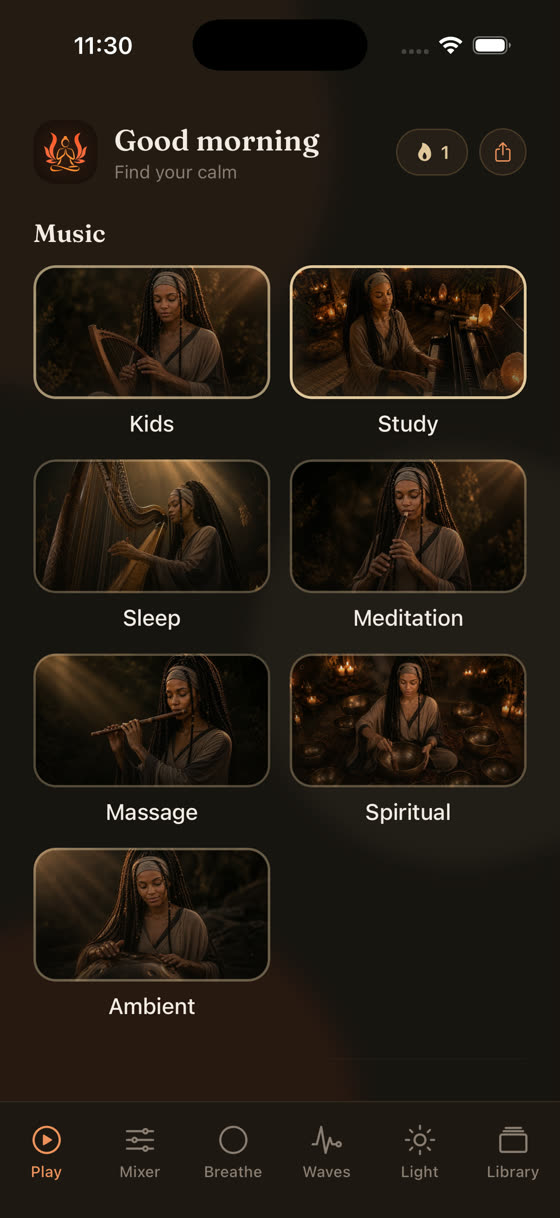
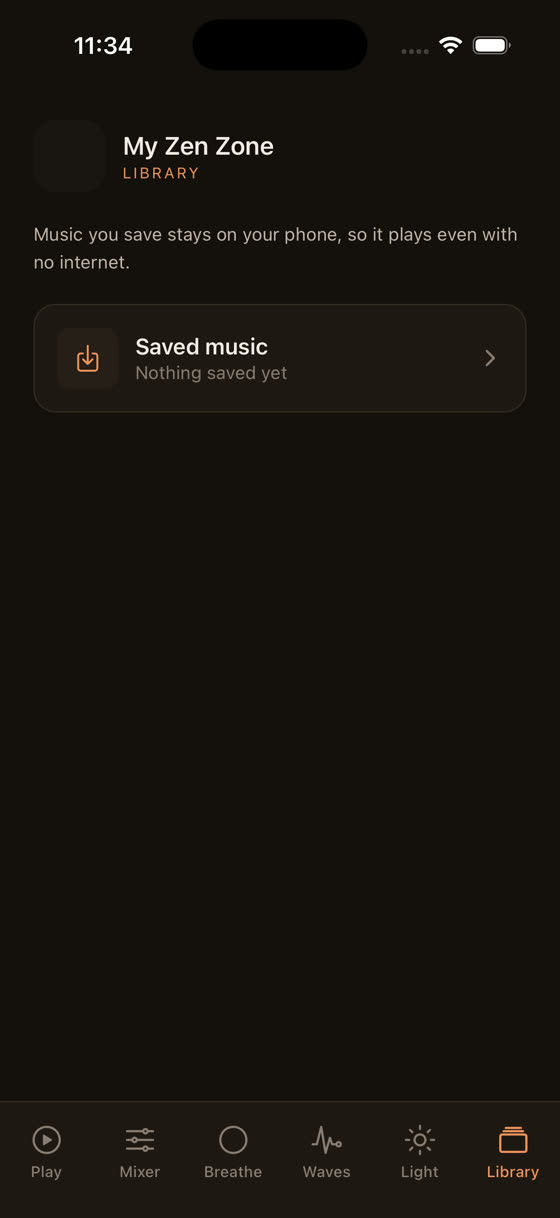
This is why the app is organised as separate worlds rather than one long list — Sleep, Focus, Meditation, Calm, Music each sit on their own, so you're not scrolling past upbeat tracks looking for something slow. Everything can be downloaded for offline use too, which matters more than people expect: a flight, a tunnel, a house with patchy wifi, a phone in airplane mode on purpose because notifications are the opposite of calm. If none of that is set up yet, grab the app before you need it rather than during a bad night, and it's ready the next time your usual quiet spot isn't available.
The Places People Actually Search For, and What Each One Is Missing
It's worth being specific about the real candidates, because each has a gap.
- The car, parked. Private and quiet, but the seat position and steering wheel keep your body in a low-level "ready to drive" posture. Recline the seat, close your eyes, and use sound to do the rest.
- The bath. Genuinely good — warm water, dim room, phone usually out of reach. Its only flaw is a hard stop when the water cools, which is actually useful as a natural timer.
- A park bench. Excellent light and air, unreliable sound. Traffic, dogs, other people's calls. A pair of headphones with something at a steady 60 bpm fixes the one variable a park can't guarantee.
- The office at lunch. Quiet if you're lucky, but the room still smells like work. This is where a distinct sound world matters — something that doesn't sound like your focus playlist, so your brain reads it as a break rather than more of the same task, which we go into more in our post on music for focus and study.
- Bed. Obvious, but only works if it's reserved for sleep and rest, not scrolling. Light matters most here.
Give Your Body a Job Before You Try to Relax
Telling yourself to relax rarely works, because relaxing isn't a decision, it's a downstream effect. What does work is giving your body something specific and physical to do that happens to trigger the parasympathetic response — slow, extended exhale breathing is the most reliable one, and it works in a car, a bathroom stall, or a waiting room chair just as well as a meditation cushion.
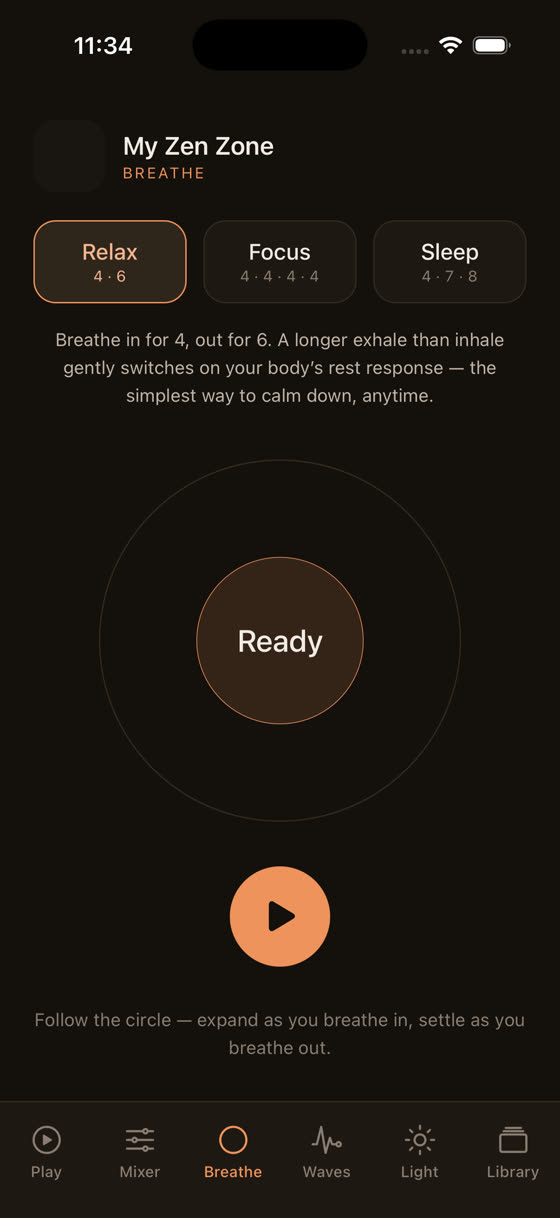
A 4-6 pattern — four seconds in, six seconds out — is a good starting point because the longer exhale is doing the actual work of nudging your heart rate down. Two minutes of that, paired with a low even sound floor, will get you further than another five minutes of scrolling for a nicer location.
Winding Down When "Near Me" Really Means "Right Here, Tonight"
The evening version of this question is usually about sleep, not scenery, and light is the variable most people skip. Screens before bed push blue light that tells your brain it's still daytime; a dim, warm light screen does the opposite without forcing you to sit in total darkness before you're ready.
If you use guided sessions to wind down, the usual complaint is that the voice cuts the music out completely, so you either lose the narration in a noisy house or lose the music you were enjoying. Ours are built as layers instead — voice, music, and nature sound each with an independent level, so the narration sits over the music rather than replacing it.
Pull the voice down to almost nothing near the end and let the music carry you the rest of the way, which is closer to how people actually fall asleep than a session that just stops talking and leaves silence.
What to Do Tonight, Specifically
Skip the search for a better location and try this instead: pick a chair or bed you already have, dim the lights or use the light screen, put on headphones, layer a sound bed at a level that just covers ambient noise, and set a stopping point with a sleep timer so you're not wondering when it'll end. Do two minutes of slow exhale breathing before you even start the music. None of this requires driving anywhere, and it works at 6am in a hotel room as well as it does at home. The full library, browser access included with a subscription, lives at myzenzone.app, and new tracks are added every two weeks, so the "place" you build tonight can sound slightly different next month without you having to go looking for it.
Common questions
Is there an actual best time of day to do this?
Late morning and the hour before bed are the two most useful windows — mid-morning for a short reset before decision fatigue sets in, and pre-sleep for the wind-down described above. Outside those, any dip in your day where you can get five uninterrupted minutes works fine; consistency matters more than the exact clock time.
Do I need good headphones or speakers for this to work?
No. Layered sound helps more than fidelity. Cheap earbuds that let you hear rain, a low pad, and a voice at separate volumes will outperform expensive speakers playing one flat track. The mixing is what creates the sense of space, not the hardware quality.
What if I only have five minutes, not twenty?
Five minutes is enough for two minutes of slow exhale breathing followed by three minutes of layered sound with your eyes closed. It won't replace a full wind-down, but it reliably drops heart rate and gives you a usable reset before a meeting, a difficult call, or just the rest of the afternoon.
Does any of this work without wifi, like on a flight or in a park with no signal?
Yes, as long as you've downloaded the tracks or sessions beforehand. Streaming needs a connection, but offline downloads don't, which is why it's worth setting a few favourites to download while you're on wifi at home rather than discovering the gap mid-flight.
Are there real studies behind the 60-70 bpm tempo claim?
The evidence is suggestive rather than conclusive. Slower tempos close to a resting heart rate are commonly associated with reduced perceived stress in small studies, but there's no large, definitive body of research proving cause and effect. Treat it as a reasonable starting point, not a guarantee, and notice what actually settles you.