The Short Answer
The best study music app is the one that lets you build your own sound instead of handing you someone else's playlist. For most people that means instrumental tracks around 60-90 bpm, no lyrics, no sudden key changes, and a way to layer in background texture like rain or a low drone so your brain stops flagging silence as \"something changed.\" My Zen Zone was built on that idea: hundreds of original instrumental tracks composed and recorded by one musician, a mixer that lets you set each sound independently, and a library that adds new tracks every two weeks so you're not looping the same forty minutes for an entire term.
Why Most Study Playlists Fail Within Twenty Minutes
Open any generic \"study music\" playlist on a streaming service and you'll notice the problem after a while, not immediately. The tempo drifts. A track with vocals slides in because the algorithm decided you'd like it. An ad breaks the mood right as you were settling into a paragraph. None of this is malicious, it's just not designed for the job. Streaming platforms are built to keep you listening across genres, not to keep your attention on a page of notes.
The other issue is repetition fatigue. A single 40-minute lo-fi loop gets used so often by so many people that your brain starts treating it as background noise you've already fully processed, which sounds good until you realise \"fully processed\" also means it's stopped doing any work for you. Fresh material matters more than people assume. That's part of why we release new tracks every two weeks rather than sitting on a static back catalogue.
What's Actually Happening in Your Head
Lyrics compete with reading and writing because both use overlapping language-processing resources. Try reading a dense paragraph while someone talks near you, then try it with instrumental music at low volume, and the difference is obvious for most people, though not universal. Some people study fine with lyrics; if that's you, ignore this section and do what works.
Tempo matters too, though the evidence here is more suggestive than proven. A steady 60-70 bpm sits close to a resting heart rate, and slow, predictable rhythms seem to help some people settle into a task without the music demanding attention. Faster tempos, 100+ bpm, suit repetitive admin work like sorting files or clearing email better than they suit close reading. None of this is settled science. Treat it as a starting point to test on yourself, not a rule.
The Mixer Is the Actual Difference
Most apps give you a track, or a playlist of tracks, and that's it. My Zen Zone gives you a mixer: independent volume for the music bed and for separate nature layers like rain, wind, or a low ocean sound, so you can build a mix that's louder in texture and quieter in melody, or the other way round, depending on what your brain needs that day.
Watch that and you'll see the actual difference between an app and a playlist. You're not picking a track, you're building a room. Some days you want more rain and barely any piano. Other days the piano needs to carry and the rain just needs to fill the gaps. That control is the whole point, and it's covered in more depth in our piece on music for focus and study.
Matching the Sound to the Actual Task
Not all studying is the same task, so it shouldn't get the same sound. Deep reading and writing benefit from sparse, slow instrumental pieces, mostly piano or soft strings, low in the mix. Rote memorisation, flashcards, repetitive problem sets, tolerate more rhythmic material because the cognitive load is different, more mechanical. Group study or anything involving talking aloud usually needs music dropped almost to nothing, just enough texture to mask a silent room.
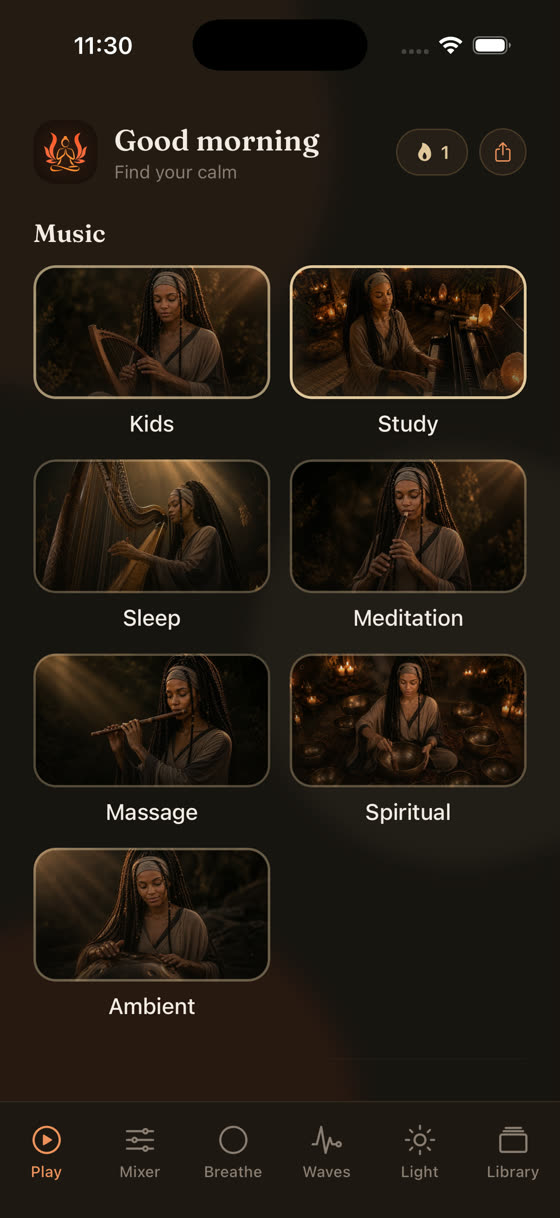
Having categories built around the actual use case, rather than one long undifferentiated \"focus\" bucket, makes it faster to find what fits the next hour rather than the whole day. That's why the home screen is split by purpose rather than by mood alone.
Brainwave Tones and Where the Evidence Actually Stands
Binaural beats and isochronic tones get mentioned a lot in this space, and we include them, but it's worth being straight about what's known. The research on brainwave entrainment for concentration is thin and mixed, not the settled fact some apps imply. Some people report it helps them settle in; for others it does nothing noticeable. We'd rather say that plainly than oversell it.
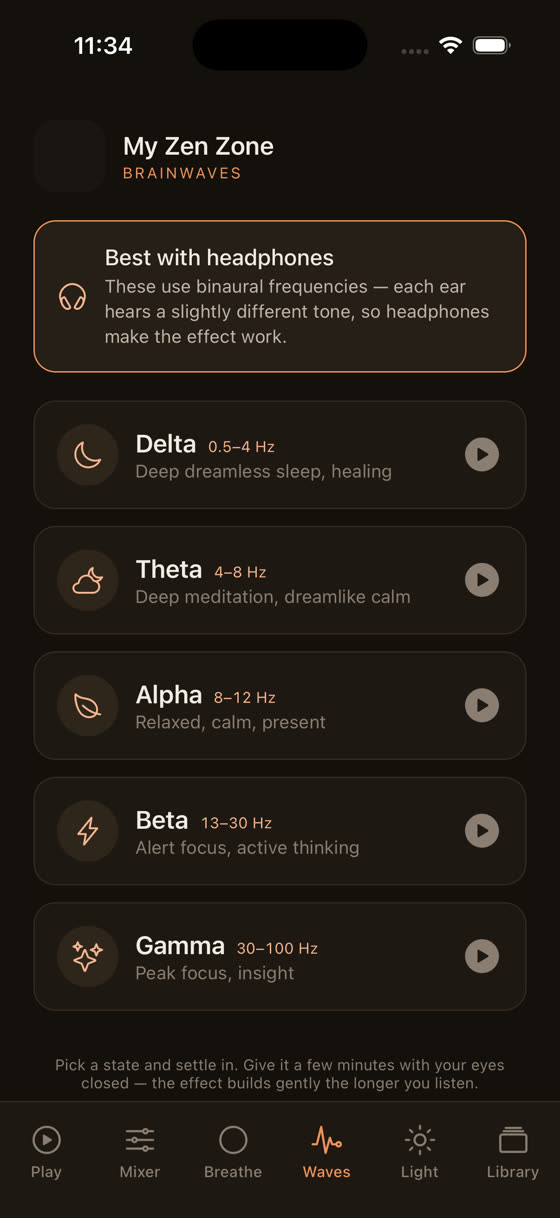
If you're curious, it costs nothing to try a session at low volume under your usual study track and see whether it changes anything for you specifically. Self-experimentation here is reasonable. Certainty is not.
Guided Resets Between Study Blocks
A lot of study fatigue isn't about the studying itself, it's about not resetting between blocks. A five-minute guided breathing or grounding session between a 50-minute stretch of reading and the next one can do more for concentration than another hour of forcing it. The catch with most guided content is that it stops your music entirely, which breaks the mood you'd just built.
Ours plays as a separate layer, so a short guided voice track sits over the same music and nature sound you were already using, not instead of it. You can pull the voice level down to almost nothing if you just want the structure of the pacing without much narration, or bring it up if you want more guidance. It's a small design choice that changes how usable these sessions actually are day to day.
What to Actually Change Tonight
If you're mid-revision or facing a deadline this week, don't overhaul your whole setup. Pick one thing. Turn off any playlist with vocals for your next study block and swap in a single instrumental track at low volume, layered with one nature sound, nothing else. Notice whether the paragraph you're reading takes fewer rereads. Set a timer for 45 minutes rather than an open-ended session, since knowing there's an end point reduces some of the low-level anxiety that makes people check their phone.
Download the tracks you use most before an exam day or a library session with patchy wifi, since offline access removes one more thing that can interrupt you mid-thought. And if you study late and then need to sleep afterwards, the transition matters more than people plan for, which is covered separately in our guide to music for sleep. The two are more connected than they look: a mind that's still running on 90 bpm focus music at midnight isn't going to settle easily.
Trying It Properly
You can read about tempo and mixers all day, but the actual test is whether it holds your attention through a real reading list or a real problem set, not a five-minute demo. The app is free to start at myzenzone.app, and if you want the full library with offline downloads and the browser version alongside the phone app, that's through the subscription page. Build one mix, use it for a week, and adjust from there. That's more useful than any single track recommendation could be.
Common questions
Does instrumental music actually help you concentrate better than silence?
For some people, yes, mostly because a low, predictable sound masks distracting background noise better than total silence does. For others, silence works fine or even better. There's no universal answer here, and the honest advice is to test both for a week and see which one actually reduces how often you reread the same sentence.
What tempo is best for studying?
Roughly 60-90 bpm suits most reading and writing tasks, since it's close to a resting heart rate and doesn't compete for attention. Faster tempos around 100+ bpm can work better for repetitive, mechanical tasks like sorting or admin. Treat these as starting points, not rules, and adjust based on what actually keeps you working.
Can I use the same music for studying and falling asleep afterwards?
You can, but a hard tempo and volume drop between the two helps more than people expect. Studying music, even at low volume, tends to be more active than sleep music. Switching to something slower and quieter at least twenty minutes before bed gives your mind a clearer signal that the task has actually ended.
Are binaural beats worth using while studying?
The evidence for binaural beats improving concentration is thin and mixed, not conclusive either way. Some people notice a difference, many don't. If you're curious, try a low-volume tone under your usual music for a session or two and judge it on your own results rather than on what any app claims it will do.
How often should I change up my study playlist?
More often than most people do. Repetition fatigue is real: a track you've heard fifty times stops giving your brain anything to lock onto, even at low volume. Rotating in new material every week or two, rather than looping one fixed playlist for a whole term, tends to keep the masking effect working.