The fastest way to relax your mind is to slow your breathing to around six breaths a minute and give your attention one specific, low-effort thing to focus on instead of your thoughts. That's it. Everything else people recommend — music, nature sounds, guided sessions, dim lighting — works because it helps with one of those two jobs. Nothing works by telling your brain to simply stop thinking, which is the advice that fails most people most often.
Why "just relax" doesn't work
Telling an anxious or overstimulated mind to relax is like telling a dog not to think about a squirrel. The instruction has no content. Your nervous system doesn't respond to commands, it responds to signals: breath rate, muscle tension, what your ears and eyes are taking in. When your breathing is shallow and fast, your body reads that as a sign something is wrong, even if nothing is wrong, and it stays alert. Slow the breath down and the body reads the opposite signal. This is one of the few mechanisms in this whole space that's genuinely well established, not a wellness claim dressed up as science: longer exhales activate the vagus nerve and nudge your heart rate down. Everything downstream of that gets easier.
The second half of the problem is attention. A racing mind isn't usually racing about nothing, it's racing about tomorrow's meeting or an email you shouldn't have sent. You can't out-argue those thoughts. What works better is occupying the channel they're using, usually with something sensory and repetitive, so there's less bandwidth left for rumination.
Breathing with something to follow
Counting breaths in your head is harder than it sounds, because the counting itself becomes another thought to manage. A visual or audio pattern does the same job with less effort. A 4-6 pattern — four seconds in, six seconds out — is a reasonable place to start; the longer exhale is doing most of the work.
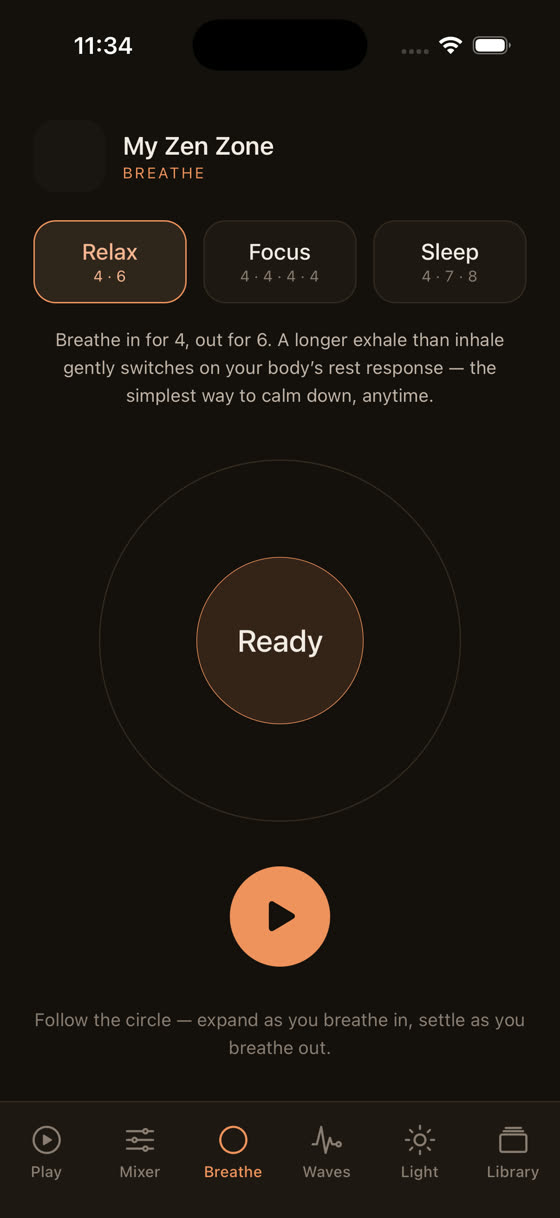
We built a breathing screen for exactly this reason, something to follow with your eyes for ninety seconds before you even reach for music. It sounds almost too simple to matter. In practice it's the quickest reset we know of, faster than anything involving a track at all.
Sound as an anchor, not a distraction
Music helps because it gives the mind a single, structured thing to track, which crowds out the looping thoughts. But generic "relaxing music" playlists often miss the mark because they're not actually calm, just quiet. A track with a sudden key change or a swelling string section forty seconds in will pull your attention upward right when you wanted it to settle.
Nature sound layered underneath solves a slightly different problem: it masks the unpredictable noises in your actual environment — a radiator ticking, someone's footsteps upstairs — that would otherwise keep triggering tiny spikes of alertness. The trick is balance. Too much rain and you can't hear the music's structure; too little and it's not doing its masking job.
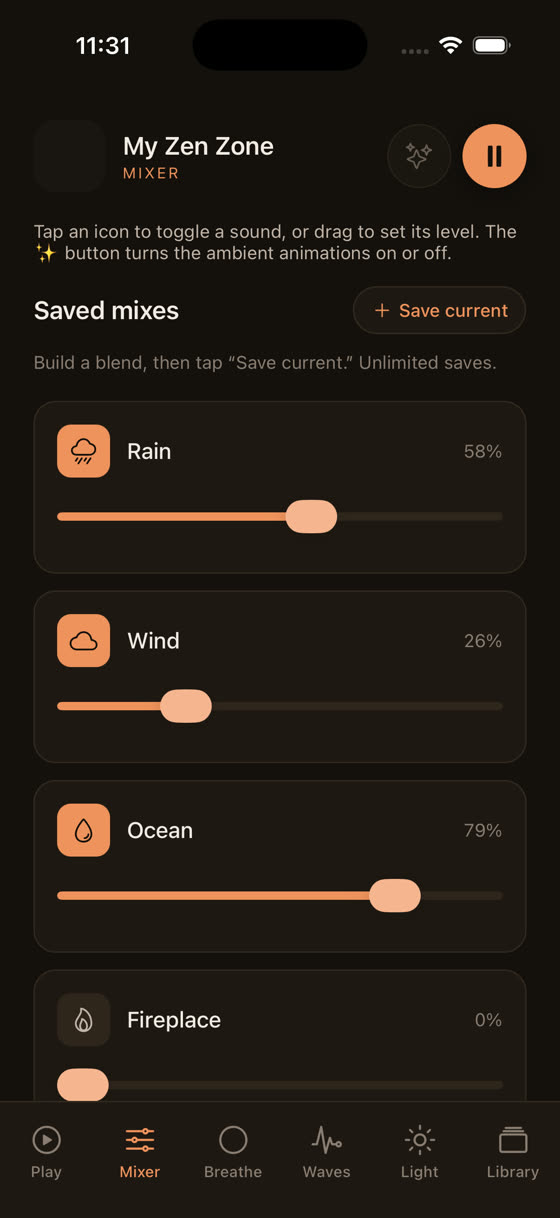
This is the one thing most relaxation apps get wrong: they give you a fixed track, rain sound baked in at whatever level someone else chose. We built a mixer instead, three layers — say piano, rain, and distant thunder — each with its own slider, so you can turn the rain up until the room disappears and leave the music low enough that it's barely there. It takes fifteen seconds to set and it's worth doing before you lie down, not after.
The tempo that actually matters
If you're choosing music specifically to bring your mind down from a wired state, tempo matters more than genre. Most of our calm and sleep material sits around 60 to 70 beats per minute, close to a resting heart rate. There's a real, if modest, entrainment effect where your pulse tends to drift toward the tempo you're listening to. A piano piece at 68 bpm will do more for you at 11pm than an ambient track with no discernible pulse at all, because the pulse gives your nervous system something concrete to match.
This is also where a lot of generic playlists fall apart — they mix a 70 bpm piece next to a 110 bpm one because both are tagged "relaxing," and the jump undoes the work. We keep tempo consistent within a session for this reason, and if you want the fuller argument for why music helps sleep specifically, it's laid out in our piece on the best music for sleep.
Guided sessions without losing the music
Guided meditation helps a lot of people, but the usual format has a flaw: the moment the voice starts, the music either stops or drops to near silence, and you lose the exact anchor that was helping you settle in the first place. You're left with instructions and nothing else, which for some people is just more words to process.
We treat the voice as a layer, not a replacement. A guided session plays over the music at a level you set yourself, so a ten-minute body scan can sit on top of a quiet piano track instead of interrupting it. Turn the voice down and leave the music running after the session ends, or turn the music down and let the voice carry more weight if that's what the moment calls for. It's a small structural difference but it changes how the session actually feels.
When you do this matters as much as how
Relaxing your mind at 2pm during a stressful workday is a different task than relaxing it at 11pm before sleep, and the tools should differ too. In the afternoon, five minutes of slow breathing with a steady track and your eyes closed at your desk is realistic; a full guided session usually isn't. At night, the job is different — you're not trying to feel calm for the next hour, you're trying to fall asleep, which means dimming actual light matters as much as dimming mental noise.
A screen that gradually fades the light in the room, paired with a sleep timer so the music doesn't keep running after you're out, closes a gap that pure audio apps leave open. If your mind is racing for work-related reasons during the day rather than at bedtime, a steadier, more rhythmic kind of focus music is the better tool, and that's a separate approach covered in our guide to music for focus and study.
What most advice on this topic gets wrong
A lot of relaxation content treats the mind like it just needs permission to switch off, as if the main obstacle is that nobody told you it was allowed. That's rarely the actual problem. The real obstacle is usually physiological arousal that hasn't been given a reason to come down, plus an attention system with nothing else to hold onto. Neither of those responds to encouragement. They respond to a slower breath rate, a steady low-frequency sound to track, and a reduction in unpredictable sensory input. Strip away the soft-focus language and that's the actual mechanism behind almost every technique that works.
It's also worth being honest about limits. None of this is a treatment for anxiety disorders or chronic insomnia, and if either of those applies to you, this is a tool to use alongside proper support, not instead of it. For the ordinary, everyday version of a mind that won't settle down, though, the combination of slow breathing, a steady low tempo, and one well-balanced layer of sound is about as reliable as anything we know of.
What to actually do tonight
Pick one thing and do it properly rather than trying all of them at once. Ninety seconds on the breathing screen, in for four, out for six. Then a single track around 65 bpm with rain underneath, mixed so the rain sits just above the music. No guided voice tonight if your mind is especially loud, since an extra layer of language might be one input too many; save that for a calmer evening.
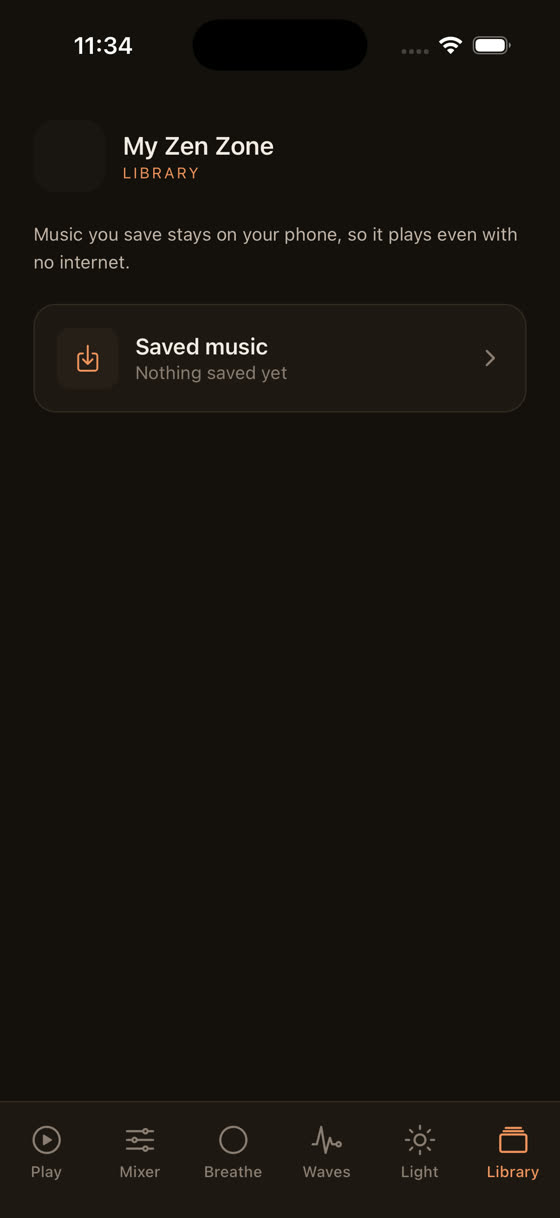
The whole library, including the fortnightly additions, is available through the app on iPhone and Android, or in a browser with a subscription, and you can download tracks offline for a flight or a night with no signal. You can start with the free tier and see which combination actually settles your particular mind — get it here and spend one evening just experimenting with the mixer before you decide it's not for you.
Common questions
How long does it take to actually feel calmer?
With slow breathing and a matched tempo, most people notice a shift in a few minutes, sometimes within the first minute if the breathing is doing the heavy lifting. Falling fully asleep or reaching a settled focus state takes longer, usually ten to twenty minutes. If nothing has shifted after that, the issue is often sound level or tempo mismatch, not the technique itself.
Does the type of instrument matter, or just the tempo?
Tempo matters more, but instrument choice affects how long you can listen without your attention drifting upward. Piano and soft strings tend to work well because they have a clear, trackable pulse without sudden dynamic jumps. Anything with vocals or a strong melodic hook tends to pull attention toward the words or tune rather than letting it settle.
Is it better to use silence instead of music to relax?
Silence works for some people, but it also removes the masking effect that sound provides against unpredictable background noise. If your environment is genuinely quiet, silence plus slow breathing is fine. If there's traffic, a housemate, or street noise, a steady low layer of sound usually helps more than hurts.
Can I use these techniques during a stressful moment at work, not just at bedtime?
Yes, and the method is largely the same, just shorter. Ninety seconds of slow breathing at your desk, eyes closed if you can manage it, with a quiet steady track through headphones, is enough to bring a spike of stress down without needing a full session.