The best relaxation app is the one that lets you shape the actual sound, not just press play on someone else's finished mix. That means a mixer where you set the level of rain, music and a voice independently, a library big enough that you're not hearing the same eight-minute loop every night for a year, and a way to use guided sessions without the music cutting out underneath them. Star ratings and download counts tell you almost nothing about whether an app will actually help you sleep at 11pm on a Tuesday. What follows is the criteria that do.
What "Best" Actually Means Here
Relaxation is not one thing. Winding down before bed at 60-70 bpm, roughly a resting heart rate, is a different job from holding attention during two hours of deep work, which is a different job again from a ten-minute reset between meetings. A genuinely useful app has to serve all three without forcing you into a single mood of music. It also has to let you adjust for the specific night: a partner already asleep, a flight with turbulence, a flat that's too quiet and makes the silence itself distracting. The apps that do this well share a few traits: real control over layers of sound, a library deep enough to avoid habituation, and tools built around actual use cases rather than generic "calm" branding.
Most Apps Give You a Playlist, Not a Mixer
Open a typical relaxation app and you'll find a single audio file: rain, or a drone, or rain with a drone baked into it at a fixed ratio someone else chose. If the rain is too loud for you or the tone underneath grates after twenty minutes, your only option is to skip to a different fixed file and hope. That's not relaxation, that's compromise.
A mixer changes this. Instead of one track, you get separate sliders for the music, for rain, for waves, for a fire crackling in the background, each set to your own level and saved that way. Some nights you want thunder loud and music barely audible. Other nights it's the reverse. Watching the balance actually move in real time makes the difference obvious in a way a description can't.
This is also where a good app becomes genuinely personal rather than a one-size mix. Once you've found a combination that works, an evening routine becomes two taps instead of a search through menus.
Guided Meditation Should Not Silence the Music
Most meditation apps handle a guided session by stopping the ambient music entirely and playing a voice over silence, or over a thin drone that has nothing to do with what you were just listening to. It's a jarring switch, and it means the two things you actually want, calming music and spoken guidance, are treated as mutually exclusive.
They don't need to be. A session can run as three separate layers: Voice, Music and a nature sound, each with its own level, all playing together rather than one replacing another. Turn the voice down to a whisper under the music if you just want it in the background. Turn the music off entirely if you want the instruction alone. Either way, nothing has to stop and restart.
This matters more than it sounds. The jolt of music cutting to silence is exactly the kind of thing that pulls attention back up when you're trying to let it go.
Sleep and Focus Are Not the Same Job
Sleep music generally wants to be slow, repetitive and low in melodic interest. Anything with a clear tune, a rising chord progression, or a beat you can tap along to will keep a portion of your attention active, which is the opposite of what you want at midnight. That's the reasoning behind most work built specifically for music for sleep: long tones, minimal movement, nothing that resolves in a way that makes your brain wait for the next note.
Focus music runs on different rules entirely. You want enough structure to mask distracting noise and hold a steady tempo, but not so much melody that it competes with the sentence you're trying to write or the spreadsheet you're trying to read. Instrumental, repetitive, mid-tempo work tends to hold attention best over long stretches, which is the territory covered in more detail in music for focus and study. Treating both needs as "relaxing background music" and reaching for the same playlist for both is one of the more common mistakes people make, and it undercuts both goals at once.
The Overlooked Feature: A Library That Keeps Growing
Repetition is the quiet killer of relaxation apps. Hear the same forty-minute loop enough times and your brain starts anticipating every swell and pause, which defeats the purpose. A library of a few dozen tracks, however well made, runs out of road within a couple of months of nightly use.
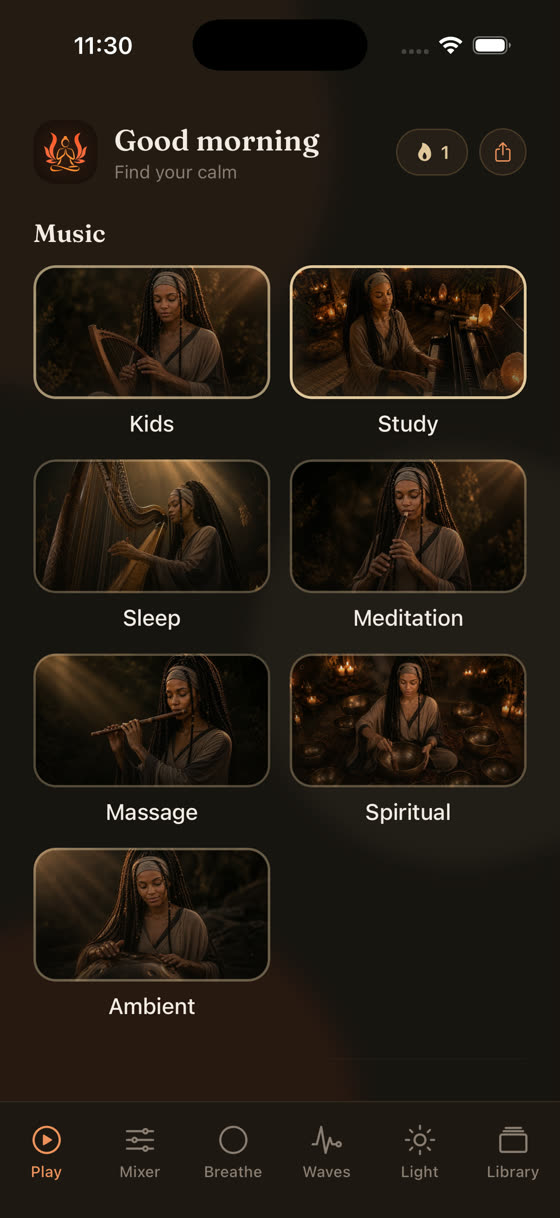
A library that runs to hundreds of tracks across sleep, focus, meditation and calm, with new pieces added every two weeks, solves this differently: there's always somewhere new to go when the familiar tracks stop working the way they used to. It also matters who's making it. Music composed and recorded by one person, working across the whole library rather than licensed in bulk from a stock catalogue, tends to have a consistency of intention that a grab-bag of outsourced tracks doesn't.
What Most "Best App" Roundups Get Wrong
Search results for this exact question are mostly listicles ranking apps by App Store category position or number of downloads, which measures marketing budget more than sound design. Few of them mention whether you can actually adjust the mix, whether guided sessions run alongside music or replace it, or how often the library changes. Fewer still are honest about the state of the evidence: research into whether specific tempos or frequencies improve sleep or focus is thin and often inconclusive, and no app should be claiming otherwise. What's reasonable to say is that many people find a consistent, quiet wind-down routine helpful, and that removing jarring or unpredictable sound from a bedroom or workspace tends to help more than adding anything specific does.
Small Things That Matter More Than People Think
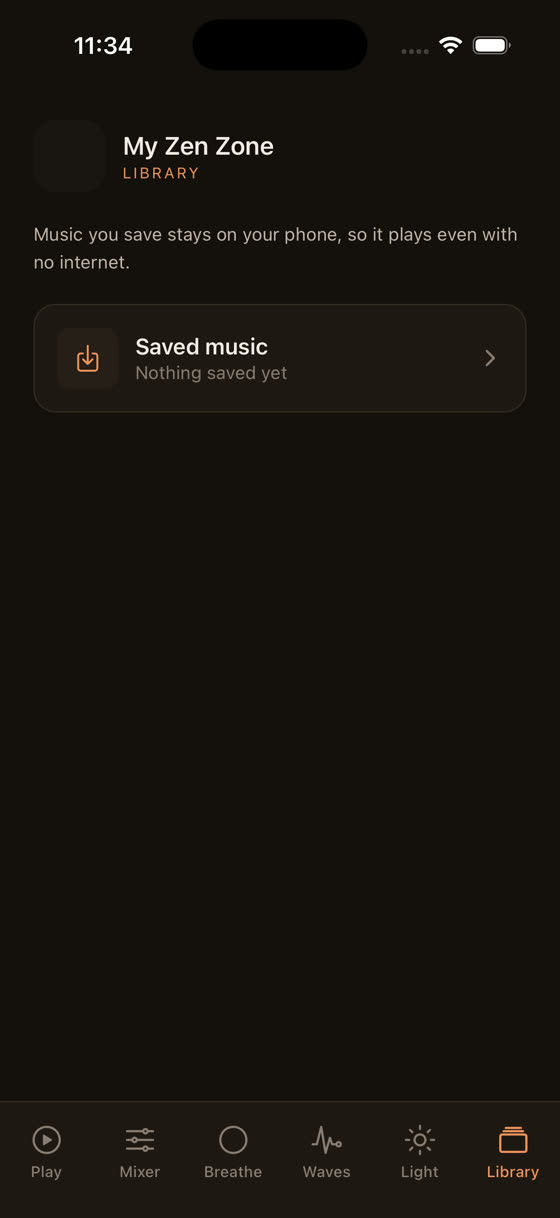
Offline downloads sound minor until you're on a flight, in a basement gym, or somewhere with patchy signal and the stream stutters right as you're falling asleep. A sleep timer that fades out and stops, rather than looping all night and draining the battery next to your head, is a small detail that gets used every single night. Brainwave tones for a focus session, and a dedicated light screen for winding the room down before bed, are the sort of features that don't show up in a five-star review but get used constantly once someone finds them.
What to Actually Try Tonight
Pick one specific problem rather than "relaxation" in general. If it's sleep, start with a slow, low-melody track, add a single nature layer at a low level, set a 30-minute timer, and turn the phone face down. If it's focus, choose something mid-tempo and instrumental, and give it forty minutes uninterrupted before judging whether it's working. If you use a guided session, try running the voice at a lower level under music rather than alone. Small adjustments like this, made once and saved, do more than switching apps every few weeks looking for a magic track.
You can try this properly with the full mixer, guided layers, and growing library at myzenzone.app/get, or read more about how it all works at myzenzone.app.
Common questions
Do relaxation apps actually work for sleep?
Evidence is limited and mixed, so it's honest to say results vary by person rather than promising outcomes. What tends to help most people is consistency: the same quiet, low-melody sound each night signals wind-down time to your brain, similar to a bedtime routine. Treat it as one part of a habit, not a guaranteed fix on its own.
Is a free relaxation app good enough, or is a subscription worth it?
Free apps usually mean a small, static library and ads mid-session, which undercuts the whole point. A subscription generally buys you a much larger, regularly updated library, offline downloads, and mixer controls that free tiers strip out. If you use it nightly, the difference in variety and control shows up within a few weeks.
Can I use the same app for both sleep and focus music?
Yes, but use different tracks for each rather than one playlist for everything. Sleep material should be slow and low on melody; focus material can be mid-tempo and more rhythmically steady. An app organised by category, rather than one generic "relax" folder, makes it much easier to pick the right one for the moment.
Does listening to the same relaxation track every night stop working over time?
Many people find familiar tracks lose their effect once they've memorised every swell and pause, since the brain starts anticipating rather than settling. Rotating through new material, or adjusting a mixer to change the balance of layers, helps avoid this. A library that adds new tracks regularly gives you somewhere fresh to go when a favourite stops landing.
What's the difference between guided meditation and just ambient music?
Guided meditation includes spoken instruction, typically on breathing or body awareness, while ambient music has no voice at all. Most apps make you choose one or the other by stopping the music when a voice starts. Better designs let you run both together as separate layers, so you get instruction without losing the music underneath it.