Meditation music does not meditate for you. What it does, reliably, is give your nervous system something slower to match. A track built around 60-70 beats per minute, close to a resting heart rate, invites your pulse and breathing to drift toward that pace through a process called entrainment. Slower heart rate and breathing are linked to lower activity in the amygdala, the part of the brain most involved in threat response, which is the actual mechanism behind that familiar feeling of your shoulders dropping about ninety seconds into a track.
The Nervous System Response Is the Real Story
Most of what meditation music does happens below conscious thought. A steady, predictable rhythm with no sudden dynamic jumps gives the brain less to monitor. Less monitoring means less low-level vigilance, which is metabolically expensive even when you are just sitting at a desk worrying about an email. Lower vigilance shows up as lower cortisol-linked arousal and, over a session, a measurable drop in heart rate variability stress markers in some studies. This is not the same as claiming the music fixes anxiety. It is closer to removing one small tax your body was paying without you noticing.
The composition choices that help are unglamorous: no percussion that lands unpredictably, no key changes that force the ear to re-orient, long sustained tones instead of short plucked ones. A harp or soft piano line that resolves where you expect it to resolve asks nothing of your attention. That is the entire point.
Why Tempo Matters More Than Genre
People ask whether it should be classical, ambient, or nature-based, and the honest answer is that genre matters far less than tempo and texture. A fast, bright piano piece in a minor key can be more arousing than a slow synth pad, regardless of which one sounds more "meditative" on paper. What the brain responds to is pace, predictability, and the absence of lyrics competing for the language centres. This is why a 65 bpm ambient drone and a slow adagio for strings can produce a similar calming effect, while an upbeat acoustic guitar track, however pleasant, will not.
If you want to see this principle used deliberately rather than just talked about, the My Zen Zone library is organised by what a track is actually built to do rather than by instrument or mood word, which is a more honest way to sort music meant to change a physiological state.
The Binaural Beats and Brainwave Claims, Examined Honestly
A lot of what gets written about meditation music and the brain leans on binaural beats and brainwave entrainment claims that go further than the evidence supports. The real, modest finding is that certain frequency differences played separately into each ear can nudge EEG activity slightly toward a target frequency band, like theta for relaxed, dreamlike states. That is a real, studied phenomenon. What is not well supported is the leap from "slight EEG shift" to "this will make you meditate like a monk" or "this tone heals the body," which is marketing language, not research language.
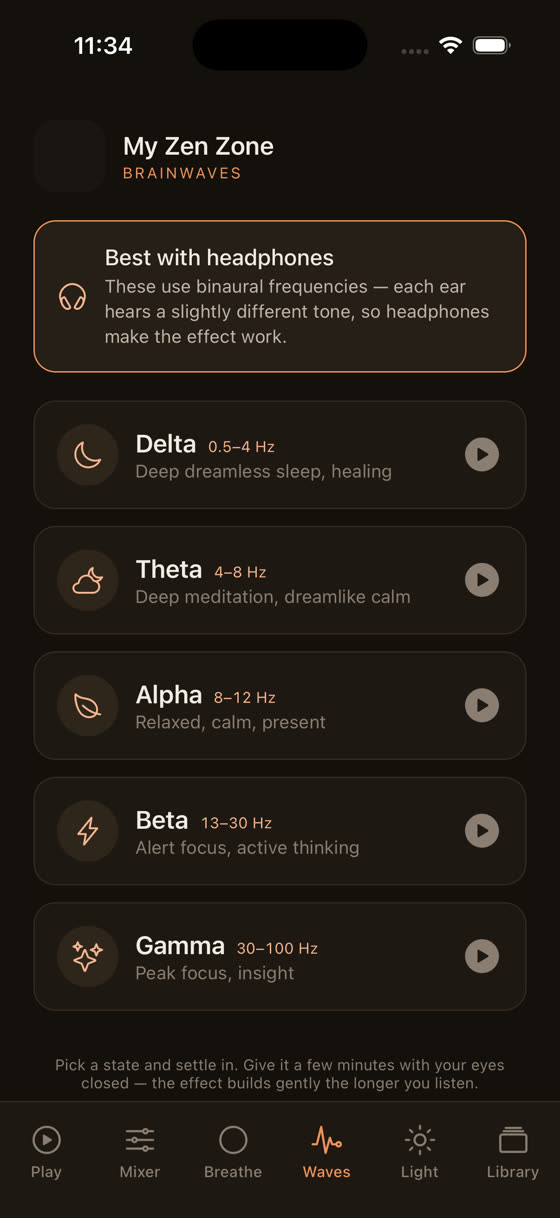
We include brainwave tone tracks because some people do find them useful as a focal point, the same way a candle flame or a mantra works for others. We just will not tell you they do more than the research says they do.
Meditation Music vs Guided Meditation: Two Different Jobs
These get lumped together but they work differently on the brain. Pure meditation music gives you a stable floor and gets out of the way. A guided meditation adds a second channel, language, which engages different processing and can be more effective for beginners who find silence or instrumental music alone too easy to drift away from without an anchor.
The problem with most guided meditation apps is that the voice replaces the music entirely, so you get narration over near-silence, which can feel clinical. We build it the other way: the voice sits as its own layer over the music rather than instead of it, so you keep the physiological benefit of the tempo and texture while still getting spoken guidance.
That clip shows a guided session with the voice, the music bed, and a nature layer each running on their own level, so you can bring the narration down and let the music carry once you know the pattern, instead of being stuck with one fixed mix.
Layering Sound Changes the Effect
One thing rarely discussed in articles about meditation music and the brain is that a single fixed track is a compromise. A brain that is wired and jittery at 9pm needs something different from the same brain forty minutes later when it has mostly settled. Being able to adjust rain against a drone against a low piano line in real time, rather than hunting for a new track, keeps the sound matched to where you actually are instead of where the algorithm assumed you'd be.
You can see three nature layers moving independently there, rain up, a distant thunder layer barely audible, a soft tonal bed underneath. That kind of control is the difference between background noise and something actually built around your nervous system in the moment.
Where This Connects to Sleep and Focus
The same mechanism that makes meditation music useful for settling the mind is why slow, steady tracks show up in sleep music recommendations, and why a different, more rhythmically consistent kind of track gets used for concentration in pieces on focus and study music. The target physiological state is different in each case, lower arousal for sleep, steady sustained attention for focus, but the underlying principle, giving the brain a predictable pattern it doesn't have to think about, is the same one driving meditation music.
What To Do Differently Tonight
If you've been treating meditation music as something to put on and hope works, try pairing it with a breath pattern instead of just listening passively. A simple 4-6 count, four in, six out, slows the breath below the music's own tempo and the two reinforce each other.
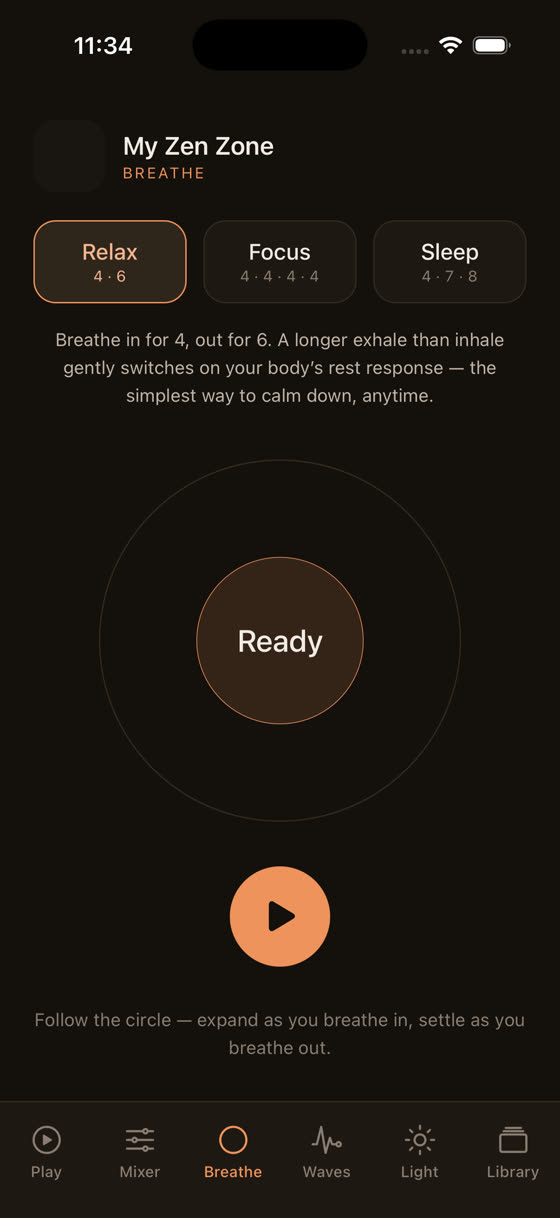
Ten minutes of that, with a sleep timer set so the track fades rather than cuts out, does more than forty minutes of music played in the background while you scroll your phone. The app shutting off on its own after a set period also matters more than people expect, because knowing you don't have to get up and stop it is itself one less thing for the vigilant part of your brain to track.
The Honest Limits of the Research
None of this is a substitute for clinical treatment of anxiety, insomnia, or attention disorders, and it would be wrong to suggest otherwise. The research on music and arousal, heart rate, and cortisol is genuinely solid in broad strokes. The research on specific frequencies, binaural claims, and precise brainwave targeting is thinner and often oversold. What meditation music reliably offers is a lower-stakes, repeatable way to give your body a cue to slow down, which for a lot of people, most nights, is exactly enough. If you want to try it properly rather than read about it, the full library, mixer, and guided sessions are free to explore from the app, with new tracks added every two weeks so it doesn't go stale.
Common questions
How long should I listen to meditation music for it to have an effect?
Ten to twenty minutes is usually enough to notice a slower heart rate and looser shoulders, based on how entrainment and breathing work. There's no fixed minimum in the research. Consistency matters more than duration, so a short daily session will likely do more for you than one long session a week.
Does meditation music work if I'm not actually meditating?
Yes, to a point. The physiological response to tempo and texture doesn't require formal meditation, which is why people use it while working, resting, or falling asleep. You'll get less of the attentional benefit meditation itself trains, but the nervous system calming effect from the music is largely independent of whether you're sitting in a formal practice.
Is there a difference between meditation music and ambient music for this purpose?
Often not much. What matters is tempo, predictability, and the absence of sudden dynamic changes, not the label on the genre. Some ambient tracks are built exactly like meditation tracks; some aren't. Check the pace and structure rather than trusting the category name alone.
Can meditation music replace guided meditation for beginners?
It can for some people, but many beginners find pure instrumental music too easy to drift away from without an anchor. A guided session with spoken instruction layered over music, rather than instead of it, tends to work better early on, giving you something to follow while still keeping the calming effect of the music underneath.