There is no single app that Reddit agrees on, and anyone who tells you otherwise hasn't read enough threads. Search r/meditation or r/getdisciplined for "best meditation app" and you'll find the same debate repeating every few months, with different winners depending on who's asking and why. What you can extract from those threads, though, is more useful than a ranked list: the actual complaints people have, repeated across hundreds of comments, point to real gaps in how most apps are built.
What the threads actually agree on
Strip away the brand names and three complaints show up again and again. People are tired of subscriptions that lock a handful of sessions behind a paywall and call it a library. People want to use the app for more than meditation, for sleep or studying too, and resent having five separate apps on their phone. And a surprisingly large number of comments are about one specific annoyance: the voice track in guided sessions is mixed too high, or too low, with no way to adjust it against the music bed underneath.
That last one is worth sitting with, because it's a design decision most apps never question. The guided voice is recorded as part of the final mix. You get what the producer decided, and if it doesn't suit your ear, your only option is to turn the whole thing off.
The mistake most "best app" roundups make
Nearly every listicle ranking meditation apps treats them as interchangeable, differing only in price and the size of their celebrity voice roster. That's a shallow way to compare tools that are meant to do different jobs. An app built for an eight-week mindfulness course and an app built for twenty minutes of wordless music before bed are solving different problems, even if both get filed under "meditation." Reddit threads are more useful than most SEO roundups precisely because people describe their actual situation: shift workers trying to wind down at 6am, parents with ten minutes between school runs, students who need something during a study session rather than a formal sit. The right answer changes completely depending on which of those you are.
Guided voice versus music-only, and why that split matters
If you read enough of these threads, a pattern appears: people eventually split into two camps. Some want a calm voice walking them through a body scan or a breath count every single time. Others find that after a few months the narration becomes noise, and what they actually want is the music and the quiet without someone talking over it. Most apps make you choose one lane and stay there, because the guided track and the music track are baked together as a single file.
That's the thing worth testing for yourself before you commit to a subscription. In My Zen Zone, a guided session plays as separate layers rather than one fixed file, so the voice sits over the music instead of replacing it, and you can lower the narration almost to nothing on the nights you just want the sound.
Watch that and you'll see what's actually different: a guided session with its own play button per layer, voice, music and nature sound each with an independent level. Turn the voice down to a whisper on week three of a habit and keep the music exactly where it was on day one. No other app we've tested does this, which is probably why it keeps coming up unprompted in the threads once someone's tried it.
Tempo and the mechanism behind "calming" music
Most articles on meditation music say "slow and calming" and leave it there, which tells you almost nothing. The usable detail is tempo: music built around 60 to 70 beats per minute sits close to a resting heart rate, and a lot of people find their breathing slows to match it within a few minutes, a basic entrainment effect rather than anything mystical. That's different from ambient drone work with no discernible pulse at all, which suits some people for deep focus but leaves others feeling untethered, with nothing to settle against.
This is also where a fixed library of ten tracks runs out of road fast. If the only tempo and instrumentation you're offered is one composer's idea of "relaxing," you'll plateau on it within a month. A library that keeps adding new material, new tempos, new instruments, every couple of weeks gives your ear somewhere new to go without abandoning the habit entirely.
Background sound and why one track is rarely enough
Another recurring Reddit complaint: people want rain, but not just rain. They want rain under a low drone, or rain with a single quiet piano line, and most apps give you one sound file on a loop with no way to combine it with anything else. A mixer where you can bring in three sounds at once, each at its own level, rain low, a soft pad higher, a single tone underneath, solves a problem that a lot of commenters clearly didn't know had a name.
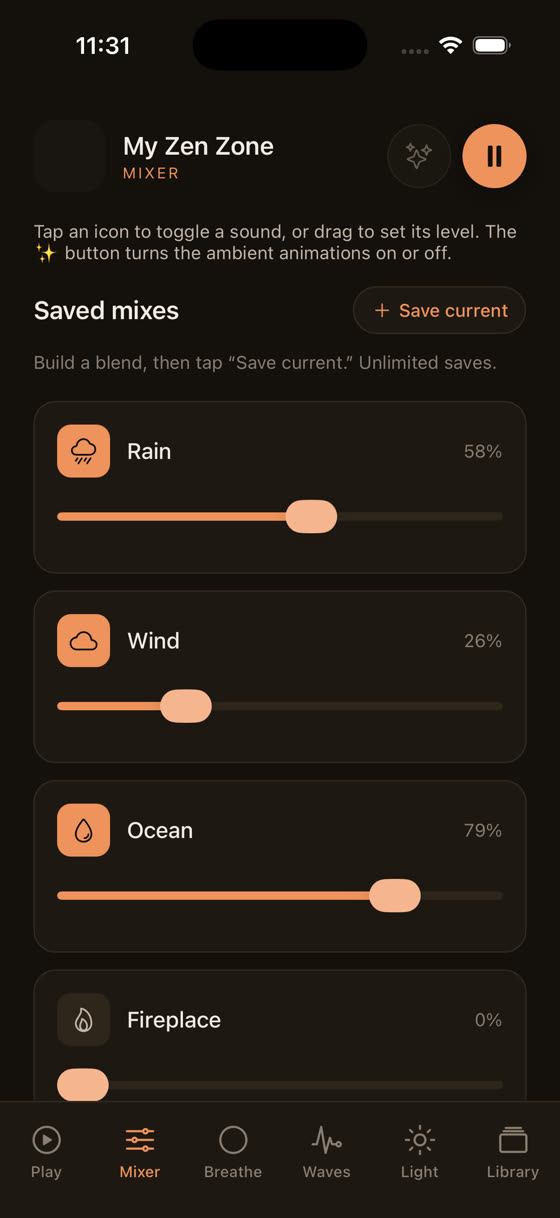
That second clip shows the levels actually being moved while the sounds play, which is a better demonstration than any description. If you're the kind of person who meditates with headphones on a commute, or falls asleep to a sound you've built yourself rather than one somebody else chose for you, this is the single feature that changes the most about daily use.
What to actually test tonight
Skip the full roundup and run a smaller experiment instead. Pick one night this week and try a wordless music track at around 60 bpm for ten minutes before bed, no narration, just sound, and notice whether your breathing changes without you trying to control it. Separately, try a guided session where you can turn the voice down rather than off, and see whether you actually prefer some narration at low volume to none at all. Those two tests will tell you more about which camp you're in than any forum thread will.
If you're testing this specifically for sleep rather than a daytime sit, it's worth reading our note on what actually helps with sleep music, since the tempo and structure that work for a ten-minute reset during the day are not quite the same as what you want running for forty minutes while you drift off. And if meditation for you is really about concentration rather than calm, the overlap with music built for focus and study is bigger than most people assume.
Where this leaves the subscription question
Reddit is generally right to be sceptical of subscriptions that gate everything behind a paywall after a seven-day trial. The honest answer is to check what you actually get for the price: how often the library grows, whether you can download sessions for offline use on a flight or in a basement gym with no signal, whether there's a sleep timer so the audio doesn't run all night on a charging phone, and whether the guided content and the music are flexible enough that you won't be bored of both within a month.
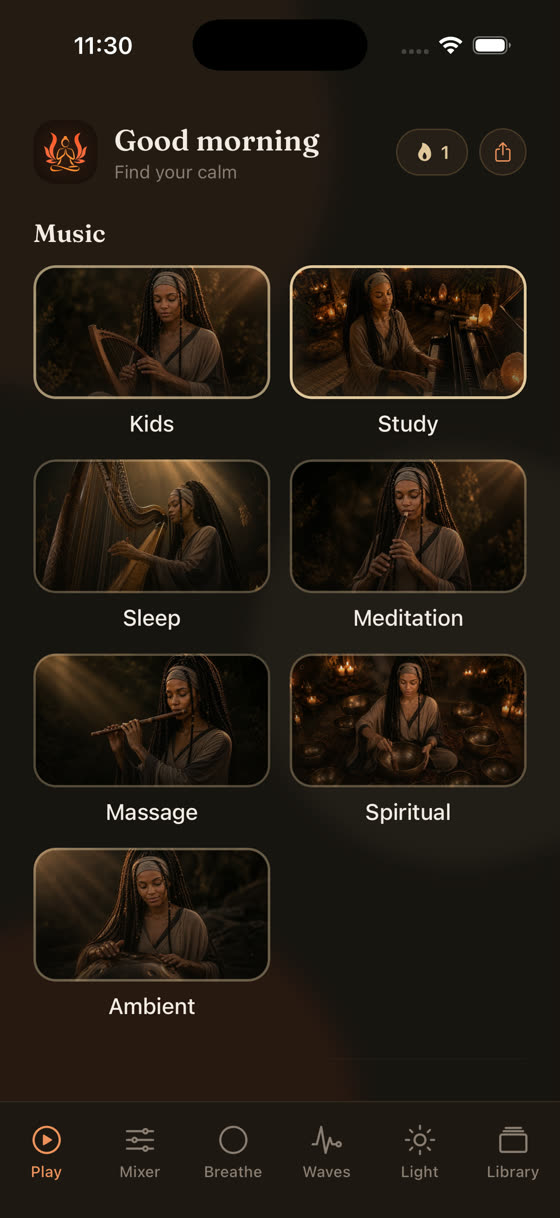
A library organised by what you're actually trying to do, sleep, focus, meditation, calm, rather than by instructor name, makes it easier to find the right session at 11pm without scrolling. New tracks land every two weeks here, composed and recorded by the same person rather than licensed in bulk, which is a slower way to build a library but means the tempo and instrumentation stay consistent across the catalogue instead of feeling like a dozen different apps stitched together.
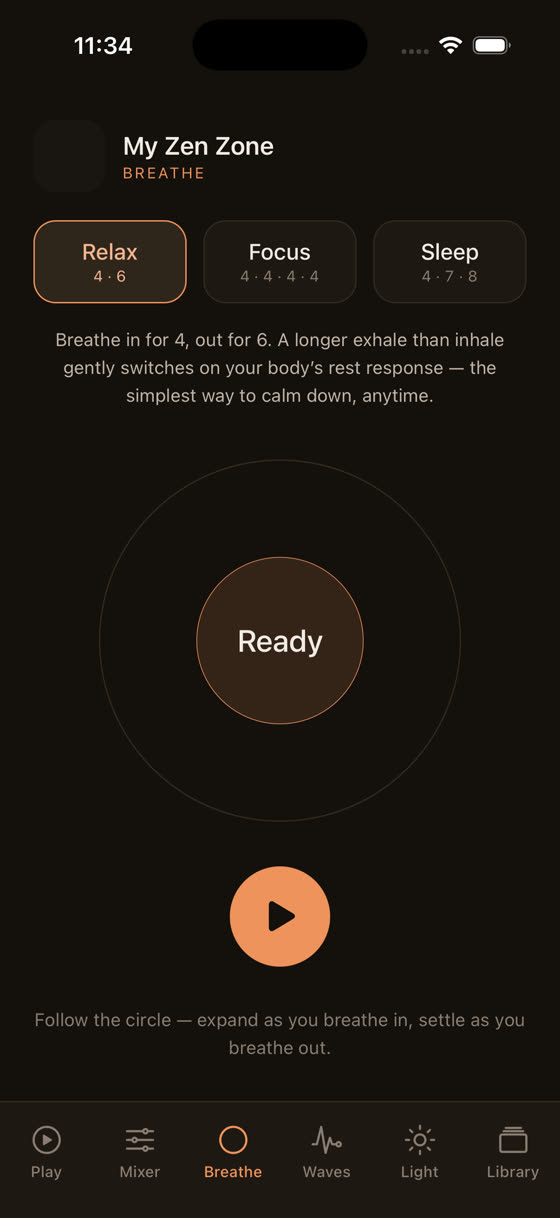
If none of the above answers your specific situation, the fastest way to find out if a mixer-and-layers approach actually suits you is to try it rather than read another ranked list. You can see the whole thing at myzenzone.app or go straight to the download and run the same ten-minute test described above tonight.
Common questions
Is there actually a scientific consensus on the best meditation app?
No. There's reasonably solid research that regular meditation practice can help with stress and attention, but almost no independent research comparing specific apps against each other. Reddit's value here isn't scientific, it's anecdotal pattern-matching from thousands of real users, which is useful but not the same thing as evidence.
Does My Zen Zone have guided meditations or is it only music?
Both. The library includes guided sessions alongside pure music tracks, and the guided sessions are built as separate voice, music and nature sound layers you can balance yourself, rather than one fixed file with the narration locked at a single volume.
What's a reasonable length to start with if I've never meditated before?
Five to ten minutes is a sensible starting point. Longer sessions don't automatically work better and are easier to abandon. Build the habit at a length you'll actually repeat most days before extending it, and use a sleep timer or session length that matches your real schedule rather than an ambitious one.
Can I use the app offline, say on a flight or somewhere with no signal?
Yes, tracks and sessions can be downloaded in advance for offline listening on both the iPhone and Android apps, which matters if you meditate somewhere with patchy signal, like a commute, a gym basement, or mid-flight.
How often does the music library actually update?
New tracks are added roughly every two weeks. They're composed and recorded in-house by one musician rather than licensed from a stock library, so the tempo and instrumentation stay consistent across hundreds of tracks instead of feeling like unrelated catalogues bolted together.