The honest answer is less exciting than the headlines promise: instrumental music with no lyrics, a steady tempo somewhere between 50 and 80 beats per minute, and nothing novel enough to grab your attention. That's it. There is no magic genre, no secret frequency, no fifteen-minute Mozart track that raises your IQ. What the research does support is quieter and more useful than that, and it has everything to do with how your brain allocates attention, not with which instrument is playing.
Why lyrics are the real problem, not "music" in general
Most of the confusion around study music comes from treating "music" as one category. It isn't. The part of your brain that processes language doesn't care whether words are coming from a lecture, a podcast, or a song lyric. It processes them the same way, which means a vocal track competes directly with the reading or writing you're trying to do. This is called the irrelevant speech effect, and it's one of the more consistently replicated findings in cognitive psychology. You can test it on yourself in about ten minutes: try reading something dense while a song with lyrics you know is playing, then try the same page with an instrumental track. Most people notice the difference immediately, especially with tasks that involve reading or writing rather than repetitive manual work.
This is also why so many "lofi beats to study to" playlists work reasonably well despite having almost no scientific backing behind the label itself. They're instrumental, repetitive, and low in surprise. The genre name is doing very little; the absence of lyrics is doing almost everything.
The Mozart effect was never about Mozart
If you've heard that classical music makes you smarter, you've heard a flattened version of a 1993 study that found a small, temporary improvement in spatial reasoning after listening to a Mozart sonata, lasting about ten to fifteen minutes. It was never about studying, it was never permanent, and later attempts to replicate it found the same small boost from other music people simply enjoyed listening to, and even from reading an engaging short story. The actual mechanism looks like mild arousal and mood improvement, not some property unique to Mozart or classical structure. The marketing outlived the finding by about three decades.
That doesn't mean classical music is useless for studying. A lot of it happens to fit the useful criteria by accident: instrumental, steady, familiar in structure even if you've never heard the specific piece. But you're not getting a classical-music effect. You're getting an instrumental-and-predictable effect that classical music happens to deliver reliably.
Tempo matters more than most people think
Music in the 50-80 bpm range sits close to a resting heart rate, and there's reasonable evidence that tempo in this zone is associated with calmer physiological arousal, which supports sustained attention better than anything faster. Push past about 100 bpm and you start priming the body for movement and alertness in a way that's great for exercise and bad for sitting still with a textbook. This is one reason upbeat pop, however much you enjoy it, tends to underperform for deep work even when it has no lyrics at all. The tempo itself is doing work against you.
We build with this in mind. Most of what sits in our focus library runs slow and even on purpose, not because slow is "calming" in some vague sense, but because the tempo range has a specific, defensible relationship to attention. If you want to see what that looks like in practice, this piece on focus and study music goes into the specific instrumentation choices we make for long work sessions.
Novelty is the silent killer of a study playlist
Here's the part most articles on this topic skip entirely: familiarity matters almost as much as tempo. A brand new track, even an instrumental one in the right tempo range, has more acoustic surprises in it than a track you've heard forty times. Chord changes, unexpected instrument entries, dynamic swells. Each of those is a tiny attention hook, and your brain, which is extremely good at detecting novelty, will orient toward it for a fraction of a second every time. Over a ninety-minute study session that adds up.
This is why the "put on a fresh playlist to stay motivated" advice you see everywhere is actually backwards for deep focus work, even though it's well-intentioned. Novelty is great for motivation and mood. It is mildly disruptive for sustained attention. The practical fix isn't to avoid new music altogether, it's to separate the two: explore new tracks when you're not trying to concentrate, and lean on familiar, predictable ones when you are. We add new music every two weeks for exactly the first use case, so there's always something new to find when you're in browsing mode rather than work mode.
What about white noise, brown noise, and nature sounds
Background noise research is messier than the tempo research, partly because it depends heavily on your baseline environment. If you work somewhere genuinely noisy, steady broadband noise like white or brown noise can mask sudden sounds that would otherwise pull your attention, and several small studies suggest this helps people with higher distractibility more than people who already focus easily. If your room is already quiet, adding noise on top can just be one more layer competing for attention. Nature sounds sit somewhere in between: rain and steady water tend to behave like gentle broadband noise, while sounds with unpredictable rhythm, like birdsong or distant traffic, reintroduce the novelty problem described above.
The honest answer is that this is individual enough that no article can tell you the right mix for your ears. What actually helps is being able to build your own and adjust it in real time rather than accepting whatever a playlist gives you.
That's the practical argument for a mixer instead of a fixed track list: you can bring in rain at a low level, keep the instrumental bed underneath it, and mute anything that starts to pull your attention the moment you notice it happening, instead of hunting for a different track entirely.
Binaural beats and brainwave claims: what's solid and what isn't
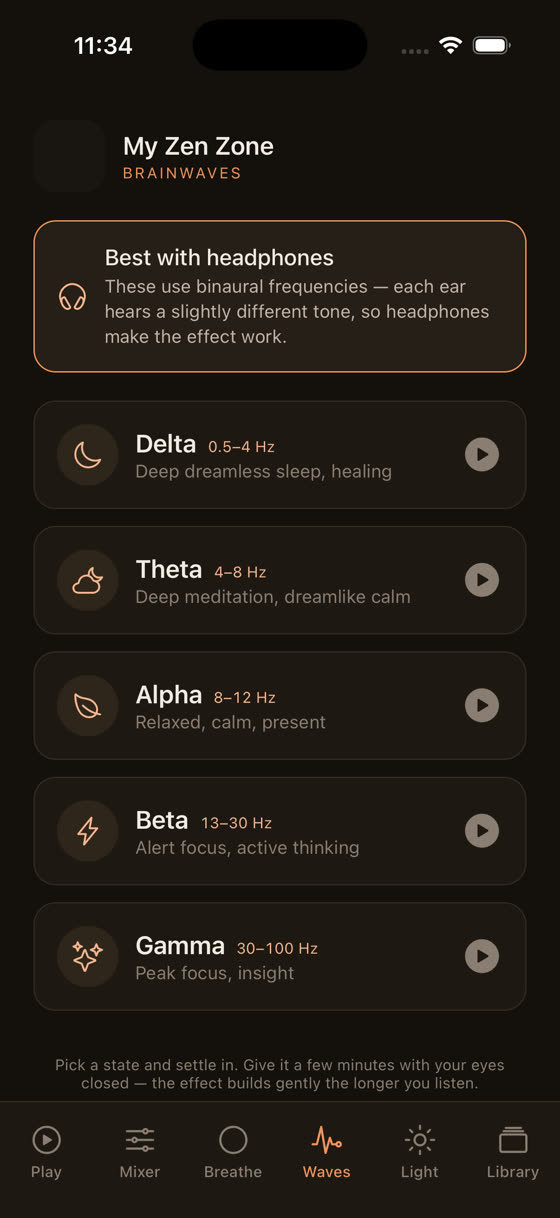
You'll see strong claims about binaural beats entraining your brain into a specific focus-friendly frequency. The honest state of the evidence is that it's an active area of research with some promising small studies, particularly around alpha and theta range tones and relaxed attention, but nothing close to the certainty the marketing around it implies. We include brainwave tones in the library because some people find them genuinely useful as a background layer, not because we're willing to promise a specific cognitive effect. Worth trying for yourself, worth being sceptical of anyone who guarantees results.
Building a study session that actually matches the research
In practice, the useful version of all this research is simple. Pick something instrumental. Keep the tempo under about 80 bpm unless the task is repetitive and manual rather than reading or writing. Default to tracks you've heard before during the actual work block, and save new discoveries for breaks. Add background texture only if your environment needs masking, and keep it low enough that you'd notice if it vanished, not so present that you're tracking it.
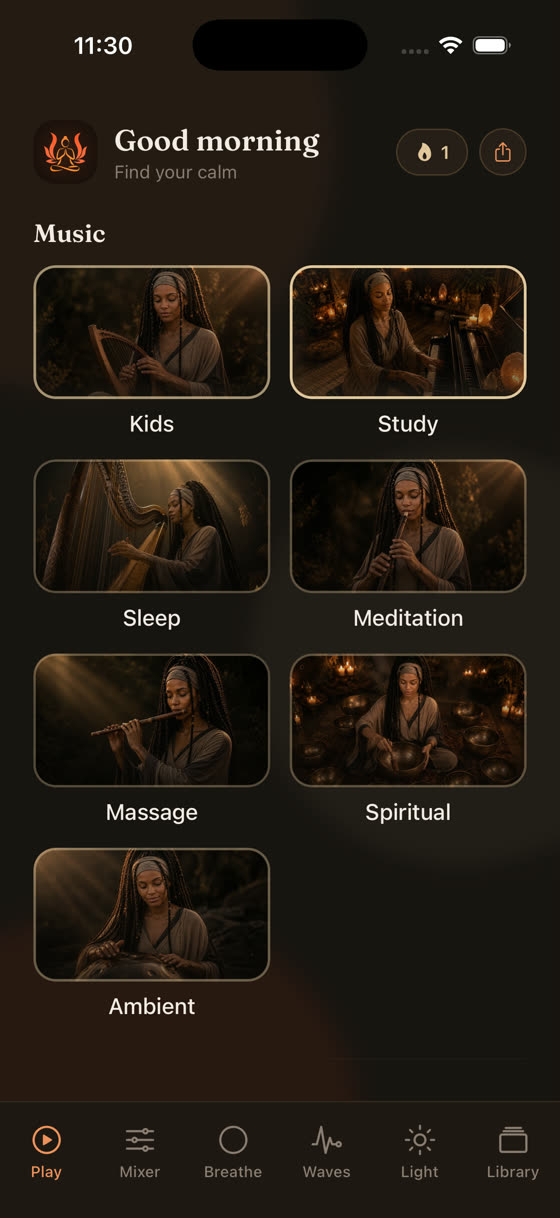
This is also where a sleep timer earns its place in a study routine, not just a bedtime one: setting a session to end automatically after fifty minutes means you're not the one deciding, mid-paragraph, whether to change the music. The decision is already made, which is one less thing competing for your attention. If sleep is the actual goal rather than studying, the same tempo-and-familiarity logic applies almost exactly, and our piece on music for sleep covers where the two overlap and where they diverge. For studying specifically, you can browse the full library, including everything added in the last fortnight, at myzenzone.app, or go straight to download the app and build your first mix tonight.
Common questions
Does instrumental music actually improve test scores or grades?
There's no solid evidence that any music directly raises scores. What the research supports is more modest: the right kind of music can reduce distraction and support sustained attention during study, which may help you study more effectively. That's a real but indirect benefit, not a guaranteed grade boost, and it's worth being wary of anyone claiming otherwise.
Is silence actually better than music for studying?
For some people and some tasks, yes. If you're highly sensitive to sound or doing something that demands intense verbal processing, like writing, silence can outperform any music. The research on music and focus shows average effects across groups, not guarantees for every individual, so it's worth testing both against your own concentration.
Can I use the same study music for sleep?
Some of it overlaps, since both benefit from slow tempo and no lyrics, but sleep music generally works better slower still, often below 60 bpm, with less rhythmic structure to hold attention. Study music needs just enough structure to stay in the background without going still. We treat them as related but separate categories for this reason.
How loud should background music be while studying?
Quiet enough that you could describe the room as calm rather than quiet enough that you're straining to notice it's there. A rough practical test: if you catch yourself consciously listening to a melody or lyric, it's too loud for deep work and better suited to a break.