We need to relax because the body can't tell the difference between a deadline and a threat. Your nervous system reacts to a looming email the same way it reacts to a near-miss on the motorway: heart rate up, breathing shallow, muscles primed. Relaxing is the only mechanism that switches that system back off. Skip it long enough and the "on" state stops being occasional and starts being your resting state.
The mechanism, not the metaphor
Most advice about relaxing stays vague, as if it's a mood you either have or don't. It's actually a measurable shift between two branches of your autonomic nervous system. The sympathetic branch handles alert, active, fight-or-flight states. The parasympathetic branch handles rest, digestion, repair. When you're relaxed, your heart rate settles toward a resting rate, often somewhere around 60 to 70 beats per minute for most adults, your breathing slows and deepens, and your body starts the maintenance work it postpones when it thinks it's under threat: digestion, immune function, memory consolidation during sleep. None of that happens properly while the sympathetic branch is running the show.
This is why "just relax" rarely works as advice. You can't talk your way into a parasympathetic state. You have to give your body actual signals it recognises: slower breathing, lower light, slower sound, stillness. That's a physical negotiation, not a mental one.
What happens when you don't
Chronic low-grade stress doesn't announce itself. It shows up as trouble falling asleep, waking at 3am with your mind already running, a short fuse by mid-afternoon, or the sense that you're tired but also wired. Sleep debt and unresolved stress compound each other: poor sleep makes you more reactive to stress the next day, and that stress makes sleep harder the following night. Attention suffers too. Sustained sympathetic activation narrows focus to immediate threats and makes the slower, broader thinking that real work requires much harder to access. If you've ever sat down to concentrate and felt like your brain was running in the wrong gear, that's often what's happening.
None of this means stress is the enemy. Short bursts of it are useful and sometimes necessary. The problem is a lack of contrast: never actually leaving the activated state, so the body loses the habit of returning to baseline.
What most articles about this get wrong
A lot of relaxation advice conflates "doing nothing" with "relaxing," and they're not the same thing. Scrolling a phone for forty minutes feels like rest because you're physically still, but it keeps your attention jumping and your sympathetic system mildly activated the whole time. Watching something tense, checking work messages one more time, even lying in bed with the TV on: all of these are inactivity without the physiological markers of actual relaxation. The test isn't whether you're moving. It's whether your breathing and heart rate are slowing down.
The other thing most advice gets wrong is treating relaxation as a reward you earn after the to-do list is finished. The list is never finished. If relaxing is contingent on "done," it never happens on purpose, only by accident, usually around 11pm when you're too tired to do anything else.
Why sound and tempo matter more than people expect
Music has a direct line into this because of something called entrainment: your body has a tendency to synchronise internal rhythms, including heart rate and breathing, to an external, steady tempo. Music at 60 to 70 bpm, close to a resting heart rate, gives your body something slower to match. This is a different job to music you'd choose for enjoyment. A track built for falling asleep or winding down generally avoids strong percussive hits, sudden dynamic changes, or anything with a hook designed to grab attention. Nothing in it should make you want to check what happens next.
This is the whole reason the library behind My Zen Zone is built the way it is: every track composed with a specific state in mind, not a repurposed playlist of "calm-sounding" songs. You can hear the difference it makes between a track built for sleep versus one built for sustained focus in this piece on music for sleep and in this one on focus and study.
Layering matters as much as tempo
One slow track is a start. What actually helps most people settle is control over the layers underneath it: a low hum of rain, a quieter layer of distant thunder, a touch of white noise to mask a noisy street outside. Fixed mixes rarely suit any one night, because what you need at 11pm after an ordinary day is different from what you need after a bad one.
Being able to pull rain up, push a drone down, and mute a layer entirely means you're building the exact sound your body needs rather than accepting whatever a producer decided everyone wants. That's the difference between a track and a tool.
The breath is the fastest lever you have
If you need to shift states quickly, sound takes a few minutes to work. Breathing works faster, because it's one of the only autonomic functions you can control directly, and controlling it gives the rest of the system a signal to follow. A longer exhale than inhale, something like a 4-second in and 6-second out, nudges the parasympathetic system on almost immediately.
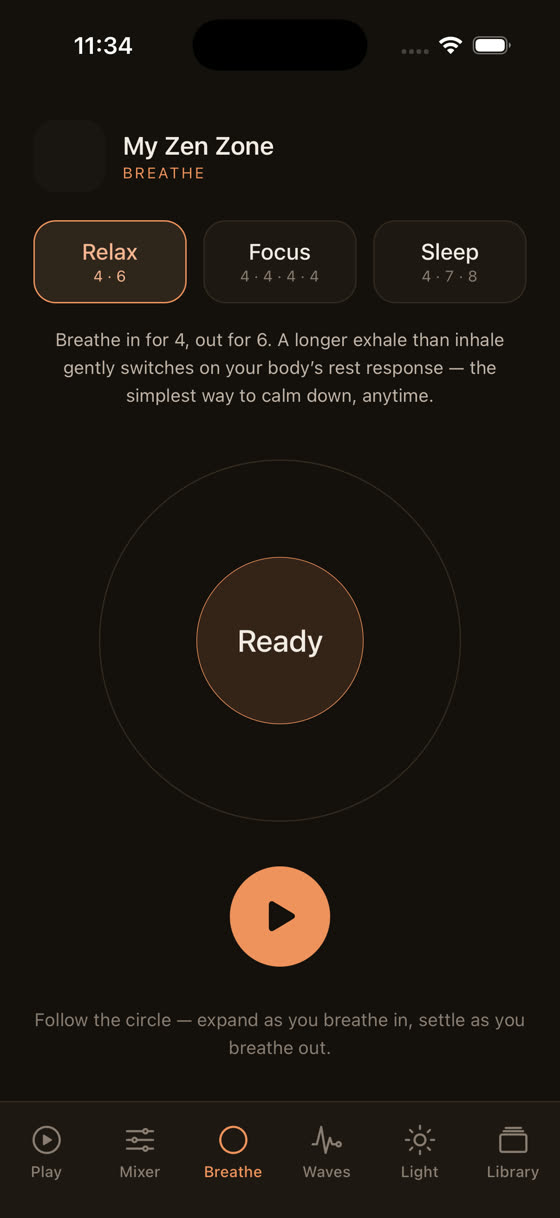
A visual pace to follow matters more than people expect, because counting in your head while also trying to relax is its own small task. Watching a shape expand and contract removes that effort entirely.
What to actually do tonight
Pick one change rather than overhauling your whole evening. Dim the lights an hour before bed instead of leaving them full brightness until you switch everything off at once; light is one of the strongest signals your body reads for what time it thinks it is.
Put your phone in another room, or at least out of reach, for the last thirty minutes before sleep. Choose music at a slower tempo than whatever you'd put on at a dinner party, and let it run long enough to actually work rather than switching it off after four minutes because nothing "happened." If your mind is still loud, try the breathing pattern instead of forcing yourself to lie still and think about sleeping, which rarely works.
Building it into a habit, not an event
The honest answer is that relaxing works best as a small daily practice rather than an occasional rescue attempt during a crisis. Ten minutes most evenings does more for your baseline stress level than one long session once a fortnight. A sleep timer that fades the music out rather than cutting it off, offline downloads for nights your signal drops, and a library that adds new tracks every two weeks so the same six songs don't go stale: these are practical details, but they're the difference between a habit that sticks and one you abandon after a week.
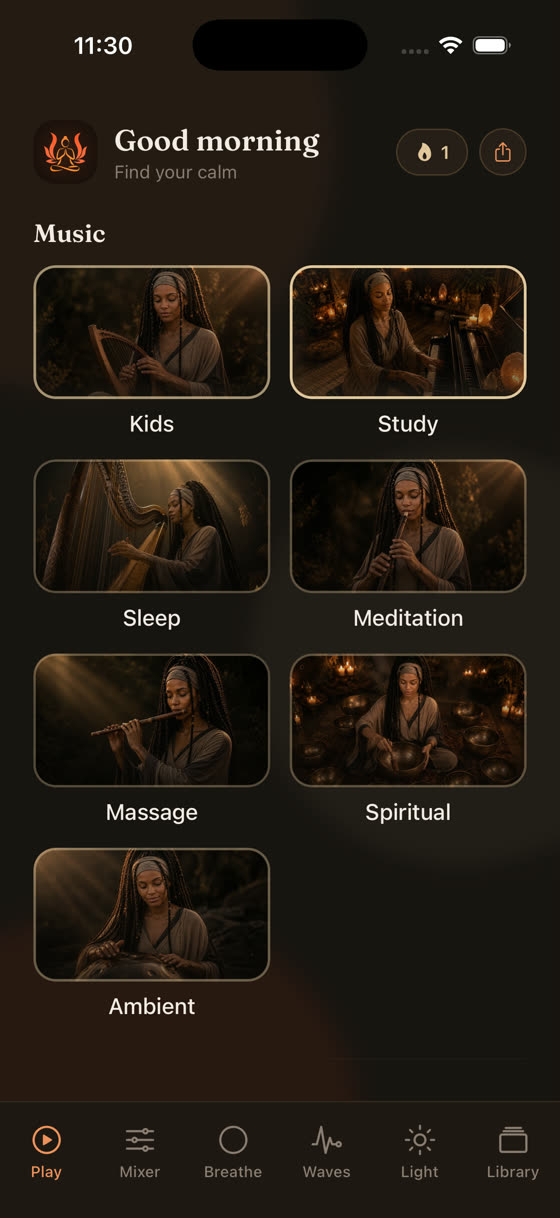
You can see the whole shape of it, sleep, focus, meditation and calm as separate spaces rather than one long playlist, at myzenzone.app, or go straight to the download if you'd rather start tonight than read about it.
Common questions
How long does it actually take to relax once you start trying?
Breathing changes can shift your heart rate within a few minutes. Music and lower light work more gradually, often 10 to 20 minutes, because they're giving your body a slower signal to match rather than a direct command. Consistency matters more than any single session, so a short daily routine beats one long occasional attempt.
Is it bad to relax by watching TV instead of using music or breathing exercises?
Not inherently, but most TV is paced to hold your attention, which works against the slowing-down your body needs before sleep. If it's genuinely calming and you're not reaching for your phone during it, it can be fine. The test is whether your breathing and heart rate are actually settling, not just whether you're sitting still.
Can being too relaxed be a problem, like for focus or motivation?
Deep relaxation and sharp focus are different states, and you don't want full parasympathetic calm while trying to concentrate on demanding work. For focus, a moderate tempo and steady rhythm that keeps you alert but not tense tends to work better than the very slow, drowsy tracks built for sleep.
Why do I feel more tired after a weekend of doing nothing, not less?
Doing nothing isn't the same as relaxing if you spent it scrolling, worrying, or sleeping irregular hours. Inconsistent sleep timing confuses your body clock, and passive screen time keeps your nervous system mildly activated. Structured rest, with regular sleep and wake times plus deliberate wind-down time, tends to leave you more restored than unstructured downtime.
Do brainwave tones or binaural beats actually help with relaxing?
The evidence for brainwave entrainment is still thin and mixed, so it's worth trying without expecting guaranteed results. Some people find a steady tone genuinely helps them settle, especially layered quietly under music or nature sound rather than played alone. It's a tool worth testing on yourself rather than relying on as a proven method.