Handpan music makes people cry because of three things happening at once: a scale built around unresolved tension, overtones that sit inside the same frequency range as the human voice, and a tempo slow enough to pull your body out of alert mode before your mind has caught up. None of that is mystical. It's mechanical, and once you know the mechanism, the reaction makes a lot more sense.
The scale itself is built for ache
Most handpans are tuned to what's called the Kurd scale, a D minor variant with eight or nine notes arranged so there's no obvious "home" note you keep landing on. Western pop and classical music are built on resolution: tension, then release, a leading note pulling you back to the root. Handpan scales, especially the harmonic minor and Hijaz-style tunings some makers use, keep a raised seventh or an odd interval that never quite resolves. You get pulled toward a landing that doesn't fully arrive. Psychologists who study music and tears, John Sloboda's work on appoggiaturas is the most cited here, point to exactly this pattern: a melodic note that clashes gently with the harmony underneath, then slips into place a beat late. That small delayed resolution is one of the most reliable triggers for what researchers call frisson, the skin-prickling, throat-tightening response some people get from music. Handpan pieces are almost entirely built from these delayed resolutions, one after another, which is why the effect can feel sustained rather than a single moment.
The overtones sit right where your voice does
A handpan's fundamental note is usually joined by two or three audible overtones, and those overtones cluster in the 200 to 800 Hz range, the same band as a human speaking or singing voice. Your auditory system doesn't process that range the way it processes, say, a violin's upper register. It's tuned by evolution to pay close attention to anything that sounds like a person. Some listeners describe handpan as sounding "like it's talking" or "like a voice underwater," and that's not a coincidence. The instrument is metal being struck, but the sustain and the overtone stack make it read as vocal. Crying in response to something that sounds like an unspoken, wordless voice is a fairly short trip.
The tempo does the physical work
Most handpan compositions sit around 60 to 75 beats per minute, close to a resting heart rate, and they're usually played with rubato, meaning the tempo breathes rather than locks to a click. That combination lowers arousal fast. Your breathing slows to match, your shoulders drop, and the part of your nervous system responsible for staying alert quietens down. Tears often show up at exactly this point, not because the music got sadder, but because your body finally stopped bracing. A lot of people who cry to handpan music say it happens after a long day, in the car, or right before sleep. That's not coincidence either; it's the moment your guard was already lowest.
What most articles about this get wrong
A lot of the writing on handpan and emotion leans on claims about "432 Hz healing frequency" or specific tunings that supposedly realign your body. There isn't good evidence for that. Some handpans are tuned near 432 Hz because a maker likes the timbre, not because of any measured physiological effect, and the frequency itself has no special status backed by research. What does have some evidence behind it, though still limited and not fully settled, is the appoggiatura and frisson research mentioned above, and general findings that slow, low-arousal music with minimal percussion reduces measurable stress markers in some studies. Be sceptical of anything promising a guaranteed emotional or healing outcome from a specific number. The honest answer is duller and more useful: it's scale, overtone, and tempo, not a magic frequency.
Why it hits some people and not others
Not everyone cries at handpan music, and that's worth sitting with rather than explaining away. Research on music-induced tears, Vuoskoski and colleagues have looked at this, associates it loosely with certain personality traits, particularly high openness to experience and a tendency toward absorption, meaning you get pulled fully into what you're listening to rather than staying half-attentive. People who've had a recent loss, who are sleep-deprived, or who are simply more tired than usual also report stronger reactions, because the usual filters are thinner. If a piece of music makes you cry once and does nothing the second time, that's not the music failing. It's context doing most of the work, same track, different nervous system that day.
Using the reaction instead of being alarmed by it
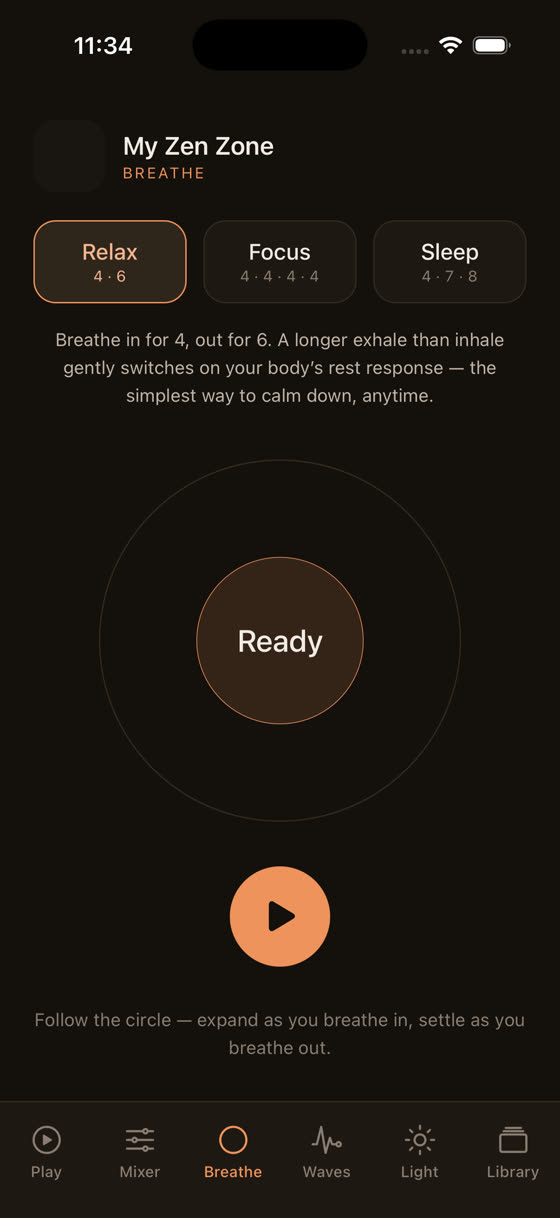
Crying at music is not a sign anything is wrong. It's frequently reported as a relief response, tears alongside a drop in tension rather than an increase in distress. If it happens to you, the useful move is not to skip the track next time but to notice when it happens: end of the day, middle of a commute, right before bed. That's information about what you need, not a warning. Some people build this into a wind-down routine on purpose, playing a handpan piece specifically because they know it will let something go before sleep, the same way others use a hot shower or a walk. If you want the release without wanting the whole evening derailed, pairing the music with a short breathing pattern helps bring you back down afterward.
How to listen if this is a track that moves you
The instrument rewards close listening more than most background music does, because so much of the effect is in the overtones and the tiny delays between notes. Headphones or a decent speaker matter here more than usual. It's also worth hearing handpan against a single, quiet layer rather than nothing at all, a low rain sound or a soft drone underneath can support the resolution instead of competing with it.
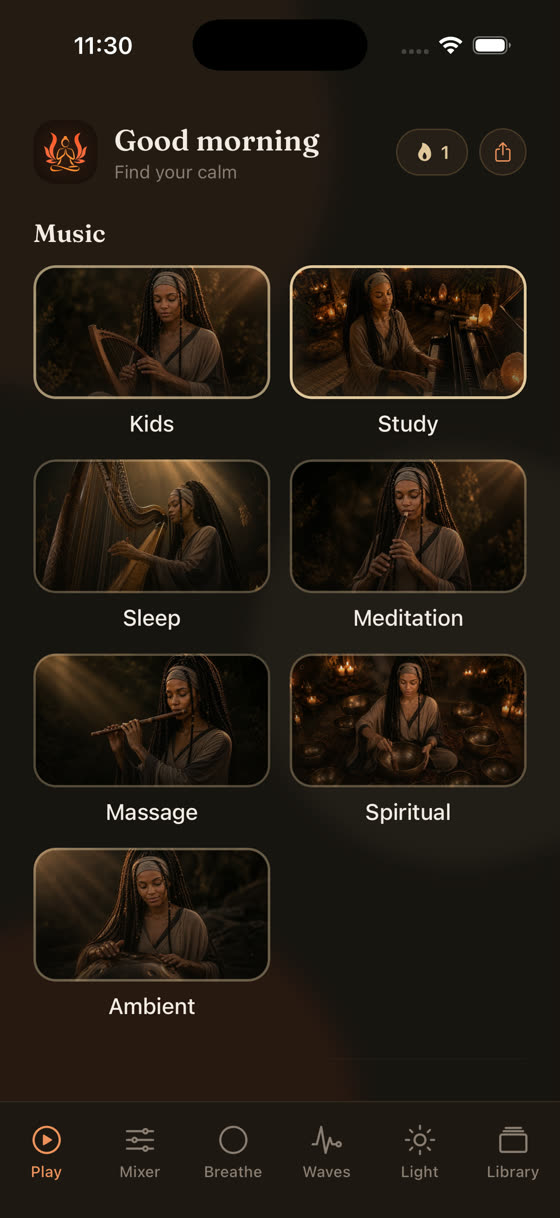
That's the kind of control the mixer in My Zen Zone gives you: three independent sound layers, each with its own level, so you can sit a handpan piece against rain at a low level or nothing at all, whichever suits the moment. Every track in the library, hundreds of them and more added every fortnight, is composed and recorded by one working musician rather than pulled from a stock library, which is part of why the overtone detail holds up under close listening. If you're building an evening routine around this kind of music, the best music for sleep guide covers tempo and structure choices that pair well with it.
When it's not really about the music
Sometimes the tears aren't about the handpan at all. Grief, exhaustion, and unprocessed stress will surface with almost any slow, minor-key music as the trigger rather than the cause. If handpan tracks are consistently the thing that opens the door, that's worth treating gently rather than avoiding. A short guided session that lets you sit with the feeling rather than push past it can help more than skipping to something upbeat.
In My Zen Zone, guided sessions play as a separate voice layer over the music rather than replacing it, so a handpan piece keeps running quietly underneath while a short, calm voice track gives you something to follow. You can turn either layer down or off entirely once you've settled. It's a small design choice, but it means the music that triggered something doesn't have to stop the moment you want a bit of guidance.
If you came here to find music, not just an explanation
Handpan sits comfortably alongside piano, ambient pads, and field recordings for anyone using music to wind down, focus, or fall asleep, and it's one of the more requested instruments across the app's library. If concentration rather than sleep is the goal, a different set of choices applies, tempo and repetition matter more than emotional pull, and the music for focus and study piece goes into that separately. For sleep and evening use, though, the same qualities that make handpan music moving, the unresolved scale, the vocal-range overtones, the slow unforced tempo, are exactly what make it work. You can hear the whole range of it and decide what suits your evening at the app.
Common questions
Is it normal to cry every time I hear certain handpan tracks?
Yes, it's a known and fairly common response, tied to how the scale and overtones work rather than anything wrong with you. If it happens consistently with specific tracks, that's your nervous system recognising a pattern it responds strongly to. It's only worth attention if the crying feels distressing rather than releasing.
Does 432 Hz tuning make handpan music more emotional?
There's no solid evidence for this. Some handpans are tuned near 432 Hz because the maker prefers the timbre, not because the frequency itself has measurable emotional effects. The tears people report are better explained by the scale's unresolved intervals and slow tempo than by any specific frequency number.
Can listening to handpan music help me fall asleep?
For many people, yes, the slow tempo (usually 60-75 bpm) and lack of a driving beat support the drop in arousal that sleep needs. It works best played quietly, ideally with a sleep timer so it fades rather than looping all night, and paired with a low background layer like rain if silence after it wakes you slightly.
Why does this happen more at night or when I'm tired?
Tiredness lowers the usual filters that keep emotional responses in check during the day. Combined with music that's already built to relax your body, slow tempo, minor key, unresolved melody, a tired nervous system has less resistance left, so the same track that felt neutral at noon can bring tears at 11pm.
Is crying at music actually a sign of stress relief?
Some research on music-induced tears links them to a release of tension rather than an increase in distress, often alongside a measurable drop in physical arousal afterward. It's not fully settled science, but the common self-report is relief, not worsening mood, which matches how most people describe the experience afterward.